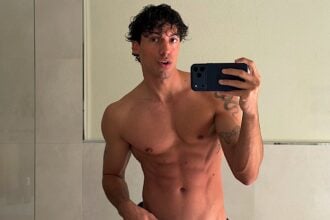
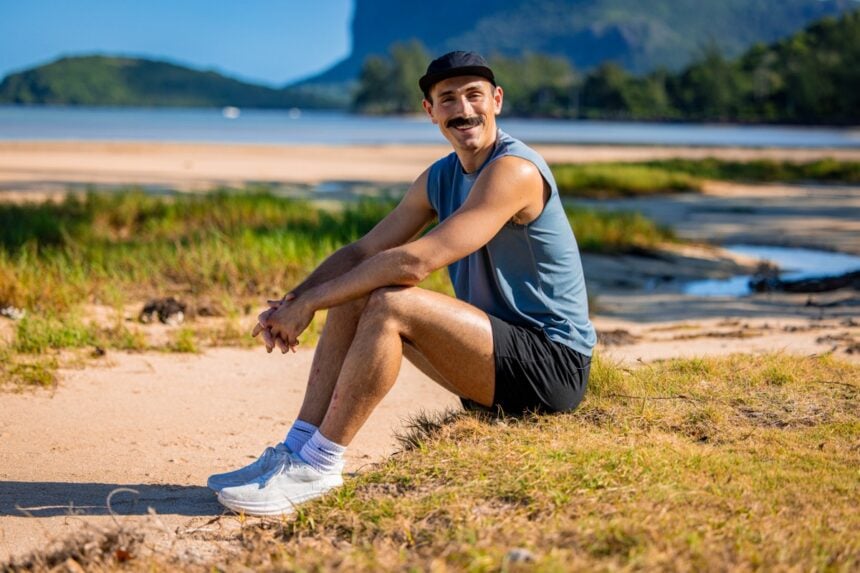
Nick Davis doesn’t fit the traditional mold of a reality competition fitness star – and that’s exactly what makes his journey on the new realty show Trainer Games so compelling. A Broadway performer turned fitness coach, Nick brings a deeply human, inclusive approach to training – one rooted in performance, vulnerability, and celebrating what the body can do, not just how it looks.
In Prime Video’s high-intensity competition series, described as “the toughest job interview in fitness,” Nick finds himself pushed far outside his Manhattan comfort zone, tackling brutal physical challenges in Mauritius alongside elite athletes, Olympians, and influencers. But while the terrain is extreme, his edge comes from something less obvious: emotional intelligence, adaptability, and the confidence earned through years of connecting with people who never felt seen in traditional fitness spaces.
In our exclusive interview, Nick opens up about translating theater skills into coaching, overcoming imposter syndrome, the healing power of representation, and how Trainer Games reshaped his understanding of his own potential – sparking everything from Ironman races to dreams of setting world records. It’s a conversation about movement as a lifelong practice, fitness as belonging, and the power of showing up exactly as you are.

You’ve built that career that spans from Broadway into the fitness world. How does performance shape the way you show up today as a coach?
I think it’s a common trajectory, especially in New York, to kind of transition from theater into fitness. I always say that a big part of being a fitness instructor is being a performer, talking to people and public speaking but also being very tuned into what you say to someone and what their reaction is. It’s all about that interpersonal connection.
I think being a performer definitely gives someone a leg up when it comes to being a fitness trainer, but I also just will always be a theater kid at heart. I think as a theater kid, I grew up as the quirky, outsider kind of kid in school. I feel like most trainers grew up as alpha male, top athletes. I feel like I have a superpower because I get to connect with people who maybe didn’t grow up playing sports or didn’t grow up in the gym because I have not always excelled in fitness in my life. It’s something that’s new to me in the grand scheme of things, so I’m able to connect with those people who don’t always see themselves in the world of fitness or sport.

Your coaching philosophy centers on celebrating what the body can do and not just what it looks like. Where did that mindset originate for you?
I think being a performer, especially being a male performer, there’s a certain expectation on what your body should look like. I found myself first getting into the gym wanting to gain muscle and gain size and I quickly found that not only was that a kind of weak motivator for me – I wasn’t super consistent in the gym – but it also can get a little bit toxic if that is truly your only goal for getting into the gym.
So, very early on in my fitness journey I found that focusing on performance goals, like how much can I lift versus how bigger my biceps were, was just a better motivator for me. When I became a fitness trainer, I identified that – and not that I don’t talk about aesthetics or don’t want people to celebrate their bodies – but I definitely like to focus on “Oh my God, you lifted more this week than you did last week”, as opposed to being like “Oh my God, you look great. A month ago, when I saw you, you didn’t look like this.” Like just focusing on what you can do because at the end of the day, if you focus on performance goals and fitness, the aesthetic in the body will certainly come. I think it’s just a healthier way to approach fitness in the long term.

Over the last five years, you’ve inspired your clients to find pride in progress, like you just said, and capability. What’s a breakthrough moment with a client that still sticks with you?
I’ve had a few, but I think one that comes to mind is a client that’s actually turned into a friend, and she’d probably hate me that I’m sharing this, so I won’t say her name. She’s not someone who likes attention, but she first came into my group fitness classes and was someone who was so visually terrified to be there. I could just tell right away she was just super aware of people looking at her and what weight she was lifting. She was just so terrified. I identified that and approached her and really got to know her and tried to make her comfortable.
Fast forward two years, she’s now posting her workouts on Instagram and she’s the life of the party in class. For me, seeing that transformation of confidence, matters more than performance goals and physique for her. Of course she’s improved in her fitness, but what I care about more the confidence that I’ve watched her build in the past two years, which is insane. From someone who is terrified of the gym to someone who the gym is now her happy place is so rewarding to me because I played a part in that and it’s really cool to know that.
How do you think that functional fitness, HIIT and strength workouts work together in an approach to long-term confidence and resilience?
Again, it’s that idea of focusing on what your body can do, and especially with functional fitness, it’s also making sure everything we’re doing in the gym like has a reason and a purpose and a benefit in long-term health. If we think about the 80-year-old version of ourselves that still needs to sit down on the toilet and stand up. We need to squat, we need to bend over and pick something up. We need to deadlift. Functional fitness just focuses on those fundamental movements…and I think that can be applied to sport. That can be applied to my career as a dancer, but then it’s also just a great way to reach the general population because there’s no one who’s not going to benefit from functional fitness. It’s incredibly important and why I like to really focus my efforts into that world.

What parallels do you see between training for a Broadway role and preparing clients for physical challenges?
That’s a good question. I’d say it’s probably the mindset. Of course, training for a role is a physically demanding. It’s a lot of hard work, but the mindset aspect of it is incredibly important – and that’s true with fitness as well. The way you talk to yourself, how you speak to yourself, how you frame this journey is incredibly important.
I think I learned a lot of mental toughness, but also I’ve learned how to speak kindly to myself because as a performer, that’s incredibly hard. It’s really easy to just critique yourself constantly, and it’s the same thing with a fitness journey, especially when you’re comparing yourself to others. It’s so easy to get yourself down, but you have to learn how to push past that and learn how to just speak to yourself nicely, because it makes a huge difference in the long run.
Performing on stage requires discipline, vulnerability, and stamina. How do those skills translate into your fitness coaching?
It’s interesting. Being a performer, I feel like you are forced to learn what it means to be vulnerable. I think there’s a world in which if I was not a performer that I would be a very unemotional, reserved kind of guy. But I think being pushed into theater and being a performer, you have to learn how to emote and connect to people through vulnerability.
I think that’s a little bit of superpower when you’re a fitness trainer because, again, I think a lot of fitness trainers are amazing athletes who find a career in training, but what they don’t realize is that it’s about the people and it’s about the connection. Learning how to be vulnerable with a client to just get on an equal playing field and learning how to handle their emotions and how to respond and what kind of response they need in any given moment is a hard skill to learn. But as a performer, if you’re not vulnerable, then you’re not really performing. You’re not being authentic. You’re not being yourself…so, it’s a bit of a superpower that we have.
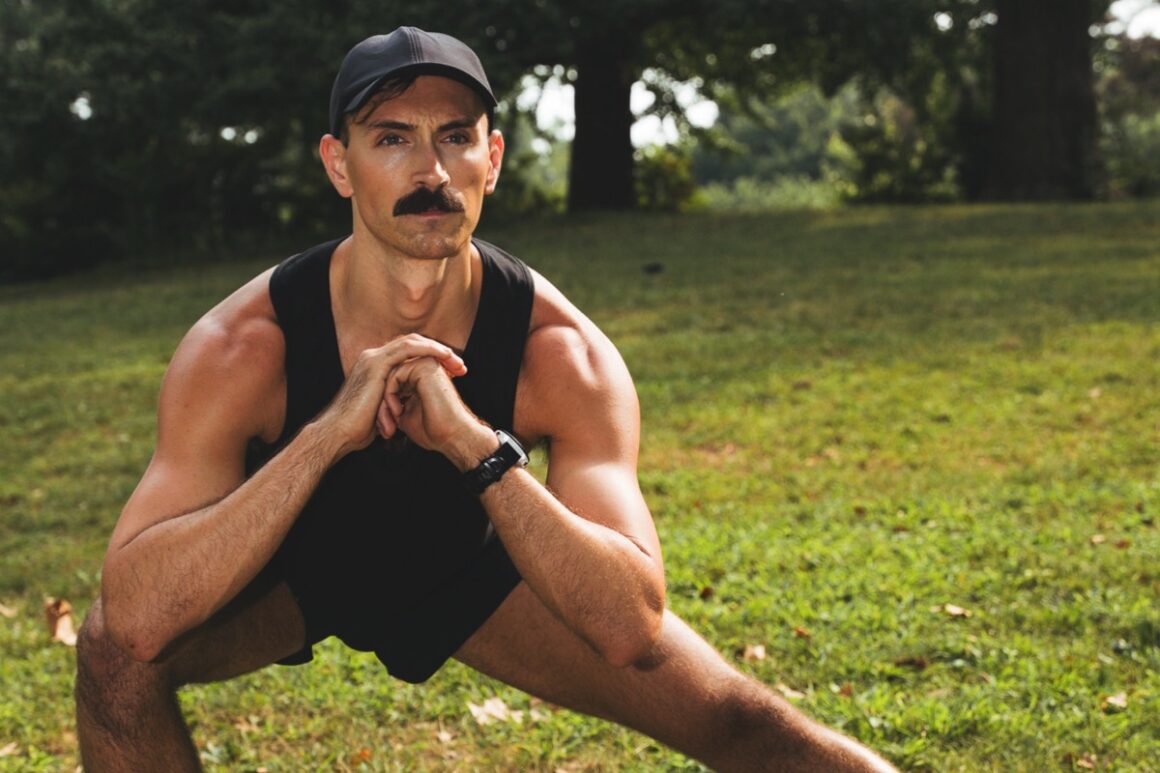
And now you’re taking on this new role on Trainer Games. The show has been called “the toughest job interview in fitness.” What about the competition made you want to sign on?
I’m a lover of reality TV. I’ve actually never applied to a reality TV show, but I love reality TV. So, when I saw “searching for fitness trainers for a new reality show”, I’m like, I’m a fitness trainer, let’s apply. But it’s interesting because I genuinely mean this when I say this, but if I had known what they really meant by “the world’s toughest job interview”, I really don’t think I would’ve signed up. I don’t think I would’ve applied. It’s like ignorance is bliss. It was so incredibly challenging. I am so grateful that I did not know what we were doing until we did it, because then I would’ve just talked myself out of it. It was that crazy.
Competing against elite athletes, influencers, and Olympians is no small feat. What do you feel set you apart from your competition on the show?
I was definitely a little bit of a black sheep in a sense in terms of my background – not having a really sports specific background, more of just a dance and general fitness background. But, like I mentioned, I think being a theater performer and more specifically being a queer trainer, I think provides me an opportunity. I think a lot of queer people grow up being a little bit of a chameleon. At first it’s a little bit of a defense mechanism or a way to hide or blend in. But I feel like, in a way, being queer has taught me how to interact with all kinds of people.
If you compare me to, let’s say, a typical male straight trainer who maybe lacks that sense of vulnerability or maybe connects with a really certain type of bro, but is not used to branching out into other groups of people, I feel like as a queer person I can blend in with the guys and talk sports and bro things. And then, when I’m with the girls, I’m feel at home and connected. I feel like as a queer person, you’re able to connect with so many different kinds of people which I think set me apart from some of the other trainers.

The filming location, Mauritius, looks incredible, but it also looked quite brutal. What surprised you most about competing in such an extreme environment?
I live in Manhattan, so it’s a little different than the island of Mauritius. I do train outside but, again, it’s in the concrete jungle, not an island. There was a lot of trail running, repelling down cliffs, jumping off cliffs, rock climbing…all these things that I simply don’t have access to in Manhattan.
It was definitely like a fish out of water moment at first, but I was surprised by how much I was able to keep up. It just shows you that my training as a performer and my strength training background and functional fitness background do translate in the real world. Even if I don’t have the experience of rock climbing, I have the strength and the stamina to figure it out on the spot and to hang with all these people who live in Montana and live in Utah and have access to the kind of landscape that we had in Mauritius. It’s not my typical environment, but it was beautiful. I’d love to go back for a vacation.
How did the mental game compare to the physical challenges throughout the competition?
I had quite the journey on the show in terms of dealing with feeling out of place at times and feeling like maybe I didn’t belong there in terms of competing with all these like world class athletes. For me, it was very much a mental game and a lesson in confidence that can get you a long way. I’m someone who likes to be very realistic and if I’m not super experienced in something, I like to acknowledge that this is not my area of expertise. But what I learned is that I’m capable of so much more than I think, and that sometimes getting rid of that imposter syndrome is just as easy as saying, “Nick, you might not have experience with this, but you have experience with similar things, so just dive in headfirst.” It was very much for me a mental game even more so than it was physical.
You worked with these mentors on the show: Hannah Eden, John Peel, and Ashley Paulson. What was it like learning from those trainers and what did you what was the most the biggest takeaway from working with them?
That is interesting. I think that kind of connects back to my last answer about confidence because the three of them are almost like the founding fathers. They’re just like on Mount Rushmore. You look up to them and you’re just like, oh my God. They’re these larger-than-life figures and I think the reason I view them in that way is because they have this unshakable confidence. They know their worth. They know what they’re capable of and I think that’s started to rub off on me. I started to ask myself, what is the one thing that is keeping me from being like them? And I think it was that strong confidence.
It was so incredible to be with them because they were all so incredibly nice and kind to me. And even someone like John – who is an ex-football player and the kind of guy who should be shoving me in a locker in school – was one of the kindest people to me after that whole experience. He was one of the people who I remember having some of the most fond conversations with, and he really took the time to get to know me and make me feel safe and comfortable, which again, this is just healing for that queer kid who’s like, “the football player doesn’t like me, he doesn’t give a shit about me”, but this ex-football player could not have been kinder to me, which can be healing as a queer person.
Going along with that, representation and inclusivity are central to your work as a trainer. What does it mean to you to bring that perspective into a global competition like Trainer Games?
I felt a bit of a responsibility in that sense, and I just kept trying to remind myself to be yourself. Be yourself – because I knew that I would probably be the only queer person on the show, and I really didn’t want to feel like I had to dim my light to blend in. I hope that comes across in the show that I was just authentically myself and I didn’t try to dumb down a version of me or make a straighter version of me. I showed up with the painted nails, with the Speedos, with the crop tops, all the things that make me feel like myself. I hope people can connect to that authenticity and maybe feel like they see a little bit of themselves in me.
If you win the $250,000 contract and a spot on the trainer team, what kind of impact do you want to make on the platform?
I always say the one word to describe my coaching style is inclusive and I think that would be something that I would offer if I was to win and be on the iFit platform. Inclusivity to me means making someone who is brand new in their fitness journey feel just as comfortable and safe as someone who is an advanced athlete or even a professional athlete. We’re all on the same playing field. We’re all on the same journey and we all started at the beginning at some point. The people I really connect to are those who are new or who don’t always feel comfortable and I think bringing that sense of inclusivity and always being like a welcoming, friendly face to any person is something I would bring.
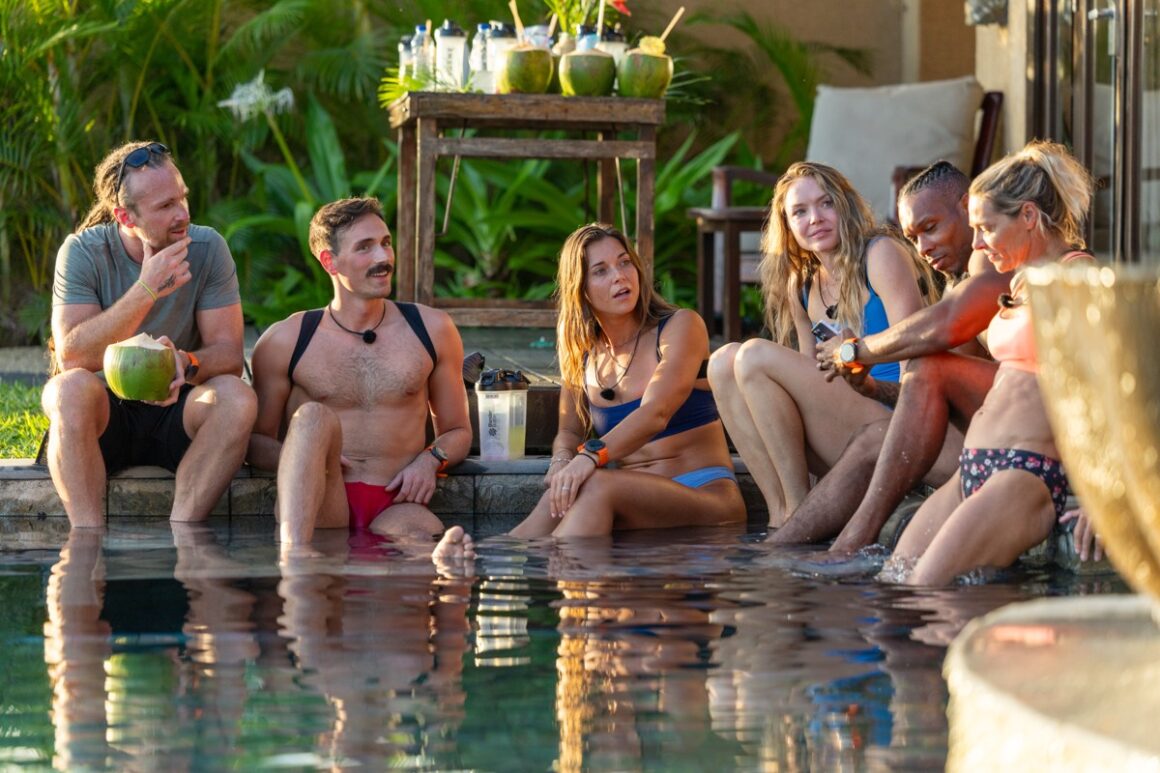
How has your experience on Trainer Games changed the way you see yourself as a trainer and athlete?
It has certainly opened up a lot of doors for me in the sense that I see myself as being capable of so many more things. The things that I did on this show are things that I never thought I would do, so it starts to get the wheels turning and you start to think, “What am I capable of?”
I immediately felt inspired as soon as I got back from the show. I signed up for my first Ironman race. I just did an Ironman 70.3, which before Trainer Games, I would’ve been like, “Hell no. I’m not doing that.” But, as soon as I got there and realized what I was capable of physically, my brain just started running with so many possibilities of cool things I could do. It’s exciting to have that new kind of confidence and curiosity.
What do you want people to understand about fitness, that reality competition shows don’t always get right?
I think when it comes to fitness, it’s not a one size fits all. We are all on our own unique journey and I think the number one thing that I want people to know is that fitness isn’t an eight-week period where you try to lose 30 pounds or whatever it is. Fitness is life, movement is life and I don’t like to just think about fitness as go to the gym or not go to the gym. It’s just movement.
Again, it’s the 80-year-old version of ourselves that has to bend over and pick something up and be self-sustaining. So, to me, fitness is everywhere in our lives. It’s not just about losing weight or gaining muscle, it’s about being functional and living a healthy, happy life – and that’s a lifelong mission. That’s not something that’s going to be accomplished in an eight-week journey, or six episodes or whatever it might be.
What is next for you personally? Is it going to be on stage or in fitness or somewhere unexpected?
Hopefully a little bit of both. I really want to straddle the worlds of still being a performer but also working in the world of fitness. I have some exciting races coming up, which I’ll announce on my socials and things like that, but again, I’m just getting the wheels turning and thinking about all the crazy things I could do. You know, what if I set a Guinness World record for some fitness-related thing? And I just want to do some big things and prove to myself and also to others that we are truly capable of so much more than we think. So yeah, hopefully some exciting things coming in the future.
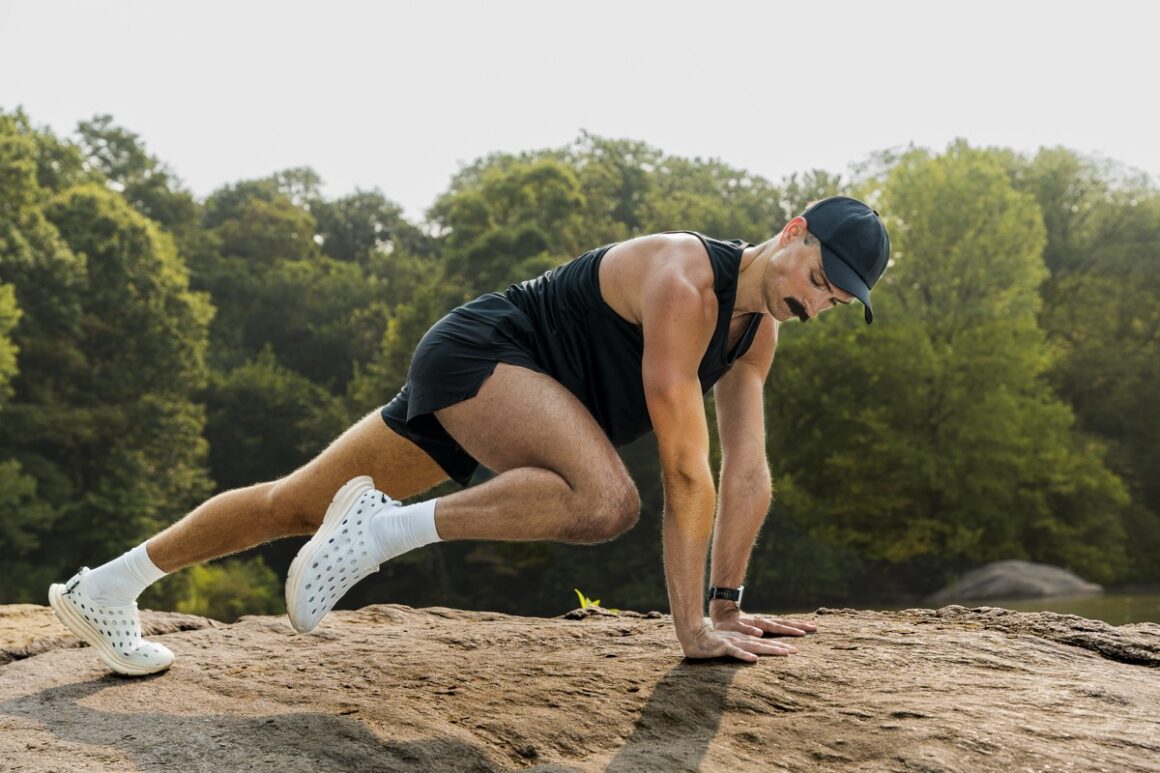
Check out Trainer Games on Prime Video. Learn more about the show here. Keep up with Nick on TikTok and Instagram and check out his workout videos here.