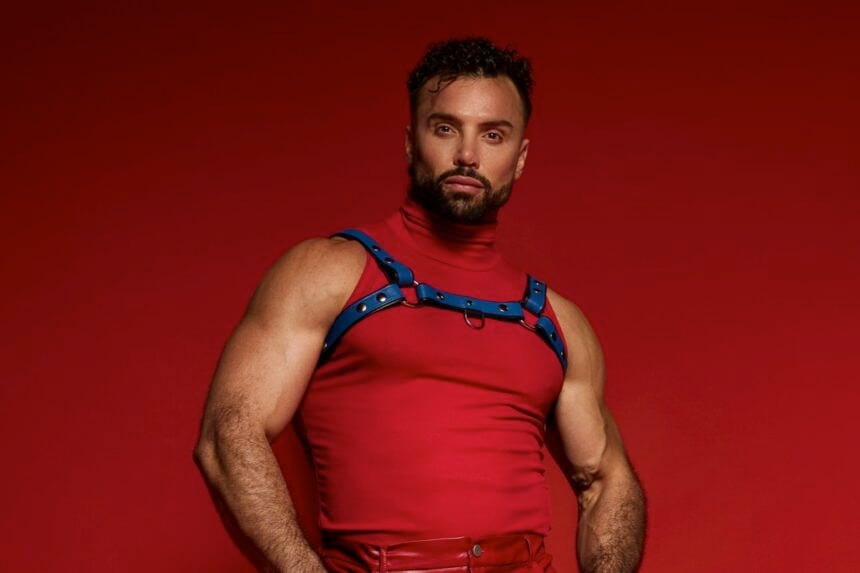
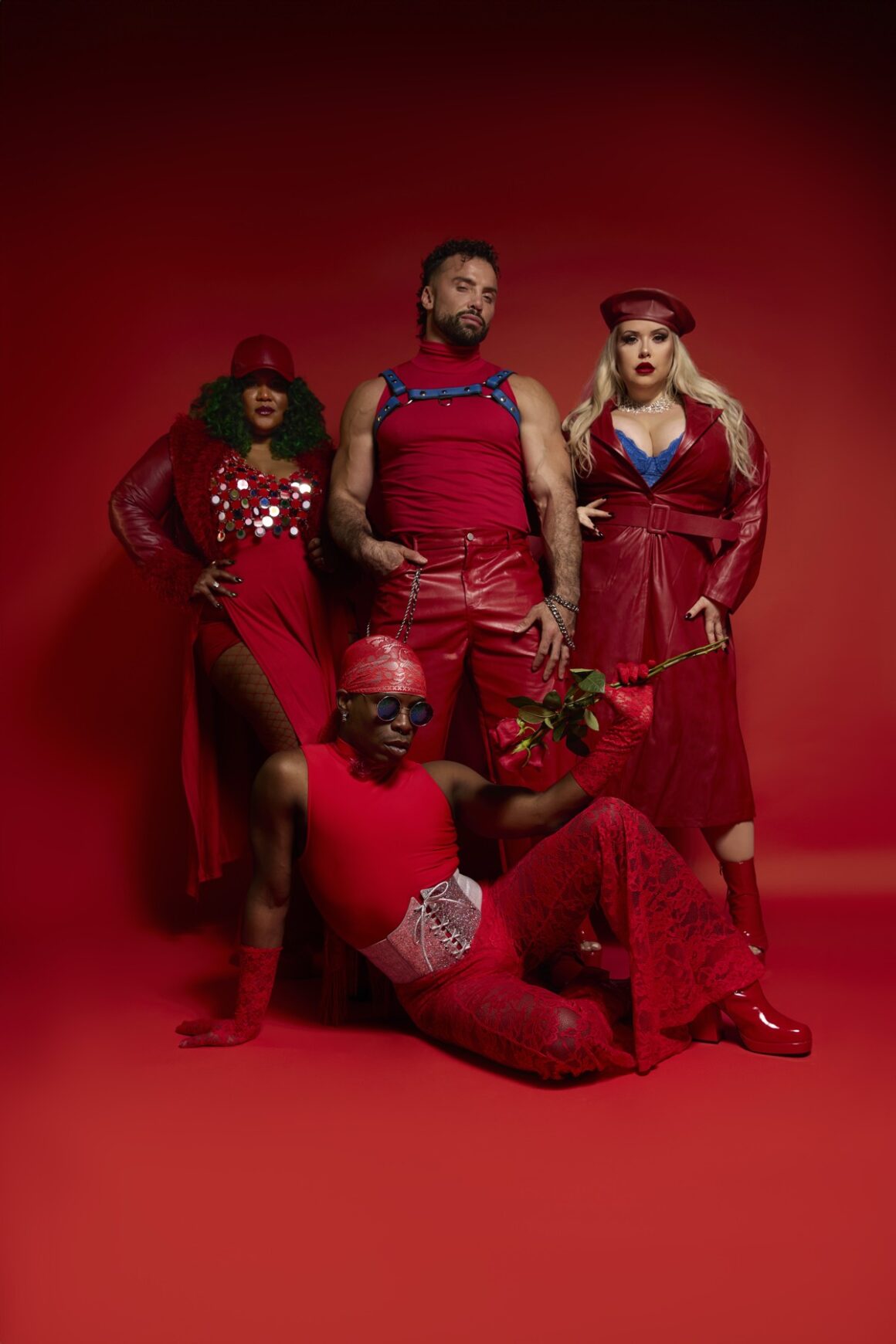
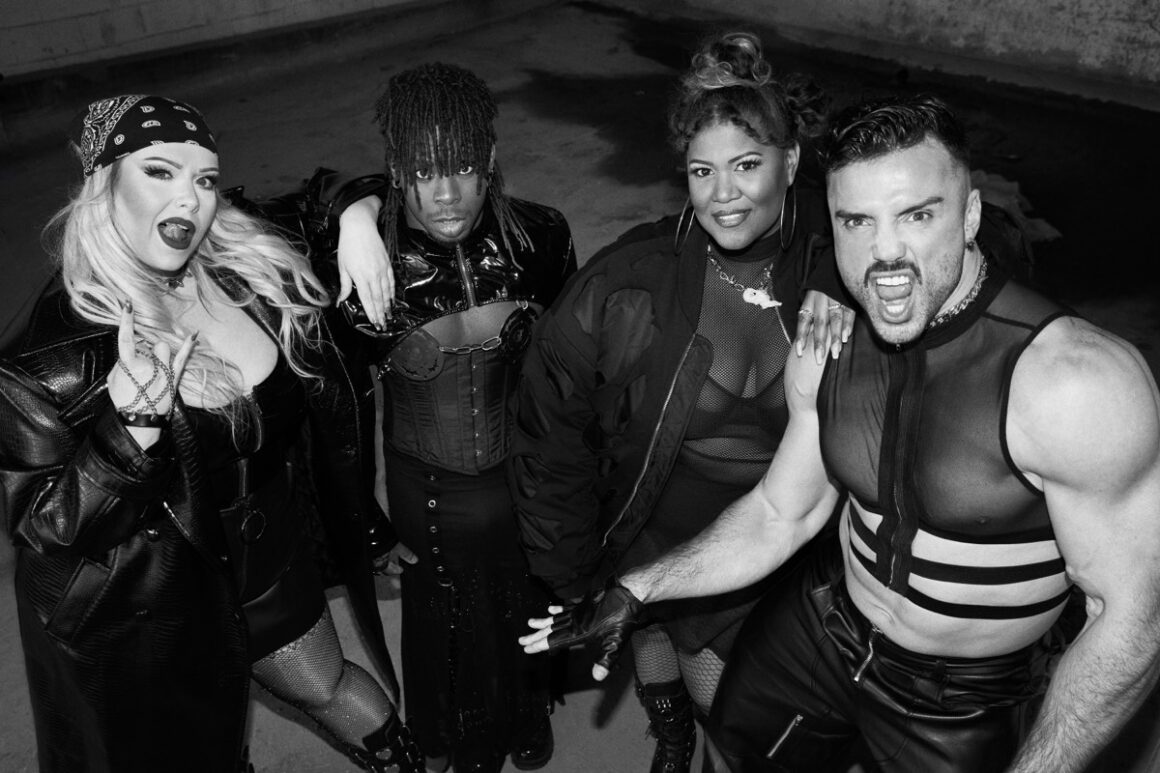
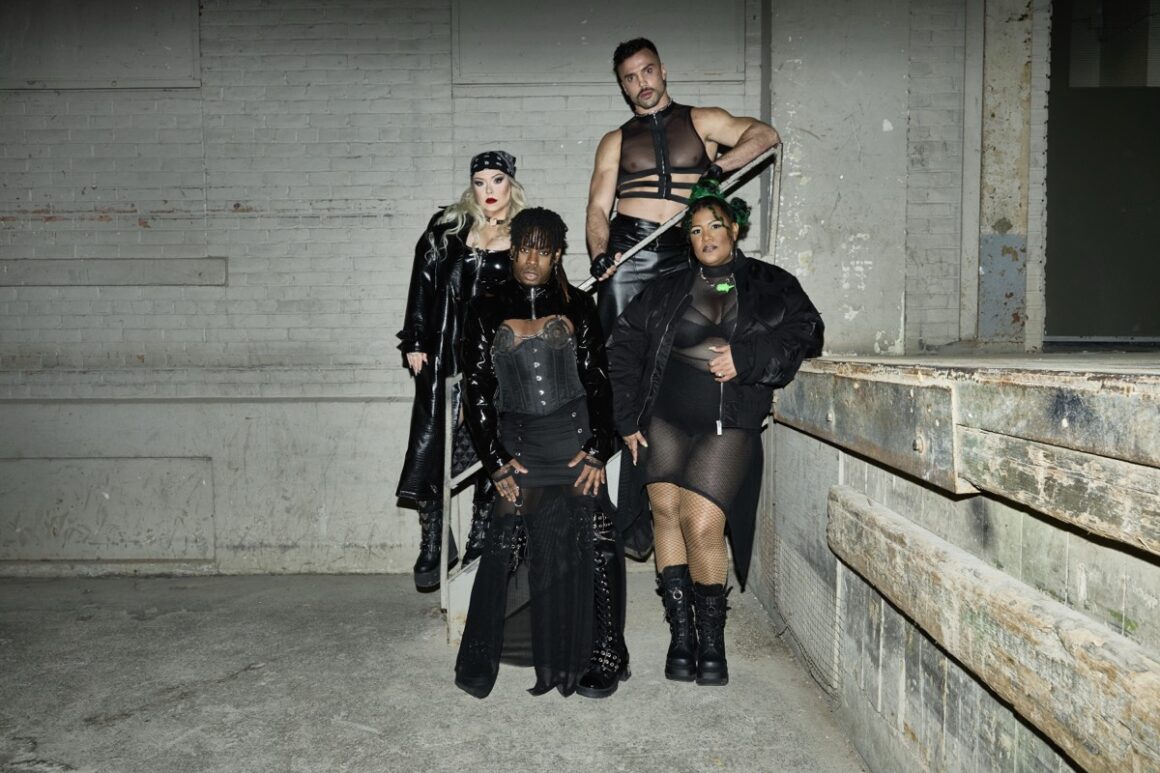
As one-fourth of the critically acclaimed pop group RiVERSE, Zak has always brought depth, discipline, and heart to the collective. Alongside fellow members Justice, Khadija, and Monroe, RiVERSE has earned international praise for their unapologetic artistry and fearless advocacy, building a devoted following of nearly one million fans through their mission to “represent the underrepresented.”
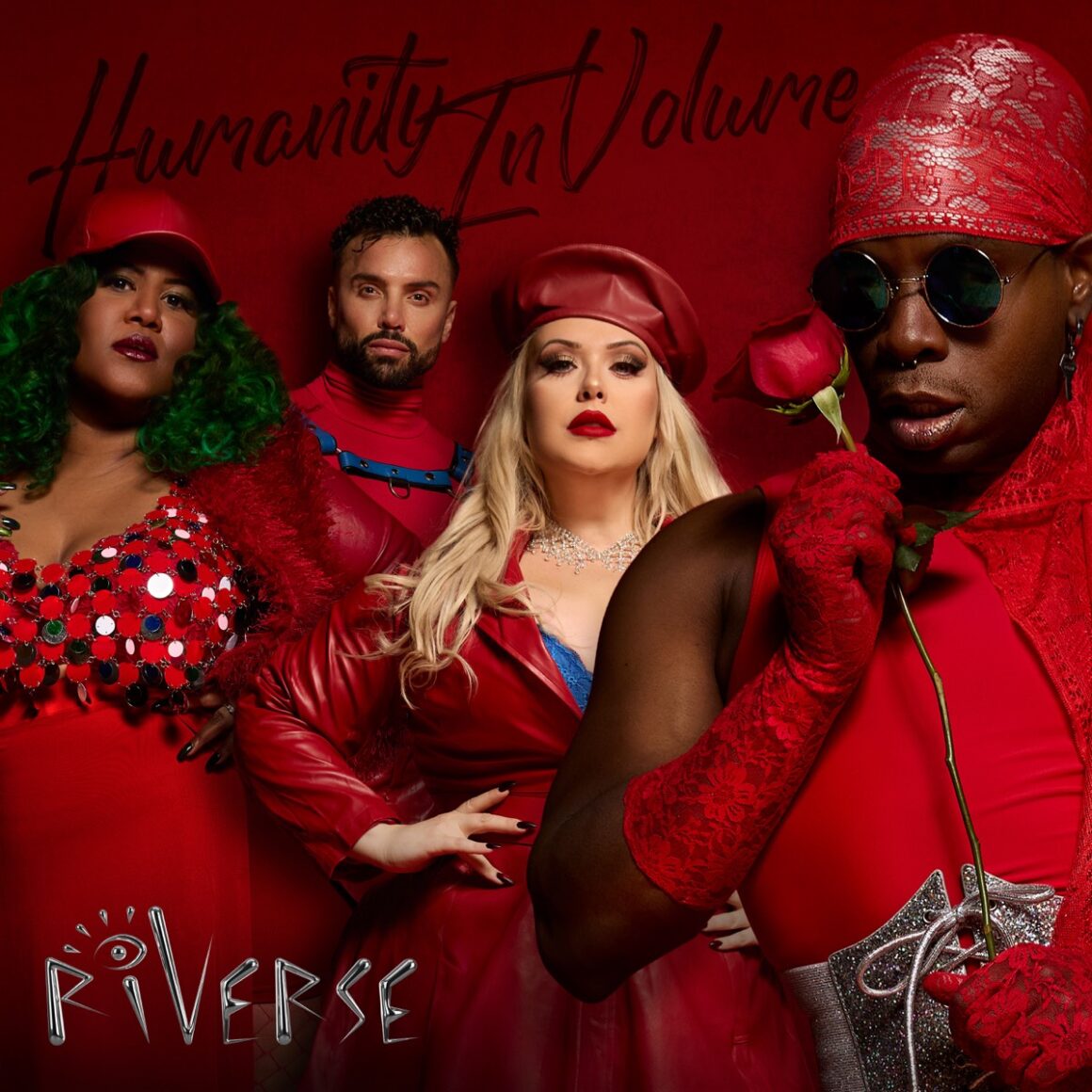
That mission reaches new heights on the group’s latest EP, Humanity In Volume, a ten-track project released in solidarity with World AIDS Day. The EP is rooted in lived experience – most notably founder Justice’s HIV diagnosis in 2021 – but it also reflects the personal journeys each member brings to the table. From Monroe’s recovery following a thyroid cancer diagnosis to Khadija’s commanding presence as a queer Black woman in pop, Humanity In Volume feels expansive, communal, and deeply human.
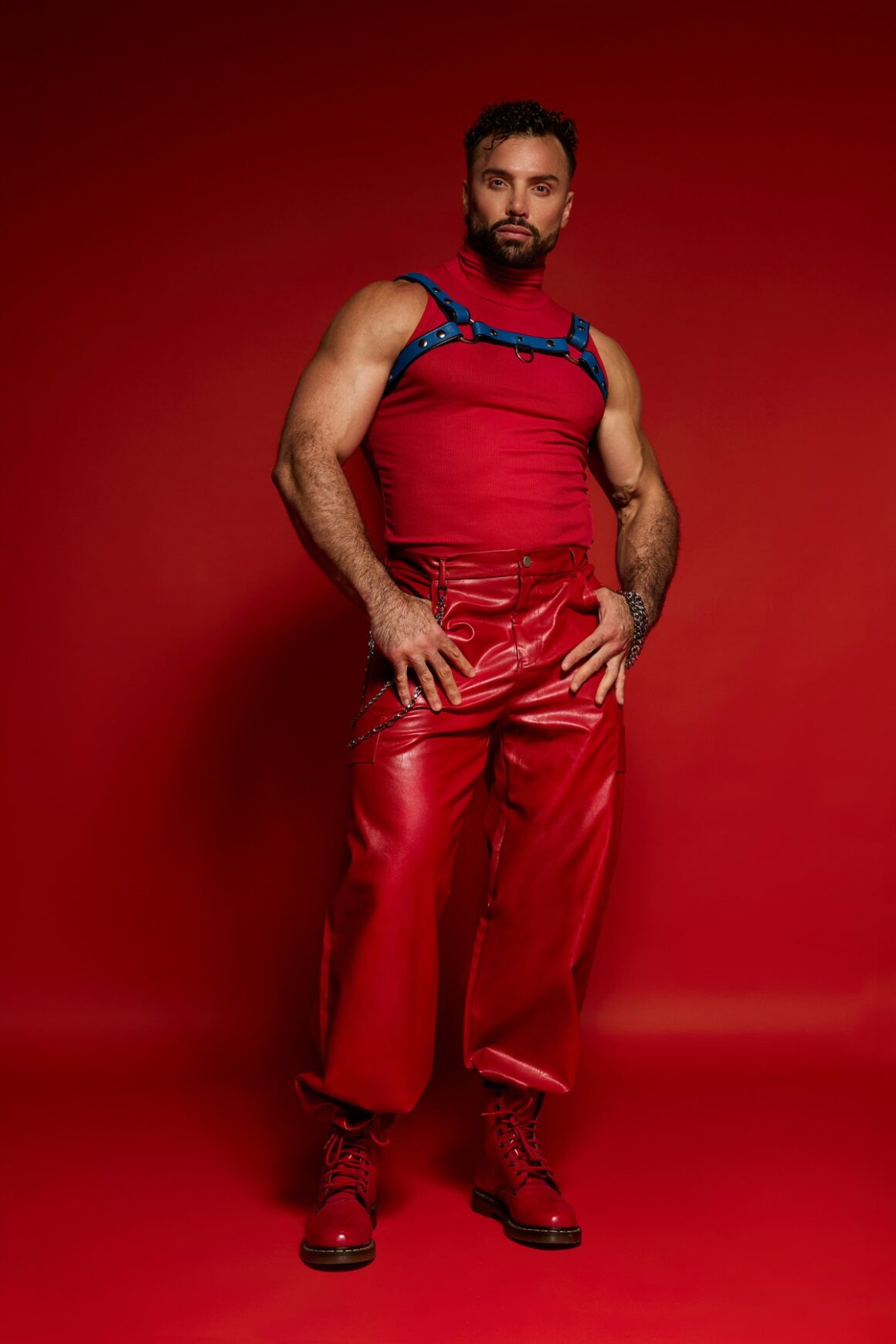
For Zak, the project hits especially close to home. Now eight years sober, he speaks openly about how recovery, discipline, and even bodybuilding have reshaped the way he shows up in life and in RiVERSE. Across the EP, themes of vulnerability, accountability, and self-love culminate in the soaring single “Lovin’ You Down,” a powerful moment of release and affirmation that encapsulates the record’s message: no matter how low things get, there is a way forward.
In this candid conversation, Zak reflects on the emotional weight of Humanity In Volume, the importance of confronting stigma through art, RiVERSE’s viral rise through K-pop covers, and what it truly means to live – and lift – in your truth.

I’ve been listening to “Lovin’ You Down” on a loop today. It’s been my Monday music motivation and Humanity in Volume is a great album. I really enjoyed it.
I am really touched on behalf of the group. That means a lot to us.
Humanity in Volume was released in solidarity with World Aids Day on December 1st. From your perspective, what responsibility do you feel artists have when it comes to confronting stigma and telling stories that often go unheard?
As artists, the responsibilities that we carry in terms of confronting stigma…we’re the individuals with the groups, with the platforms, with the connecting fibers to society. You mentioned “Lovin’ You Down” as your Monday feelgood track, so multiply that ad infinitum across the country and across the globe. We’re the people they’re tuning in to in terms of hearing that messaging, so if it doesn’t come from us, who else?
We feel it’s important for us to carry that message, to share that message. And really as my sister Khadija says right now at this point in our journey, it’s not about just doing this for the singing and the dancing and the fun of it. If there’s not a message behind what we’re doing, if there’s not a kind of impact that we’re trying to convey in making the world a better place, then what is it all for?
How did this EP challenge you personally, like either creatively or emotionally, compared to previous projects with RIVERSE?
This EP was particularly challenging as it hit on the nose each of our individual struggles and our personal journeys. So, for me personally coming out on the other end of it is my sobriety journey, but it really hits very close to home.
We’re empathic as a group and we share in our struggles, so when it was Justice’s positive diagnosis, that’s just Justice’s life. But it also impacted us because there’s the “I” and then there’s the “we”, like with Monroe’s cancer journey. It really touched on things that we hadn’t previously been necessarily prepared to talk about and so there was a kind of a processing and an evolution of that and a rising above, and that’s really the messaging behind the album itself and where it concludes in “Lovin’Me Down” in coming out on top and rising above it all.
What do you hope listeners, especially younger queer fans would feel or understand after spending time with this EP?
I think the most important takeaway from the album is no matter what you’re struggling with if you hold it inside, let it out. Speak the truth, share it with your community.
You have a tribe out there. You are powerful. You are strong. You will overcome it. We believe that you will. And we see it in ourselves. We see it in the people around us and will lift you when you can’t lift yourself. And essentially to come out on the other side, loving yourself and remembering that you are beautiful, you are worthy, you are valued, and you are loved.
Now, as I mentioned, I love “Lovin’ You Down”. How does that set an emotional or thematic tone for your EP?
“Lovin’ You Down” is the fourth or the conclusive element to the EP, so it’s essentially the album. The EP was written from Justice’s beginning HIV diagnosis to then sharing and to then to surfacing on the other end, of course loving himself down. Now that is a message– though it speaks to Justice’s HIV journey specifically – it speaks really to anyone who comes from a rock bottom place and then rises above that. “Lovin’ You Down” is essentially that moment of just release and breaking free from the shackles of that low point and really realizing that you are worthy. Life is beautiful and you can overcome and really see the beautiful side of things through the struggle.
RIVERSE’s recent KPop covers got you a lot of attention. Why do you think those performances resonated so strongly against across cultures and fan bases?
RIVERSE always delivers killer vocals – that I can say pretty confidently – and really we’ve been doing it all along and we’ve been covering different groups. We’ve been big fans of the K-pop genre for quite some time and so our recent covers of some KPop songs off of, for instance, Netflix’s hit show KPop Demon Hunters. It’s really just allowed a platform of a medium through which, you have parents, you have children, you have basically the masses connecting into this genre and this music that everyone has loved and RIVERSE coming to the scene with a cover for that has just been seamless, it’s been pretty…what’s the word I’m looking for? It was just very timely. It doesn’t really change how we’ve been doing things. We’re just doing the same things, but now through a medium that is connecting with the masses.
Following up on that, how do you balance creating like viral moments, like the KPop songs, like while staying grounded in your group’s deeper message of representation and being advocates?
That’s a really good question, Christine. I think, we don’t try to overthink our covers with our KPop songs. Yes, there’s the one aspect of it, which is just, it’s light, it’s fun. We’re just covering, “Golden” from KPop Demon Hunters, and it doesn’t seem like there’s much more to it than that other than just, vocals and fun. And that’s really all that it’s intended to be because the idea is through accessing RIVERSE and through intersecting with us through… let’s say someone discovers us for the first time, they can then investigate us further and learn more about the messaging behind our music. It’s just more of a light starter kit to the journey with RIVERSE and the introduction to us.
We don’t want to necessarily hit them with a wall of messaging when they might not be, prepared for it, but we’re going to invite them in slowly and encourage them to learn more. And that’s how we find that balance.
Now you had mentioned your sobriety. Congratulations on that.
Thank you.
Looking back, how do you think sobriety has changed the way you show up as an artist and a member of a band?
Sobriety has changed my entire life and it changed the way I show up as an artist. I can enter spaces honestly. I am who I say I am. I do the things I say. I’m accountable, I’m trustworthy, at least to those who know me. I think they can sign off on that as well and it allows for me to walk in with pride for the person, who I am and essentially what I bring to the table.
It also allows for me to just, take things one day at a time and truly act with humility in my shared journey with the other RIVERSE members. That kind of is pervasive across my entire artistry and how I approach my life. If if it were not from my sobriety, I wouldn’t be alive, period. It just makes me eager to approach the next stages of RIVERSE because I know that the prior handicaps that I had in my life, the things that were taking me down, I’m working on myself and I’ve found a new outlet – and that is through the music and creativity as opposed to the destructive elements before.
Now you’re a bodybuilder, which isn’t something people always expect in a pop queer music space. What initially drew you to bodybuilding?
I have a passion for fitness. I’ve always had a passion for fitness. It’s just changed shape. Previously I was all about calorie restriction and I’ve got to look thin, very dysmorphic thinking. I struggled with eating disorders myself in my past and so now it’s just really. finding a flow state with my consumption and healthiness, and so it’s translated to more muscle. But that’s just because I’m allowing for myself to eat the things and to live a lifestyle that I maybe would have been prohibited myself from doing previously. Maybe it’ll encourage others to do the same. And I think all body journeys are everyone’s individual rights to explore and everyone’s individual journey to create. There’s no one kind of one size fits all.
How do you feel that bodybuilding has changed your relationship with your body, your discipline, and your mental health?
How has bodybuilding changed my body? It’s allowed for me to enter spaces with confidence, to show ready for the work. Oftentimes I come to a dance rehearsal and I’m already warmed up. I’m already stretched. I’ve just come from a workout and I’m ready to do the work. As far as discipline, the act itself is a discipline one, it requires consistency, it requires persistence and it requires some degree of mental fortitude.
And that’s something that is learned and then applied pervasively to all aspects of my life. Then for my artistry, I struggle a lot with anxiety and the gym and my physical regimen is one that is hand in glove with my mental regimen. It’s the only time in the day where I can just be with my breath in stillness and releasing my head from thoughts as opposed to letting them kind of flood in with all of the anxiety producing things that do on all of their times of the day, so the two are connected.
The mission of RIVERSE is to represent the underrepresented, how do you personally define that responsibility today from as opposed to when the group was first formed?
I don’t think there’s been much change in that. Ultimately we represent the underrepresented because it’s just who we are. The collection of us as four very different individuals. It’s not something that you we see in media. I don’t just mean different by shape. I don’t mean different by skin color. I don’t mean different by sexuality, different in all of these ways, all put together and coming together and, through a degree of longevity in our careers showing that there’s we can come together and we can win.
That’s not a message that we see too often and it’s not one that we wish to change. It has been with us from the beginning and it continues with us today. So, the only thing that it has changed is really the necessity to convey that message on broader and more impactful scales just because of the state of the world today. The underlying people haven’t changed the urgency, the messaging has.
What does living in your truth look like for you right now, both publicly and privately?
Living in my truth? What does it look like for me publicly? I have no secrets. Secrets make you sicker. You’re only as sick as your secrets. I ascribe to that and so publicly of course we’re all humans doing humanly things, and once the fishnets and the leather comes off and we’re out of our costumes, I go home, I eat a bowl of cereal, I pet my partner’s cat, and we cuddle on the couch.
It’s not as though the public pop persona doesn’t align with the human, there’s obviously what people might see in the public pop persona. There’s still a human doing humanly things behind that, so I don’t see that as a degree of dishonesty or not living in truth.
We’re all born naked and the rest is drag, as RuPaul says, so that everything has a performative element to it but truth in my personal life today is being accountable, being trustworthy and being the person I am who I say I am, where I say I’ll be, and it’s as simple as that.
When fans look back on Humanity in Volume years from now what do you hope your voice represents in that story?
I want people to feel empowered. I want them to believe that in looking back and hearing the album, that there’s a way out, you can hit a rock bottom and sometimes you don’t have to keep digging deeper. You can seek help and you can get out. You have a community. You just have to find your tribe and that life is beautiful and it’s worthy of living and that we’re all worthy of having a beautiful life. There’s no struggle too big.
Socialite Seven
What is on your gym playlist right now? What is one song you have to lift to?
Oh, on my gym playlist right now is “Nowhere Fast” by Fire Inc. It’s song from the nineties. I believe there’s that one and then there’s also “Platinum Mega Mix” by Steps.
Coffee…before your workout or after?
Neither, I take it straight to my vein in the form of pre-workout. So, I guess the answer is caffeine before my workout but it would just be a scoop of pre-workout straight in my mouth.
KPop choreography or heavy leg day, which is more brutal?
Oh, KPop choreography. I look forward to KPop choreography but it gives me a little bit of the scares. It’s intense. It’s very intricate work. Not impossible, but a leg day is something that I am much more familiar with.
What is your go-to comfort food when you’re off tour and off schedule?
Cheesecake. Cinnamon buns – you’ll sense a theme here. There’s sugar…and a big bowl of sugary Cinnamon Toast Crunch cereal with whole fat milk and a banana inside of it.
If RIVERSE had its own reality show, what would your role be in the group dynamic?
Ooh. I typically find that I’m in the caregiving role, like I’m cooking for the group, I’m making sure everyone has their cups filled, everyone’s warm and has rides to make it home. People call me Zaddy, Papa Zak, essentially. And I think that’s quite telling in itself.
What is one thing that fans would be surprised to learn about you?
Fans would be surprised to learn that I play piano. It’s right behind me. I play guitar. I used to play the trumpet. I used to be in a ska band called Flapjack, like rock meets reggae. It was a holiday. It was a great time. Most people wouldn’t know that.
Finish this sentence. “I feel most like myself when I am ____.”
I feel most like myself when I am at the gym because there’s no performative element to it. At least for me. I have my music on, I’m in my own world and I’m most like myself because I’m just living for me and nobody else. It’s just me, my music and the task at hand.
“Humanity in Volume is currently available wherever you stream your music. Follow Zak and RiVERSE on Spotify, Instagram and YouTube.
MORE POP CULTURE HEADLINES