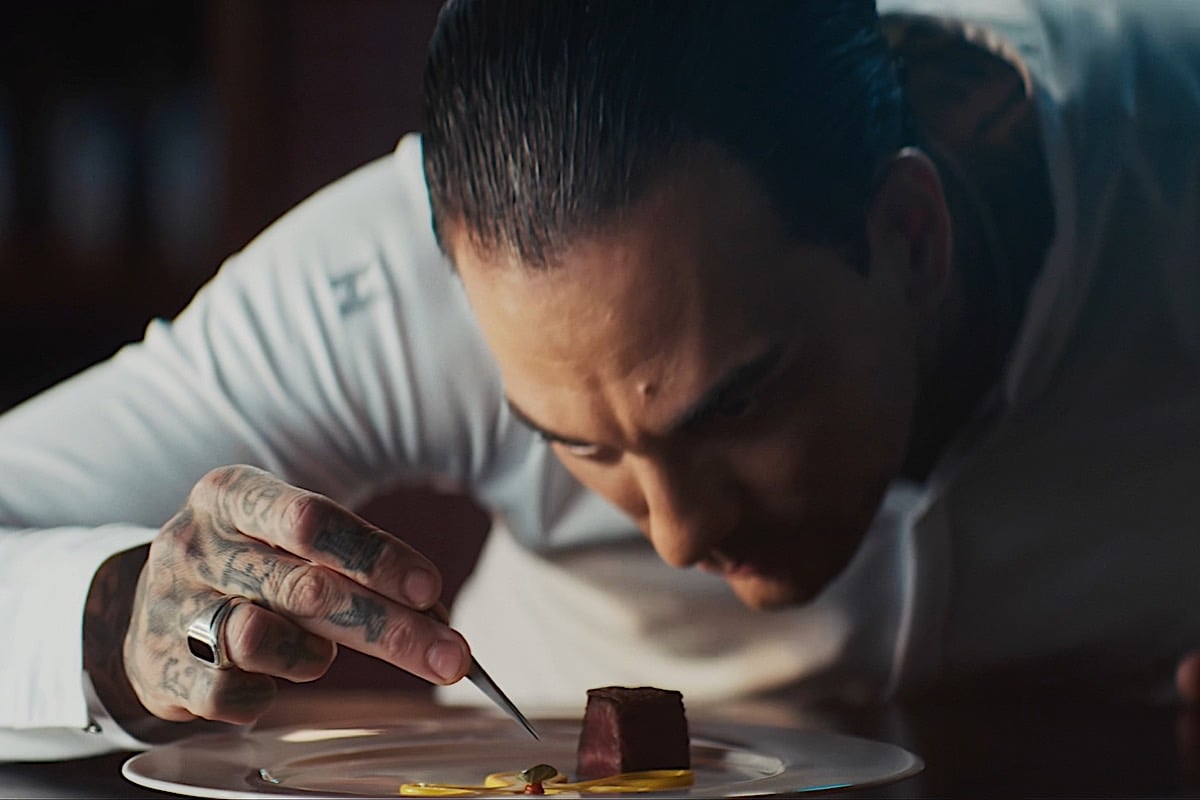
For Joseph Saady, otherwise known as Chef Jojo, food has always been about much more than what’s on the plate. Some of his earliest culinary memories are of cooking alongside his sitto (grandmother) in Detroit, where she taught him that feeding people was an expression of love, faith and family. That philosophy followed him from his family’s gas station café in California, where he started with a deep fryer and chicken and fries, to restaurants, molecular cuisine, and a career that has taken him around the world.
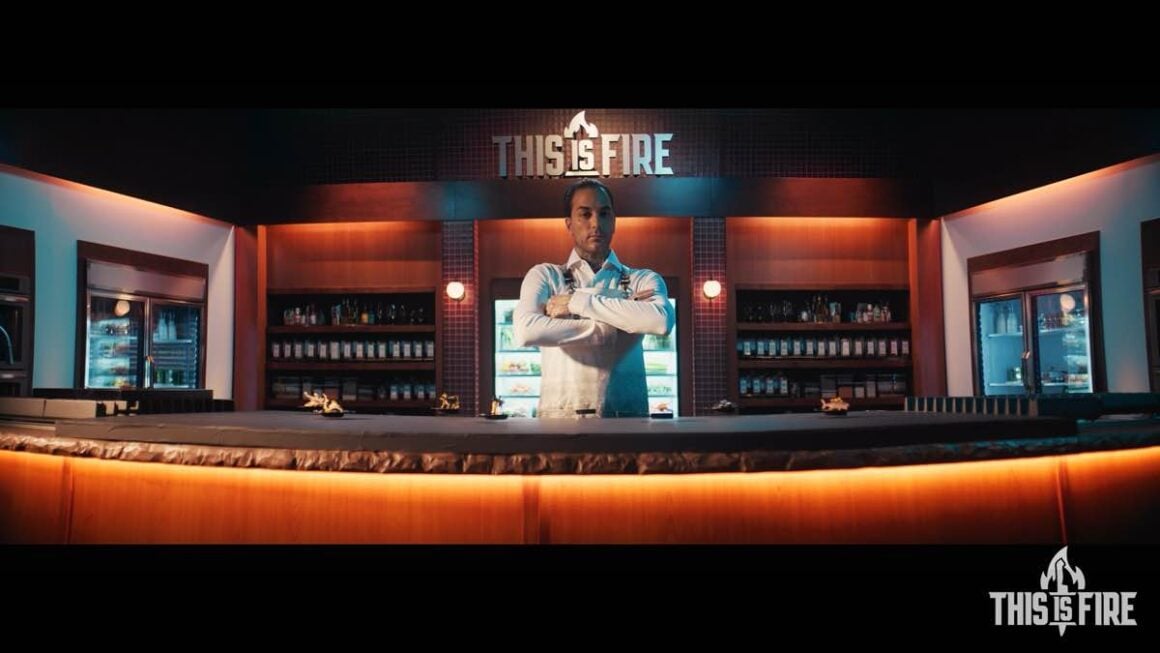
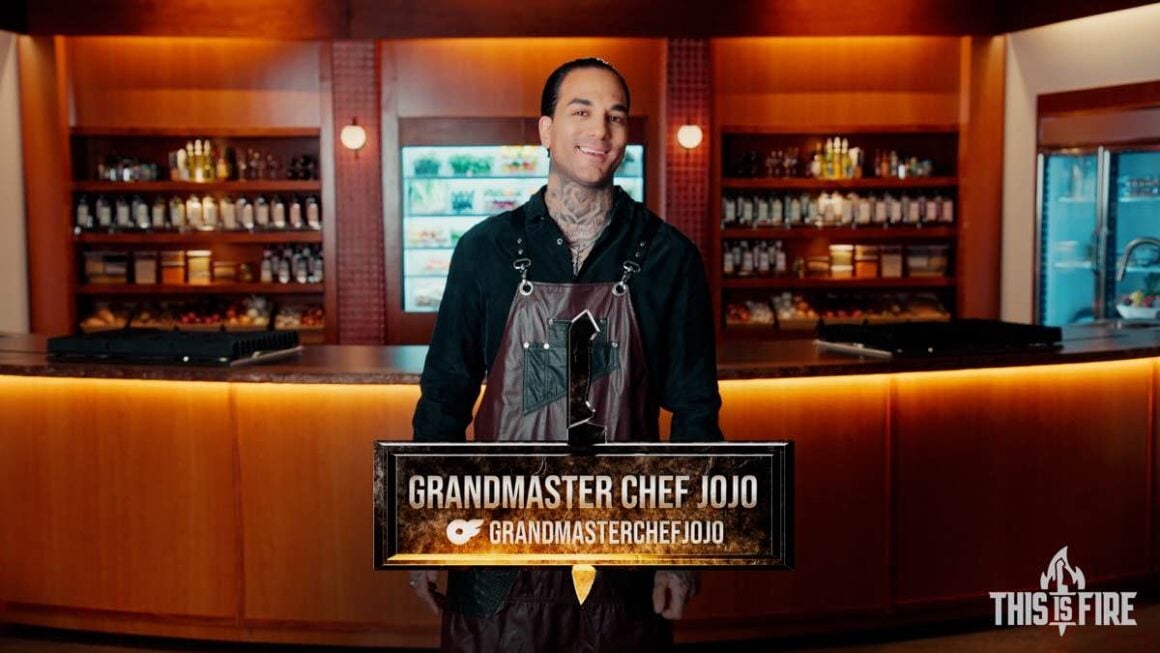
Today, that same spirit is at the heart of This Is Fire, the OFTV cooking competition where Chef Jojo mentors amateur chefs through intense culinary challenges while encouraging them to embrace failure, have fun, and discover what they’re capable of. For him, winning isn’t simply about the competition; it’s about giving contestants the confidence to cook, create, and bring people together around the dinner table.
With 10 seasons of This Is Fire under his belt, Chef Jojo talks about the lessons his sitto taught him, the science and patience behind his cooking, why he refuses to let competition overshadow compassion, some of the show’s most memorable culinary disasters, and his dream of eventually traveling the world to feed the people who need it most.
Some of your earliest memories of cooking are with your sitto in Detroit. What do you remember most about those early days in the kitchen with her?
Everything. It was the memories that hold me to constantly remember to put others first, and those memories are always making sure everyone in the family is taken care of, making sure that everybody is- how do I say it? Nourished – through just faith and food. And those are the memories, while she was cooking she was talking about how much she loved this ingredient, how much she loved making bread in the morning, how much she loved when she would give me garden shears and a basket to go get zucchini and tomatoes from the garden in the morning.
I know your family ran a gas station with a cafe, and that’s where you started your culinary journey. Did you always know you wanted to make cooking your career?
We’re from Detroit. We had bodegas but we were always cooking at home and doing things my family grew up doing, living in Syria. Roasting lamb, growing grapes, breaking down goats and those kinds of things. The bodega really just set it off for me because we started with a deep fryer and made French fries and fried chicken for all the workers on the farm on their lunch breaks…this all occurred in California. We started there and it felt so good to use the fryer. Later, we got a griddle top and then a pizza oven, and then we soon bought a cafe. There we were modernizing American food with Mediterranean flavors, making peanut butter burgers, club sandwiches and BLTs. Then we bought a steakhouse and it was all open fire cooking, and we really got to bring what we do every day at home.
American food was a treat for me. Mediterranean food is what we ate every day, all day, layering flavors with toasting, seasonings and stuff like that. But when I got to have American food, it really just blew my mind. I knew at a young age, when I was watching Emeril on TV, that I loved what he did. I knew that I was going to be able to combine everything in my world – I’m a skater, snowboarder, an extremist. I love low rider cars and I love doing extreme things. I just knew at a young age I was going to be able to incorporate all of these things and just be me.
What did you learn from those early jobs about cooking and about working in a family business?
What I learned in the early stages of just cooking was taking your time and being patient. Nothing was fast, nothing was easy. A simple tomato can be amazing. Do not throw away the seeds. Save the juices, the skin. We really saved everything. Patience and longevity were things that I learned at a very young age before working in the kitchens and being professionally trained and using what I was self-taught, which is what I learned from my family.
How did growing up in a family business shape the way that you approach food, hospitality and entrepreneurship today?
Growing up in the family business definitely taught me just that hard work pays off – and it doesn’t matter if you are educated, but it does help. If you have determination and a passion for something and it makes you happy, you’ve just got to work hard at it. That literally trickled down to what I do today. I get put in front of all these tech things and these AI things, and even going onto social media and all this stuff, it’s like I still am old school. I barely know how to use it all, but I know how to use my hands, and I know how to use my heart and the energy I want people to feel. And I just work hard. I still grab a broom, still wash some dishes, but still can cook a dish from scratch all the way up to a molecular dish that will change your perspective. It’s just hard work and dedication. It’s the work that I learned, that I watched my family do.
You alluded to it earlier and it was in your bio video about molecular cuisine. What is it about the science and experimentation of cooking that continues to interest you?
The development of it, the cleanness, the educational part as far as learning sugars and where we could take food and morphing it. Understanding that when certain seasons that come into play, you’re going to get different tastes from tomatoes, apples and grapes, the things I’ve been talking about. You’re going to have different perspectives on it as far as when you understand seasonal ingredients and what you could when the science comes in. Again, that’s patience. What I learned from the moleculars, it’s just pure patience. It’s never rushed food. It’s sometimes up to months of fermentation to get that one bite, to have that guest say, “Hey, I’ve never had this before.” So that’s why we do it.
How would you describe your culinary philosophy today, and how much of it can be traced back to your roots?
My culinary philosophy today is definitely do more for others. My brand is built off the concept of being selfless and not selfish, to never have an ego and have humility, to understand that the people around the world need to be fed at all levels. It doesn’t matter where you cooked, where you’ve been trained, as long as you are doing more for others and using the beautiful gift that has been given to you to understand food at whatever level, that’s the most important part.
What is one lesson about cooking that took you years to learn but you wish that you had understood when you first got started?
Oh, man. I’m still learning. I’m never not a student. Every day I’m still finding out new and better ways to break down a fish and understand that fish. I think fish butchery was definitely one of them. To understand and break down and understand how to use the bones and understand, from a stock to a broth and then also to create farces (a seasoned paste or purée of minced fish) and mousses with the scraps, and to utilize everything versus poultry and red meat and all those other animals that give their lives for us to eat. But fish is a very delicate, beautiful animal that we should not take for granted and be very soft with it. So, I would say fish for me, for sure.
How did This Is Fire come about and what made you want to take on a cooking competition format?
This is Fire came about from a beautiful, individual named Justin Schoenrock. He was doing some stuff for OFTV. It was the pandemic. He was doing some IRL work. He found me through the grapevine of some people he knew, and he came over to my house. Usually, they have to plan things and make it look like crazy good TV, but with me, he just was blown away. He asked me, “You cook like this every day? You go you go to the skate park with your kids every day? You work on your lowrider car every day? What’s going on?” It was too much dopamine for him to try to understand.
And the way I did my cooking segment for him, he was just like, “One of these days, man it’d be really cool to…have you ever thought about being a TV host?” I’d always thought about it, but my life was busy. I’m all over the country and world, flying all over with musicians and people that own massive companies and doing these Michelin star events around the world that I didn’t even know if I would ever be able to entertain that. But I was definitely interested because I’d thought about it as a child, and with OFTV and my belief system, I was never afraid to go anywhere. Wherever my Lord takes me, I’m right there. So, it happened to be with an amazing network that does so much for not just creators but gives you that creative freedom – and that was the main thing with me is as somebody who’s super creative, I wanted to create a relationship with an amazing company and a group of creative individuals, and OFTV gave me that opportunity to reach that entirely different audience who can watch it.
What’s cool about OFTV is that you can watch for free and there’s everything from cooking to comedy, fitness and music. It’s just everything. That’s pretty special. And they’ve trusted me – or trusted us as a group. It has evolved from 12 people, now it’s to 60 people – a full-blown production. From season one to season 10, it has changed so much, and it keeps evolving, and it’s not “How can we get bigger and bigger?” It’s not what we think at all. We really want everybody that comes on the show to win. I want them to feel something, that they could put their mind to anything, and that they are so loved and appreciated. And we love OFTV for allowing us to lead with that. We want nothing from them. We want everything for them. They’re great people.
Obviously, there are a lot of cooking competition shows on TV. What do you think makes This is Fire stand out from those other shows?
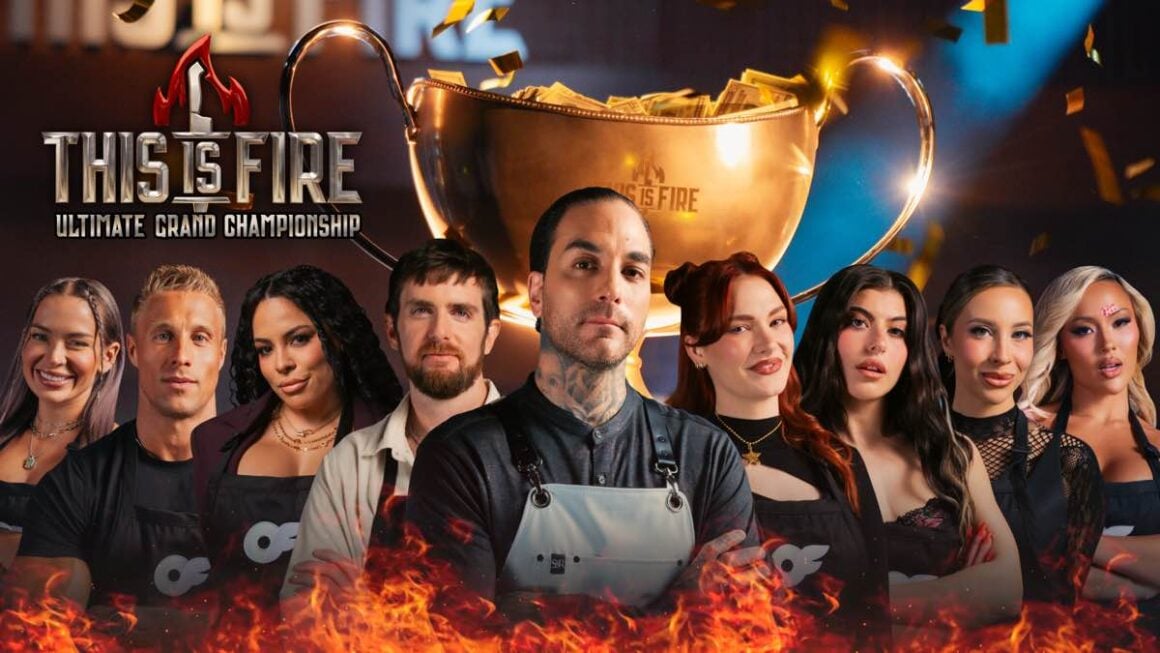
I really think the show stands out in its own dynamic because every season feels like a Super Bowl. It’s super intense and we spend months and months developing recipes and things that will allow [the contestants] to get hands-on and showcase themselves in a different way. I really feel that with a lot of cooking shows it’s very scripted, and this one’s not. It’s very non-scripted. I never know who’s going to win and people definitely get upset with that, they always think that I already know who’s going to win, but I don’t.
They don’t understand that someone can come in super confident and be crushing a dish, crushing their techniques, and then something could happen at the very end, and they just didn’t make it, versus somebody who looks all over the place, and I’m freaking out with them. I help them as much as I can as far as being the guidance that I can give on this 30-minute episode. I’m like, “Oh, I don’t know if they’re going to make it. They’re not listening. They’re not applying it.” And then all of a sudden they have the best dish and they move on and/or they win the entire season. It has blown my mind as far as what this show is. Everything is beautiful and cinematically shot. The contestants are raw. We are a very a chef-driven show. We are not like as far as, like I say, faking it to make it. We are culinary consultants by day. The production team is shooting things and winning Emmys by day and we’re all coming together to create something fun that the world has never seen before. That’s why I love This is Fire.
Unlike some other shows, your kitchen is competitive, but you also make a point of being supportive and mentoring these amateur chefs. Why is creating that kind of environment important to you?
Because I grew up with it, right? Being mentored by chefs, being mentored by my family, being mentored by friends. I’ll even put it this way – you know with your mom and dad, you’re like “Yeah, okay Dad, I hear you,” but then when your friend’s mom and dad says something you’re like, “Oh, I understand.” Like a mentor, right? That it when it finally clicks in your head and you apply it in life, that is the next step.
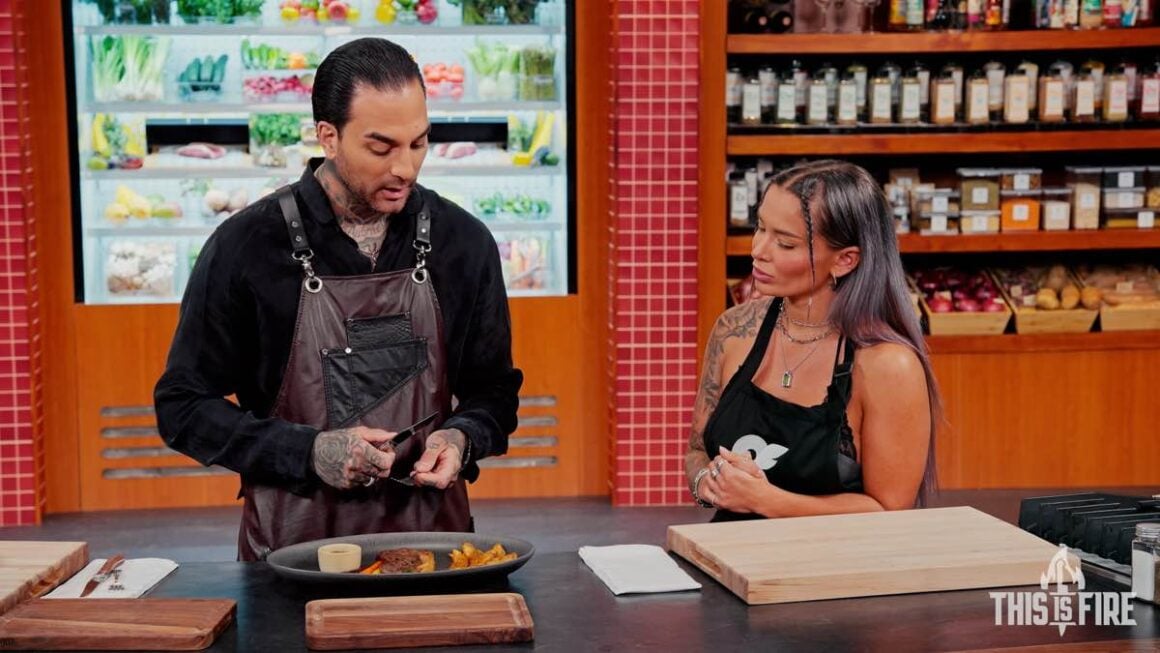
The formula that we created for the show was like, let’s lead them to be great and to cook at home, cook for their friends and invite people over, because I believe everything happens at the dinner table. It doesn’t matter what kind of day you had, what you’re going through. You never know what that individual’s going through, but that one bite of food and that love you put into it could really change your day, and that was the goal. Win or lose, you still won in our book because it’s not easy doing what they do.
Is there a moment from the show that has surprised you or stayed with you more than you expected?
There are so many. I can’t even… I definitely think season one was something I think about all the time. And now it’s been ten seasons in four years, and it’s like you hold all these memories. There are specific ones of people burning things and comedians on set like Adam22, that dude made me laugh so hard. I always laugh with the guys because they’re comedians.
The girls, they’re just, running around, having fun. They act like they don’t know what they’re doing, but they really do. They play the part really well. Women are extremely smart and they surprise themselves. Gal Ritchie and a bunch of other contestants, like Chef Melissa [Stratton] and Chef Luna [Star], were crying their eyes out when they won. And there are those moments of “I did it. I really did it.” When Girthmaster won, he was so proud. He couldn’t wait to tell his family. He couldn’t wait to tell his mom – and that right there is that’s what it’s for, to show that, “I can do anything.”
I had interviewed Nathan Webb way back in season one, and one of the things we talked about was Stevan’s Old Bay chicken Parmesan travesty. What is the most egregious culinary error you’ve seen on the show?
Raw chicken, raw foods…they’ll focus on the one thing that they’re not supposed to focus on the entire time, and they’ll end up just dropping the ball. Adam22 cutting his quesadilla on the pan with the Teflon. That was awesome. One time, I think it was season two, I was incorporating sous vide cooking and vacuum sealing and then how to strain a puree. I remember Chef Nikki Benz spent the whole time steaming this beautiful cauliflower and then I was guiding her on how to strain twice and chinois is what we call it. And she was pushing the spatula, the chinois, the sauce, and she was seriously almost there, but time was running out. She freaked out and just dumped it all on the plate – all the brine and everything. It still tasted good, but it wasn’t the smooth puree I was looking for. But I just remember that moment of oh my God, she’s understanding it, she’s listening. She’s about to literally take this technique home, and then she’s “No, I’m good.” It’s just little stuff like that.
What do you hope people will take away from watching This is Fire beyond simply learning how to cook?
As far as what I want people to take from it is don’t think that cooking is intimidating, don’t think that you can’t do it at home, don’t think that you can’t eat healthy at home, don’t think that you can’t go grab something and fail at it 100 times. You are destined for greatness. You were made to be great, and I really think cooking challenges the brain in ways that others don’t understand.
I’m really hoping that This is Fire challenges everybody that’s watching to cook at home. Hang out with your family. Call some friends over. Get off the phone for a little bit. Put the cooking show on TV and literally laugh. When me and my kids watch it, we laugh our asses off and they bet on who’s going to win – and that’s the fun part. We want people to smile through this. We don’t want anybody to think anything different because everybody is made to be amazing and we want people to feel amazing at home.
After everything you’ve accomplished personally, is there still a culinary challenge or a dream that you haven’t tackled yet?
Oh, yeah. So many. One of my friends and idols in this world is Chef José Andrés, and he’s a big inspiration in my life – watching him go around the world and speaking to all his chefs throughout the days and years and how they’re all ride or die with him. I just want to feed the world one day. I want to travel and feed the world that needs it, not the rich and famous all the time. I enjoy it. Don’t get me wrong. They love and trust me with a lot, but I would really love to get places and pay respects to that underdog, the people that are picking our food every single day and take care of them because they deserve it. That is my dream. Would I love to win a Michelin star? Absolutely. Would I love to get my James Beard? Absolutely. But I’m not driven through awards. I’m driven through experiences and memories and OFTV and Creative Dynamic and, Healthification Restaurant Group. They all have been able to believe in me to listen and achieve these beautiful menus and this beautiful show to help get further and further in achieving that goal. Let’s put it this way, I get surprised all the time.
Watch This is Fire on OFTV. Follow Chef Jojo on Instagram.