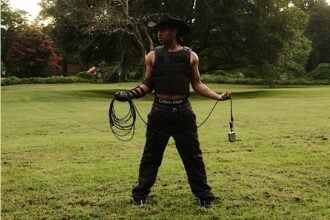

From becoming the first runner-up on American Idol to starring in seven Broadway productions and bringing the unforgettable Lil’ Sweet to life in Diet Dr Pepper commercials, Justin Guarini has spent much of his career in the spotlight. But his latest project is about helping others find the confidence to step into theirs.
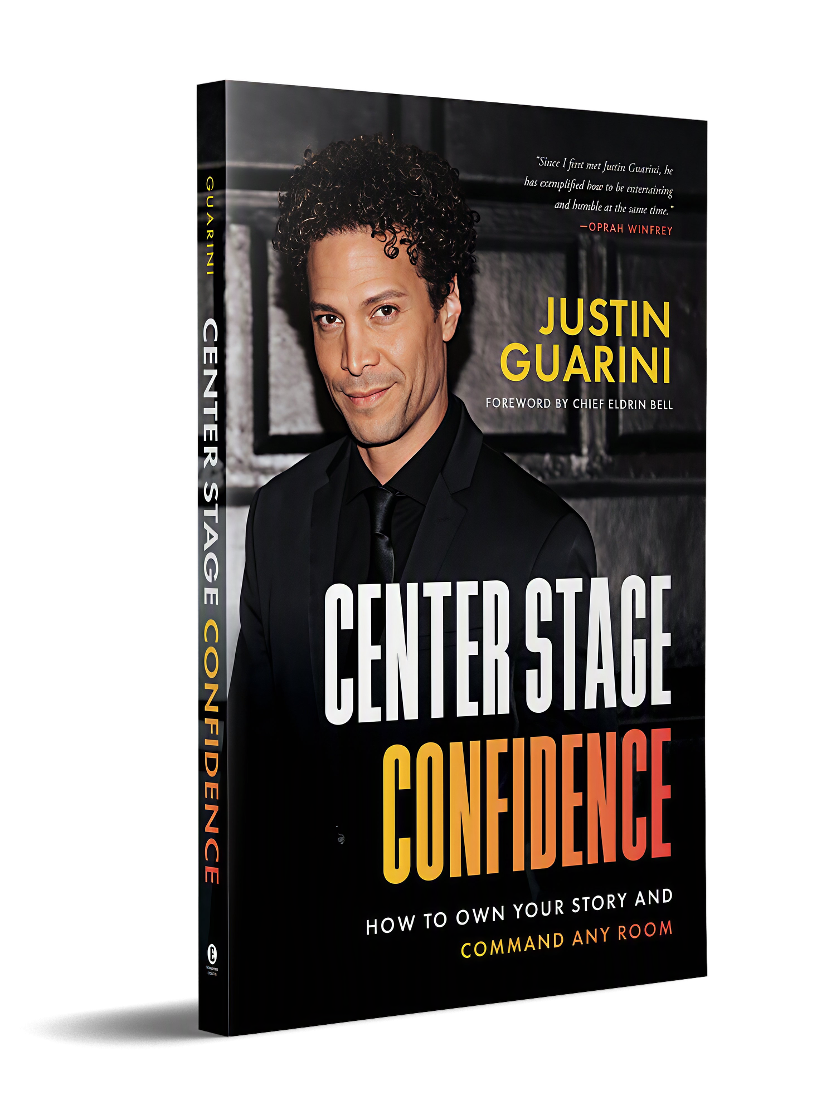
In his new book, Center Stage Confidence: How to Own your Story and Command Any Room, Justin draws on more than 25 years in entertainment, business and personal development to explore what it really means to believe in yourself. His message? Confidence isn’t something you’re born with, and it doesn’t mean never feeling afraid. It’s about trusting yourself enough to take the risk, embrace failure and keep moving forward, even when the spotlight feels a little too bright.
Through personal stories, practical exercises, and a four-part framework of awareness, acceptance, awakening, and action, Justin offers readers tools to own their stories, find their voices, and show up with greater confidence onstage, on camera, in the boardroom, and beyond. We caught up with Justin to talk about the lessons behind Center Stage Confidence, the unforgettable moments that shaped his own journey, and why sometimes the best thing you can do when everything goes wrong is simply say, “Yikes.”
You’ve made a name for yourself on American Idol, starred on Broadway, and now you’re building a career as a confidence coach. What inspired you to write Center Stage Confidence, and why did this feel like the right time to share what you’ve learned?
Over the 25 years of my career, I’ve discovered that fear and faith can exist at the same time. Some of my greatest successes have come when I’ve moved into that space where I’m nervous or afraid, but I also have faith in what I’m doing and in everything that got me there. I think everyone who has experienced success eventually reaches a crossroads. They have to decide whether to move forward and pursue what they really want or shrink back and accept what they’ve always had. This book is about navigating that space.
What’s interesting is that I wouldn’t necessarily consider myself a confidence coach. My business partner, Kim Walsh-Phillips, and I work with eight-, nine-, and even ten-figure founders, creating masterminds to help them reach the next level. We have clients who built Drybar and sold the company for $275 million. Yet, when we encourage them to share their experiences and guide others, they’ll ask, “Is anybody going to listen or care?” and I want to tear my hair out. These people have sold companies for hundreds of millions of dollars. They know what they’re doing but it shows that no matter how successful you become, there are still things that can get in the way of your confidence and prevent you from moving forward. That’s a big part of what this book addresses.
The title Center Stage Confidence suggests that confidence is something we can develop rather than something we’re simply born with. What does being confident actually mean to you?
Confidence is something people often misunderstand. It’s not something you’re either born with or you’re not. It’s a skill you can develop, just like riding a bike or tying your shoes.
The root word of confidence is “confide,” which means to trust. So, self-confidence is really about trusting yourself. It’s not about walking into a room and being dominant or arrogant. It’s about owning your story and commanding the room without diminishing anyone else.
One thing I tell the CEOs, entertainers and professionals I work with is that everything you desire is waiting just on the other side of your willingness to fail. I know failure is a dirty F-word that nobody wants to talk about, especially publicly. But when you learn to use fear and failure as allies rather than enemies, you begin to discover the kind of confidence you admire in people onstage, onscreen, and in the boardroom.
Your philosophy emphasizes showing up even when you’re not fearless. How do you learn to act despite the discomfort rather than waiting for the fear to disappear?
It’s not easy, but it’s simple. I once stood in front of 30 million people on live national television and completely messed up the lyrics to a well-known song. I had only a moment to figure out what I was going to do next. I could have made it obvious that I’d messed up, or I could have run offstage and blamed my highlights – of which I had very many at the time. Instead, I had to move forward, even though I was incredibly afraid and uncertain. We’ve all experienced those moments when we have no idea what to do or say or how we’re going to get ourselves out of a situation. But rather than running away, we can stay in that uncomfortable space.
In that moment, all my previous experiences came together: the rehearsals my parents took me to, the high school plays, the karaoke stages, and everything I’d done professionally. I figured it out. And I didn’t die. I didn’t get arrested. The sky didn’t crack open, and the world didn’t end.
That’s how you develop confidence. Confidence loves evidence. When you stay in an uncomfortable situation instead of running away, you prove to yourself that you can handle it. Over time, that creates the foundation you need to navigate even higher-stakes moments.

How can people become more comfortable taking risks when failure might affect their reputation, career, or financial future?
Preparation. Being prepared can mitigate most of the risk, although it can’t eliminate all of it. When you’re prepared for a meeting, presentation, or performance, you don’t have to spend so much time worrying about yourself. We often get in front of a group of people and think, “What are they going to think? What happens if I mess up?” But focusing on ourselves can make us miss the opportunities right in front of us.
Instead, put your mission first. Focus on your message, your product, your service, and the people you’re trying to reach. When you shift your attention toward serving your audience, something changes. There’s almost always someone in the room nodding or smiling, giving you a lifeline of positive feedback.
You can prepare as much as possible, but eventually you have to embrace the risk. You also have to be willing to play, have a good time, and adapt to whatever comes your way. Someone might go off-script, or a light might break in the middle of an interview. If you’re willing to play along, make a joke, and acknowledge what’s happening, you take the pressure out of the situation. Preparation gives you a foundation, and flexibility helps you handle the unexpected.
The book offers a framework for becoming more confident onstage, on camera, in meetings, and in other high-pressure moments. Can you walk me through its core elements?
It starts with awareness, recognizing where you are and what’s holding you back. Maybe there’s a voice in your head that appears every time you step onto a stage or walk into a room. That voice might belong to a parent, teacher, spouse, or even a stranger who said something to you years ago.
For me, it was a girl in elementary school. I walked into school one day feeling good about myself and looking well-dressed. She asked, “Why are you so cocky?” From that point on, I would shrink whenever I entered a room because I didn’t want anyone to think I was arrogant. I wasn’t trying to be better than anyone else. I was simply feeling good about myself.
The next step is acceptance. You recognize where you are and acknowledge that this is your starting point. Instead of asking, “Why did this happen to me?” ask, “Why did this happen for me? What can I learn from it?”
Then comes awakening. You start asking what’s possible if you face that fear and stop allowing an old experience or someone else’s words to hold you back. With very rare exceptions, if someone else has done something, you can do it, too.
Finally, there’s action. You have to move into that place of discomfort and do the thing that scares you. Each time you do, you build confidence, sometimes one brick at a time.
For people who freeze when a camera turns on or feel awkward speaking in front of a group, what advice can help them become more natural and compelling?
First, if you freeze onstage, don’t pretend it didn’t happen. One of the most powerful things you can do is acknowledge it without apologizing or minimizing yourself. Simply being onstage gives you a certain authority but when you start apologizing and making yourself smaller, you shift that dynamic. The audience suddenly feels like it needs to save you, and that’s not what you want. Instead, acknowledge what’s happening and let the audience become part of the experience. You can show your humanity without losing your presence.
I remember a wonderful example from my time in Romeo and Juliet on Broadway. Tony Award-winning actor Brent Carver was playing Friar Lawrence, opposite Orlando Bloom as Romeo. During a major monologue, Brent completely lost his place. He went back to the beginning and tried again. He reached the same point and forgot the lines a second time. He tried a third time, and it happened again. At that point, everyone in the audience was starting to realize something was going on. Rather than apologize or panic, Brent simply turned to the audience and said, “Yikes.”
Everybody lost their minds. They were clapping, cheering, and laughing. It became one of the most memorable moments of the entire run. The stage manager gave him his line, and the show went on. That’s a perfect example of how you can maintain your presence even when something goes wrong.
As for becoming more engaging, it comes back to owning your story. You and I could deliver the exact same monologue, but because nobody has experienced the world through our eyes, we would deliver it in completely different ways.
The best performers allow the material to come through their own experiences. When I’m playing a character like Sweeney Todd, I’ve never killed anyone, and I’ve certainly never been a barber. But I understand shame, anger, and victimization. I can connect those emotions to my own experiences.
The most engaging people allow themselves to be fully who they are, flaws and all. They understand that not everyone will like them, and that’s okay. The people who are willing to own their stories and bring their authentic selves into a room are the ones who truly connect with an audience.

What’s one misconception about confidence that you wish more people would let go of?
That you’re either born with it or you’re not. Confidence is a skill anyone can learn. There’s no special gene that some people have and others don’t. It’s about developing trust in yourself, understanding your story, and being willing to sit in situations that make you uncomfortable.
I think everyone in entertainment and business should take an improv class because it’s so revealing. The whole concept of “Yes, and…” teaches you to accept what’s happening and contribute something of your own.
So many people are afraid of that uncertainty. But when you’re willing to sit in that uncomfortable space and add something to the situation, you discover that you can handle it. You learn something, even if it’s what not to do next time.
There’s a story about Thomas Edison reportedly making 10,000 attempts before creating the light bulb. When a reporter asked how he withstood all those failures, Edison supposedly explained that he hadn’t failed 9,999 times; he’d discovered 9,999 ways not to make a light bulb.
That’s the mindset. Confidence is an entirely learnable skill, and I’m proud that Center Stage Confidence isn’t simply a memoir. It includes transformational exercises that help people uncover their stories, own the room, and develop the confidence and presence they deserve.
I’m an entertainment nerd, and I work in advertising, so I have to tell you how much I love Lil’ Sweet. It’s my absolute favorite ad campaign of all time.
Mine, too! Every year, I hope they’re going to bring it back. I even get in touch with my friend who’s one of the ad executives and ask, “Hey, so, you know…”
It was seven years, and the way you feel about it is exactly how the entire crew, from top to bottom, felt about it. We would get together every year, and the crew would tell us, “We wait all year for this commercial.”
We’d shoot the script, and then we’d just play. I think it’s a beautiful example of what’s possible in entertainment and business when you’re willing to play, stop putting pressure on yourself to be perfect, and move beyond doing things simply because that’s how everyone else does them.
The businesses and brands that are willing to play and leverage the stories, ideas, and unique perspectives of the people on their teams are often the ones that do the best. Lil’ Sweet was definitely a really fun example of that.
Center Stage Confidence: How to Own your Story and Command Any Room is now available at Amazon or wherever you buy your books. Follow Justin on Instagram, TikTok, Facebook and on his website.