Atlanta-based singer, songwriter, and producer Alto Moon (who you may remember from American Idol and his insanely catchy song “Lemonz”) is building a sound that’s equal parts nostalgic and next-generation. He calls it “Future Soul”, a sleek collision of Southern gospel, classic soul, R&B, pop, and futuristic production that reflects both where he comes from and where he’s headed. With influences ranging from Motown and James Brown to Charli XCX, Beyoncé, and Gaga, Alto isn’t interested in choosing between the past and the future. He’s bringing them together at light speed.
His latest album, godspeed., became a deeply personal exploration of growing up, letting go, and learning how to be comfortable with himself. Along the way, he teamed up with drag icon Bob the Drag Queen for “ride,” built a distinctive futuristic racing-inspired visual identity, and continued making his mark as a proud queer artist in Atlanta’s music scene.
Now, Alto is entering his next chapter with A Soufside Story, a new mixtape that brings together blues, soul, R&B, Atlanta hip-hop, HBCU marching bands, and the sounds of the South. In this conversation, Alto talks about finding his musical identity, embracing queer freedom, the magic of working with Bob, why queer music deserves to live beyond Pride Month, and his determination to make music that doesn’t just soundtrack a moment but becomes part of people’s lives.
You describe your music as future soul. What does that mean to you, and what makes a song feel like future soul?
Ah, that’s a good question. I think for a while there, I was just trying to find my sound for the longest time, as a lot of artists do. But I always kept coming back to soul-based stuff, so anything under the umbrella of Blues, R&B, classic soul stuff like, James Brown, ’60s, Motown, and anything in that world. But the future part came because I love production. I love really forward-thinking stuff, like your Charli XCX’s and things like that. I’m a child of the internet, so it’s fun to blend those two. I always try to make sure that songs have an element that gives me some nostalgia, which is the soul, and then a few things that make me feel like, “Okay, this is a little bit riskier.” And so that’s why I call it future soul
Your sound brings together so many different things like pop, R&B, electronica, and the influence of Southern gospel. How did those seemingly different worlds come together for you?
I don’t think I chose them. I think they chose me. I grew up with the sound of old Southern gospel and R&B in my household. I was in the iPod era and pop music was thriving. I was watching all the award shows, so your Gagas and Beyoncés of the world. I was just consuming pop and what pop culture was and really falling in love with that. I obviously wanted to use some of that influence in my music but then, as I’ve gotten older and became a producer and songwriter, I’m just influenced by the things that are happening in real time, so it just naturally became that way, but nothing ever left. Things just stuck and I added on.
There are echoes of other artists in your music like Usher, Sam Smith and Frank Ocean but your songwriting has a distinctly kind of cheeky personality. When did you realize you had found your own artistic voice?
In everyday life, I am definitely the comic relief of all my friends’ movies. I just don’t take things too seriously. I love a giggle. I just can’t sit in a serious situation for too long, and maybe that’s why I never thrived in the corporate world or anything. I would hear friends say things like, “I really that line you said,” and they think it’s funny, and I was like, “That’s just how I talk” and I started to double down and make sure that my personality is more shown in that. I love writing, but I also love for people to hear me speaking through my music voice and so I just enjoy including some of that cheekiness in my writing to keep people giggling just as they would if they were hanging out with me.
Along with the humor, you’ve got a sense of vulnerability too. How do you balance emotional honesty with the desire to make people want to dance?
My goal is always to find the most authentic version of myself. I think, growing up in the South, it is easy to shield your real self for the sake of keeping others comfortable. And as I’ve grown, I’ve just really wanted people to understand how I was so that I could find my people who related to me on a super deep level and I think the way that happens is finding the truest way I can say this in a musical way every time I write lyrics or sing. And so that’s been just a journey, and I think I’m constantly getting better at it, but it’s just a little practice all the time. I want people to understand me just by listening. It sounds a little corny, I just want people to feel like they at least get who I am by listening to my stuff.
What do you think makes a great pop song emotionally connect with people?
Ooh. I think it’s being able to say the thing that many are feeling. Whoever’s in your community, whoever listens to your music in your community, there’s a reason that they’re coming to you for it, and maybe this is not the perfect wording for this, but it was always told to me that the artist is like the drug and the listener is always coming to you for that specific drug. And let’s just say that drug is dance. If you feel like dancing, you know who you’re listening to when you’re in that mood, right? And so, finding a way to continue to supply that for the people who are coming to you for your music and being like, “I know that you’re coming for me to say the thing that you’re too scared to tell your parents,” or, “I know that you’re coming to listen to me to cry today.” It’s figuring out what it is that the people who come to you for your music want you to say because they are too afraid to say it themselves.
You’ve got an album out called godspeed. and it feels like a statement about moving forward on your own terms. What did making that album teach you about yourself?
That’s so funny because that is what the album was about, but little did I know I was ahead of myself. So many things changed the months following that album release like some loss in my life, some changes in friendships and relationships, but mostly age. I just hit 30, the big 3-0. I could feel the end of my 20s and the end of what just felt like a chapter in my life, and I couldn’t really put my finger on it, so I tried through music. And in the closing song, “one in a million”, I started to notice everywhere I looked around, at the end of the day, I was like, “It’s just me.” I used to end the night with clubbing and partying and always have people around, but there were so many nights where I looked around and I was just alone. And I was like, “Oh, man.” It is really up to me not just to make my dreams come true but to be happy, so I have to learn what it’s like to just love being with me. And that’s where that album led. It starts with the partying and constantly trying to satisfy people around me to just being like, “Who am I when it’s just me?”
The album weaves together a lot of different themes, like you said, reinvention and vulnerability. Were those themes intentional from the beginning, or did they reveal themselves as you went through the process of putting the album together?
I think the album built itself. I’m not really someone who goes, “I’m going to make this song.” I just start and put myself in a creative environment and the song comes out. And then when I started to curate songs that I was making, I write a lot. Out of maybe 50 songs in this time period that I’d written, these were the 10 that felt the most honest about where I was and reflected the way my life was feeling and the story that I wanted to tell at the time, they just, they came to me.
One of my favorite songs that you’ve done recently is “ride”, and Bob the Drag Queen is featured on it. is involved. How did Bob end up working with you, and what was your reaction when the collaboration came together?
Oh, that was actually super crazy. I’d written the original version of “ride” and there’s a line that uses his name, and I thought it was a silly line. And I thought, “It would just be so funny if Bob was on this.” I had worked previously with Jujubee and Peppermint with their show, and I knew the label who also knew Bob. So, it was one message to this person, to another, and I knew that Bob was aware of me because he was in attendance for the Peppermint show and had liked one or two things on social media prior. I thought, “If I can just find Bob’s contact through various channels and a lot of luck…and through a lot of really awesome resources, I got Bob to sit down for two hours.
He’s an amazing freestyler and rapper, so he just freestyled it and came up with an incredible verse, I think two. We just made sure to make it as magical as possible. And then it just so happened that we were booked for the same Pride that year. It was my first time playing Atlanta Pride, and Bob was headlining. I think I did the same thing, I bothered someone’s manager, to another manager, to a club bouncer to ask, “Can I just see Bob tonight?” And it happened to be the night before the song came out. So, we got to meet, hang out, talk about it. Little did Bob know all of this trouble I was going through to actually connect and hang out. But it just really ended up being, like, a bunch of magical things happening and getting to share that moment. And yeah, it’s just so awesome to have him be a part of my discography forever. I am just so inspired by Bob. Drag in general, but Bob is absolutely one of the premier drag queens that influences my art, and the magic came through on the song.
You’ve described yourself as a proud queer voice in pop. How does your queerness influence your songwriting and performance?
I would say that’s been a journey of learning how to feel brave enough to say the things that I want as a queer artist. I would say it’s influenced it in the communities I’m around. Again, as we’ve talked about, saying the thing that some of us are too afraid to say at times. But I think I am an activist in my everyday life but I also strive to just bring a little bit of joy. I don’t want all of my music to be so serious and be like, “This song is going to change the world.” Sometimes I just want my song to provide a little laughter for my community. I want people to look at me and think, “he’s pretty damn cool. I wasn’t really expecting to like this.” And maybe people wouldn’t initially brand it as queer music. But I think once people listen and they realize how it’s written and the stories I’m sharing and know that I’m trying my best to show a really cool side of what queer art looks like and what queer music sounds like.
What does queer freedom mean to you as an artist?
I think what queer freedom looks like to me as an artist is banning self-doubt, and I actually have this on a sticky note on my mirror. It’s bravery, authenticity, and nerves. So being brave enough to share being authentic because there is only one me, and people actually relate to you more when you’re being the most you can be. And just having the nerve to stand up on a stage, in the studio when sharing your art and being out in public and standing on your art. To show up all the time and just be like, “Here I am. I’m a queer artist. This is what it looks like, this is what it sounds like.” And that’s just what it is.
Pop music itself has become increasingly open to queer perspectives, like, but it’s still, there’s still a long way to go. What do you think the industry gets right and where do you think it could still get it wrong?
Right now, it still seems as though queerness can be worn a lot as like a costume in pop music. Right now, when you hear about queer music, it’s usually talked about through cisgender or sometimes straight white females in pop music, and pop being limited to one type of appearance or aesthetic. And it’s not always coming directly from the source. I do think there’s been a lot of strides in queer media both in movies and TV shows, obviously Drag Race‘s popularity constantly increasing for people to see the source of a lot of queer art. But I think it’s going to be both the job of queer artists and those in positions of power to actually look at the ground level of queer art and give it more opportunities, chances, funding, the same way we do with our already established allies who are in label systems where a lot of money is already happening. But I think it’s an inevitable thing. I can see people starting to turn their heads to queer artists and give them more of a chance, and I think it’s just going to be not only everyone being more open-minded to it, but the artists themselves to make great undeniable art that gets shared and gets out in front of people to the point where they go, “No, I get it.”
Turning to aesthetics, you’ve got this futuristic racing gear look now. How important is fashion and visual storytelling to your identity?
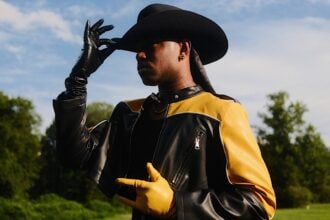
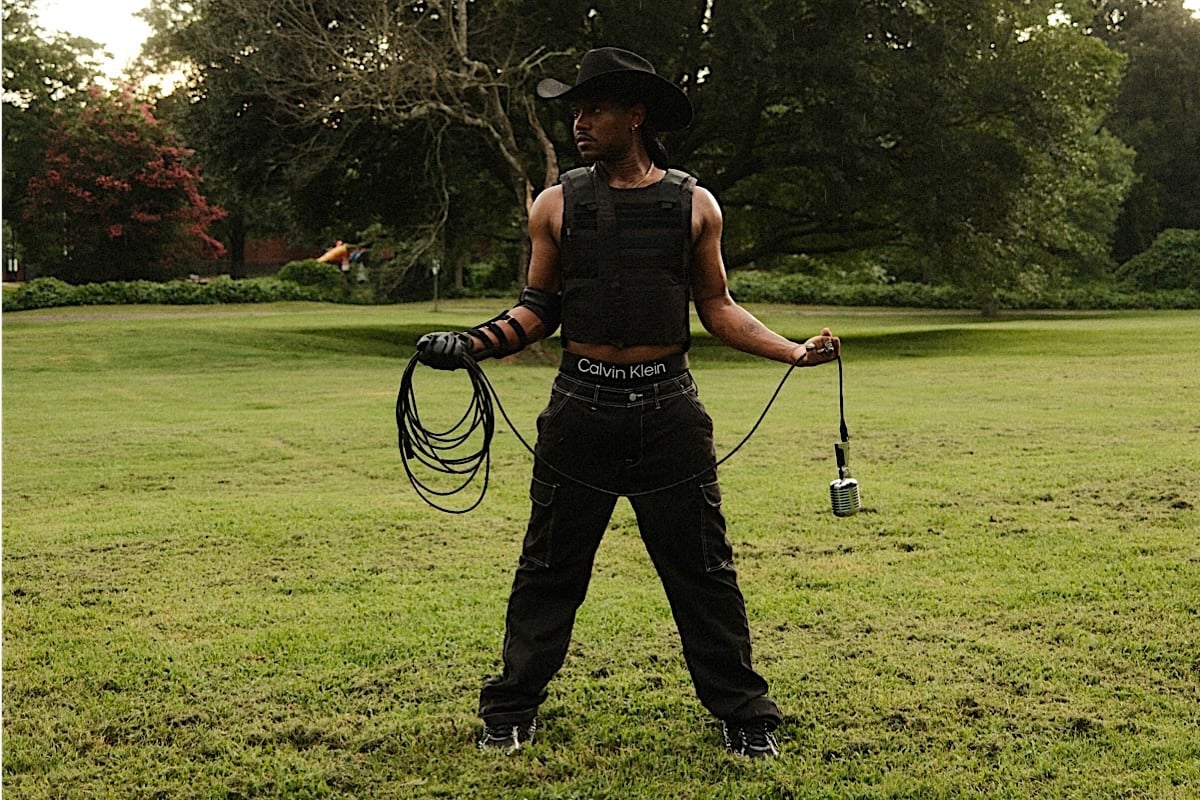
I would say it’s increasingly more and more important. As you can see right now, I’ve got my hat on and right now I am really focusing on telling the story of being queer in the South. And there are a lot of iconic things that you wear that scream South such as what’s on my head right now. I want people before they even hear me to have a tiny bit of understanding of what it is that I’m trying to say – and I learned that through drag both kings and queens. And just people in everyday life, when you see them, I’m like, “I kinda get this person.” I think aesthetics are really important to speak before I do and it’s something I’m really wanting to right now. It’s very DIY. I’m doing it all myself, trying to find whatever it is that speaks to me. But hopefully, in the future, I can bring some ideas to life with incredible designers and people who work in that world who can help see my vision and bring it to life. But for now, that’s my job and I really enjoy giving it a shot.
What’s one fashion or visual idea that you’ve been dying to try but haven’t gotten to yet?
Ooh, a fashion or visual idea I’ve been dying to try. Right now I’m flirting with the iconic durag, but I want it floor-length. I want it to be trailing behind me – like a trail of fire.
As an independent artist, you’ve already accomplished a lot. You were on American Idol, Lionel Richie was very excited about “Lemonz” – which he should be – but what has been like the most surreal career moment you’ve experienced so far?
On my vision board the year I was doing Idol I always dreamed of working with MTV, and I grew up on it. It was the channel that inspired me as an artist. I wanted to make music videos and I just put it on this vision board. I’ve always been a skeptic about stuff like that. But this one time I did, and it was like January the year after I did Idol and I just got an email that was like, “Hey, we’ve came across your work and we want to work with you on this small miniseries.” And I was reading the email. I was like, “Who is this from?” And it was just like MTV. And I was like, “I think I’m being trolled because my Idol appearance hadn’t even been released or made public at this time. I was like, “How could you have found me? Who is this?” I think I was so just shocked by it all that as it happened and I got to participate in a series where I like sang and did a, a cover of a song I never even asked. I was like, “Where did you guys find me?” It all just happened so quickly. They treated me with such kindness. They took care of me. They understood me. And it was just one of the proudest moments of my career. And yeah, I just, every… To this day I’m like, “That was strange.” I don’t know how that happened.
Are you working towards a new era beyond godspeed? Is there anything you can tease?
Yes. I’m actually working on a mixtape right now. And if you see on my socials, it’s called “A Soufside Story”. I’ve always grown up in the South, and mixtapes were really important in the genres of hip hop and even with some pop artists. I’ve always loved how artists who made mixtapes were, because they were just about telling their story with no corporation or label involved, and because I’m independent, I have all this freedom.
I wanted to tell my story so that if you did come across me, you’d know exactly who I am, or this is something that I can point to people and say, “This is my story.” It’s including a lot of the genres I mentioned previously, like blues, soul, R&B…some people might even consider it country. But just some very historically Black genres mixed with some of my favorite sounds of the South, like Atlanta hip hop, HBCU marching bands and some huge beats. I’ve been producing a ton of it. I’m in the midst of recording it. I’ve already released a few singles from it, and it seems to be getting a pretty decent reaction online, so we’ll see what happens. I’m trying to stay focused and just make sure that I’m telling my story with as much authenticity as I can, but it’s Black, it’s queer, it’s Southern, and I’m just so excited to do something that feels like a culmination of my journey so far.
Five years from now, what do you hope people say that Alto Moon helped changed about pop music?
Five years from now, I would hope that I gave people a chance to take queer artists seriously – not that they don’t, but I want people to no longer look at queer music as exclusive to just being campy and just something you turn to when it’s Pride Month, but music that you genuinely connect with all year round, and music that they have on a playlist next to their favorite pop star or next to their favorite artist that they’ve grown up with.
I want the music to be timeless. I want it to be able to last longer than a summer. I’m not here to try to get the song of the summer, I’m here to get songs that are a part of people’s lives, and when they look back at good times, they’re like, “Oh, I remember listening to Alto Moon with my friends in the car,” or, “My first time, at a club.” I want my songs to be a part of their story and influence them. If they’re an artist or a creative person or just someone who loves music, I want it to influence their lives in a positive way – which maybe sounds pretty ambitious for just the small artist that I am, but I plan to grow. I don’t plan to be small forever. Let’s see what happens in five years.
Follow Alto Moon on Spotify, Instagram, TikTok, Facebook and YouTube. You can also visit his website.