When Revry co-founder and CEO Damian Pelliccione first hit the streets of San Francisco in 2016 to hand out flyers for a new LGBTQ+ streaming service, the goal was simple: provide a home for queer stories that the mainstream media had long overlooked. Ten years later, that “bootstrap” mission has evolved into a global powerhouse.
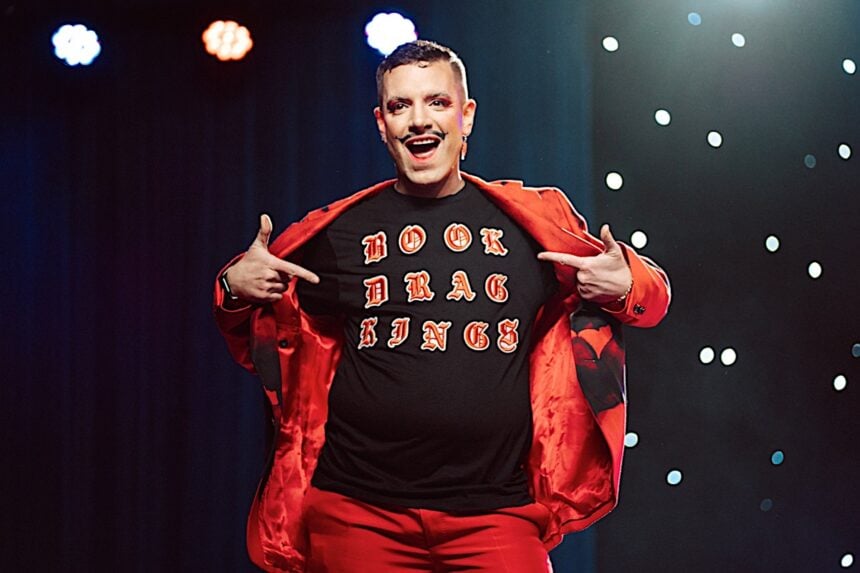
Revry recently announced the second season of its breakout hit reality competition, King of Drag. Following a debut season that garnered over 32 million views and 3.8 billion press impressions, the series has proven that the world isn’t just ready for drag kings—it’s ravenous for them. With e.l.f. Cosmetics returning as a presenting sponsor and casting currently open through March 13 (apply here), the show is set to return this fall to further its mission of centering “Queer Joy.”
Following the successful debut of its inaugural season, King of Drag continues its mission to spotlight the overlooked artistry and cultural impact of drag kings from the lesbian, trans masc, nonbinary, and queer communities through performance challenges ranging from clown comedy to horror. This celebration of masculinity and storytelling saw King Molasses emerge as the first-season winner, earning the crown and a spot in the 2025 Out100 for his undeniable presence and comedic instincts. The series has quickly become a global phenomenon, amassing over 32 million views, 30 million social media impressions, and 3.8 billion press impressions while sparking more than 200 international watch parties in cities from Paris to Taipei. Now cemented as a defining force in queer entertainment, the show enters its next chapter with two 2026 Queerty Awards nominations, further proving that its unique brand of queer joy has a massive, global resonance.
In our exclusive interview, Damian discusses the “aha” moment in Germany that led to Revry’s creation, the massive $1.7 trillion economic power of the LGBTQ+ community, and why parodying masculinity is the cultural reset the world needs right now.

How would you describe Revry to someone who had not heard of it before?
Revry is basically the world’s largest LGBTQ free streaming app. We are the hub for all things, movies, series and specials, where you can find it completely free on any device you stream with any connected TV that you have in your home, um, and the great thing is, there’s 00, barrier to entry. You know, how we monetize is you have to watch ads, but you know, you can just turn us on and start watching.

How did you get involved with Revry?
I’m the CEO and one of the four fabulous co-founders. As I always like to say, I was the one that actually conceived of the concept for the network. It was 2015 and I was doing B2B development for a streaming technology company out of, of all places, Cologne, Germany. I was based here in Los Angeles but I would be back and forth between Europe and LA a lot.
I was in Cologne, prepping for IBC, the International Broadcasting Convention, which happens in Amsterdam in the fall. I don’t speak German and I was trying to find things to watch on TV. I found myself flipping through my laptop instead. I’ve always been a self-proclaimed Applephile. I love the keynotes, and I have to have every new toy the moment it drops. At the time, Apple was announcing the fourth generation of Apple TV. They were talking about creating an open-source operating system called tvOS, based on the iPhone’s iOS. That was my “aha” moment.
I realized this was the beginning of a new era of applications built for the “lean back” experience—entertainment designed for the television in your living room rather than the phone in your hand. That’s when the big idea hit. I wanted to create the world’s first LGBTQ streaming network.
We started our consumer launch at San Francisco Pride in 2016 so it took about six months for us to build it, populate the app with content, and then come up with a bootstrap marketing plan. We printed a bunch of t-shirts with QR codes and we drove up to San Francisco Pride from LA, handed out 2,000 flyers and walked around talking to people. I remember specifically in San Francisco, everyone hangs out in Dolores Park on the Saturday before the march on Sunday. And so, we were there that Saturday, and people were like, “What street marketing team do you work for?” And I’m like, “Oh, no. I’m the CEO and the CMO is over there and the CFO is over there,” and it was just kind of funny, because they couldn’t believe that we were marketing our own product, walking around and demoing it and showing people in the park. I love that origin story because that passion continued to where we are today, 10 years later.
Let’s talk about King of Drag. The first season of show proved that there’s a massive global appetite for drag kings, especially since they’re not as represented on other programming. What surprised you the most about the show’s reception?
As the creator, judge, and executive producer of King of Drag, I spent three years developing this project prior to our launch last year. At Revry, our business model is unique, because unlike other networks, our shows are often underwritten by advertisers. This meant a large part of my job was simply getting advertisers to understand what a drag king is.
Believe it or not, I still have to explain the concept in everyday life. Just today at the doctor’s office, someone asked, “A drag king… is that like a woman dressing up as a guy?” I told them, “Bingo!” It isn’t a difficult concept to grasp, but there is still a significant barrier to mainstream understanding and, because of that, and for three years of trying to just describe what a drag king is, I thought the world wouldn’t get it, but I was so thankful that I was wrong and that the world does get it.
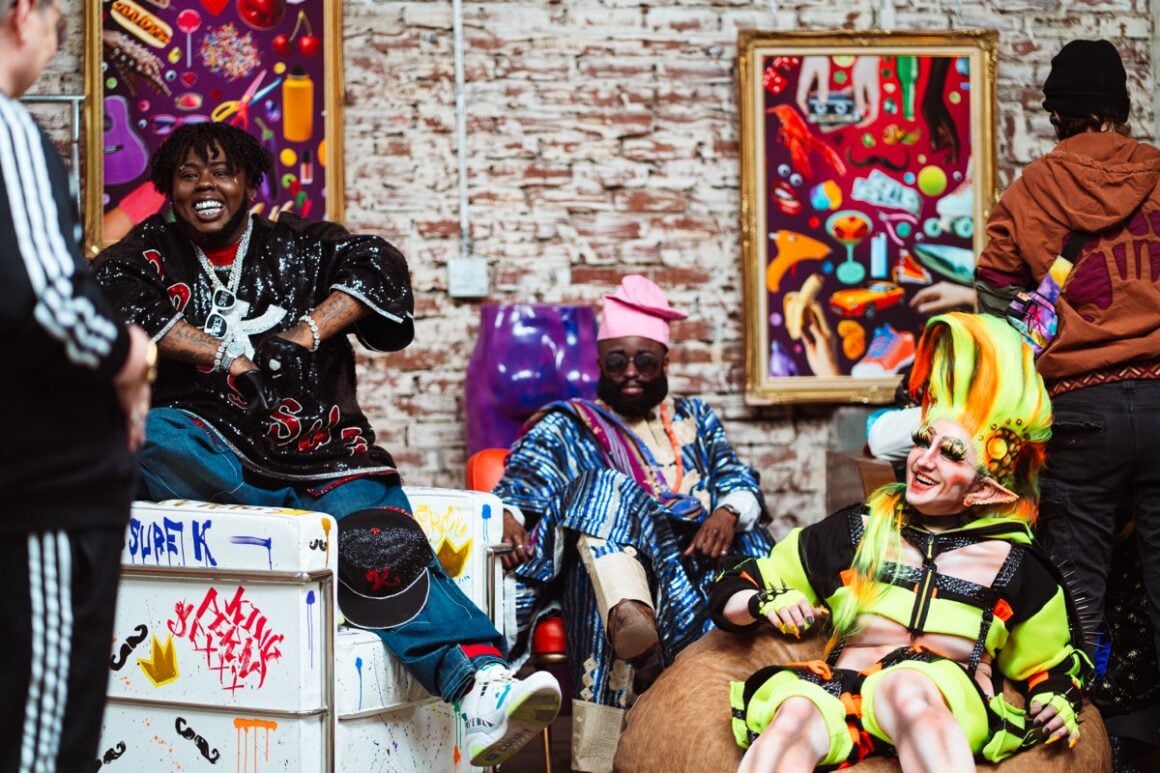
And 36 million impressions later, and over 200 watch parties globally – and we were only responsible for two – we created a new cultural phenomenon for a very underserved, massive community of drag artistry that actually has existed for a very long time. I mean, Moby Dick, one of our consulting producers from season one, is a self-proclaimed drag historian. We’ll talk about how far back drag kingery goes, and so it’s so crazy to me that drag kings have just not had that same opportunity to have a platform through media and through television specifically. It was a very obvious, easy concept for us to get into at Revry, to want to really hone in and focus on and start to develop into the show that you see today.
We’re really excited about just how global and how big and how ravenous this audience is – and this audience transcends gender. It transcends sexual orientation. You know, there are more allies that watch King of Drag than there are queer people, very much like any other mainstream show, like a Heated Rivalry or a Drag Race. What makes them so popular is not that it’s made necessarily for the community, it’s for the world to understand our culture. And I always say queer is a culture. It’s a very new culture, and we need media to help drive our culture forward.
You mentioned the impressions that you had gotten and the watch parties, what does that level of engagement tell you about where drag kings and queer storytelling like, more broadly fit in today’s entertainment landscape?
The engagement we’re seeing on King of Drag and on other topical shows like Heated Rivalry tells us there is a hungry audience for this content. Regardless of how you identify sexually, gender-wise, or even politically, good entertainment is good entertainment. Great storytelling transcends specific audiences.
One of the biggest things we fight for is the ability to “take up space.” We want to prove to major studios and networks that there is a massive, viable market that wants these stories told. Revry may not be a major studio yet, but we are well on our way to proving that the demand is there.
I love stats and figures because they tell a story that’s hard to ignore. In the United States, the LGBTQ+ community is the third largest consumer group in terms of disposable income, trailing only behind White and Hispanic consumers and ahead of Black and AAPI groups. We spend an average of $1.7 trillion in disposable income. That should be a massive signal to any advertiser, studio, or streamer. This is a “gray space”, an untapped opportunity to gain a loyal audience by creating products and stories specifically for that third-largest consumer group.
This is a point I always emphasize on panels: for too long, the queer community has only been seen as a “charity.” Organizations like GLAAD, The Trevor Project, and various gay and lesbian centers are vital because they fulfill definite needs in our community. But I am tired of our community being approached only as a charitable cause.
I am not your charity; we are a viable consumer group. We have a strong heritage, a rich history, and a vibrant culture. That culture offers business opportunities that go far beyond what the industry has seen in the past. Smart businesses are only just scratching the surface of what it means to engage with us. It’s about meeting people where they are and aligning with creators and networks like Revry that truly understand the culture.
As far as King of Drag, how did the fan response to season one influence how you’re approaching the new season?
Well, we did surveys with our fans. We had little QR code surveys that we put up with no incentive. We just asked hey, want to see a season two? Scan this QR code and answer a few questions. We collected a lot of data on what people wanted to see, more of what challenges they liked – really basic information. I love the creative responses but we also had so much commentary and social chatter and direct messaging through our channels – and even today, when we had the announcement about season two in Variety, I’m getting emails from drag kings that I know and drag kings I don’t know from all across the country and the globe. I’m getting excited about this next season and these kings offering their concepts and their ideas. Look, at the end of the day, we want to elevate our ability to story tell. We want to elevate the challenges. We are elevating our guest judges. We have a lot of things that we learned in making season one that we’re going to be able to be better at with season two and I’m really excited about some of the announcements that we’re going to have coming up very soon.
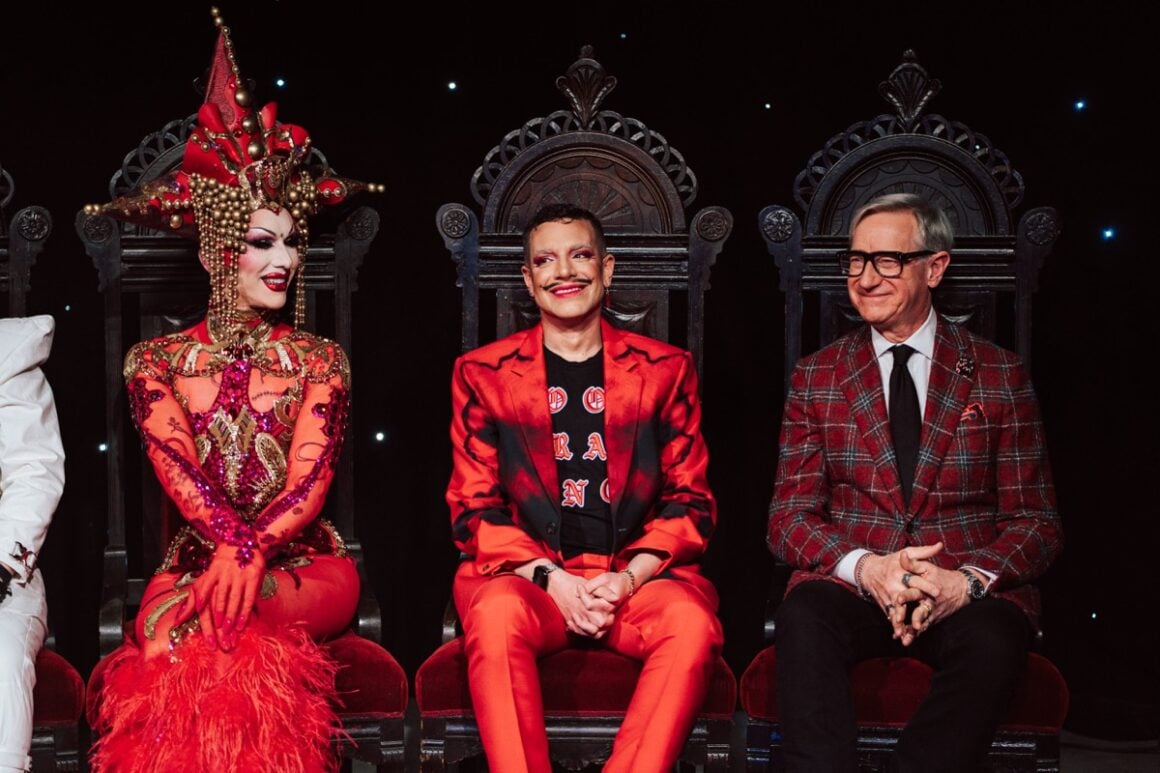
As a judge on the competition, what qualities or evolutions are you most excited to see from season two contestants?
It’s funny. I was just asked this question another interview yesterday and I’m going to be a broken record here. As a judge, what excites me most about Season Two is the opportunity for these artists to truly own their “lane.” We wouldn’t be where we are today without the path blazed by Drag Race or Dragula, but we are currently in that “early era” of the show—similar to the first seasons of Top Chef, Project Runway or American Idol. This is the moment where drag kings can define their brand and claim a space that has never existed before.
A perfect example from season one is Henlo Bullfrog. Henlo isn’t your typical drag king; what they do is incredibly conceptual and next-level. Watching them is like watching a Basquiat or an Andy Warhol piece come to life.
Even though they are already a sought-after costumer and makeup artist for major Hollywood productions and other queens, they stayed true to their specific art form during the competition. Seeing them succeed made my heart sing because it proved that high-concept artistry has a massive audience.
If I could offer two pieces of advice for anyone thinking about applying for the next season, they would be to find your lane. What is your specific voice? What makes you different and exciting? Lean into your authenticity. You have a chance to create a space for a type of artistry that the world hasn’t seen yet.
Also, this not a side hustle; it is a career. We built this platform to launch and further professional trajectories. Only apply if you are serious about making your life’s work about being a drag king. Use this stage to turn your passion into your primary job.
The challenges highlight how expansive that drag king performing can be. Can you give us a teaser as to how the creative scope or ambition will evolve this season?
We’re still working on the challenges, so I don’t even know what they all are yet. I will say that there’s obviously a few returning challenges. I’m sure you can guess which one that we’re really trying to brand for the show. It’s really fun and exciting and I think the kings did really great with that. The Dong Show is definitely coming back this season but I can’t answer that yet, because we’re literally deep in development on what the challenges are going to look like for this year.
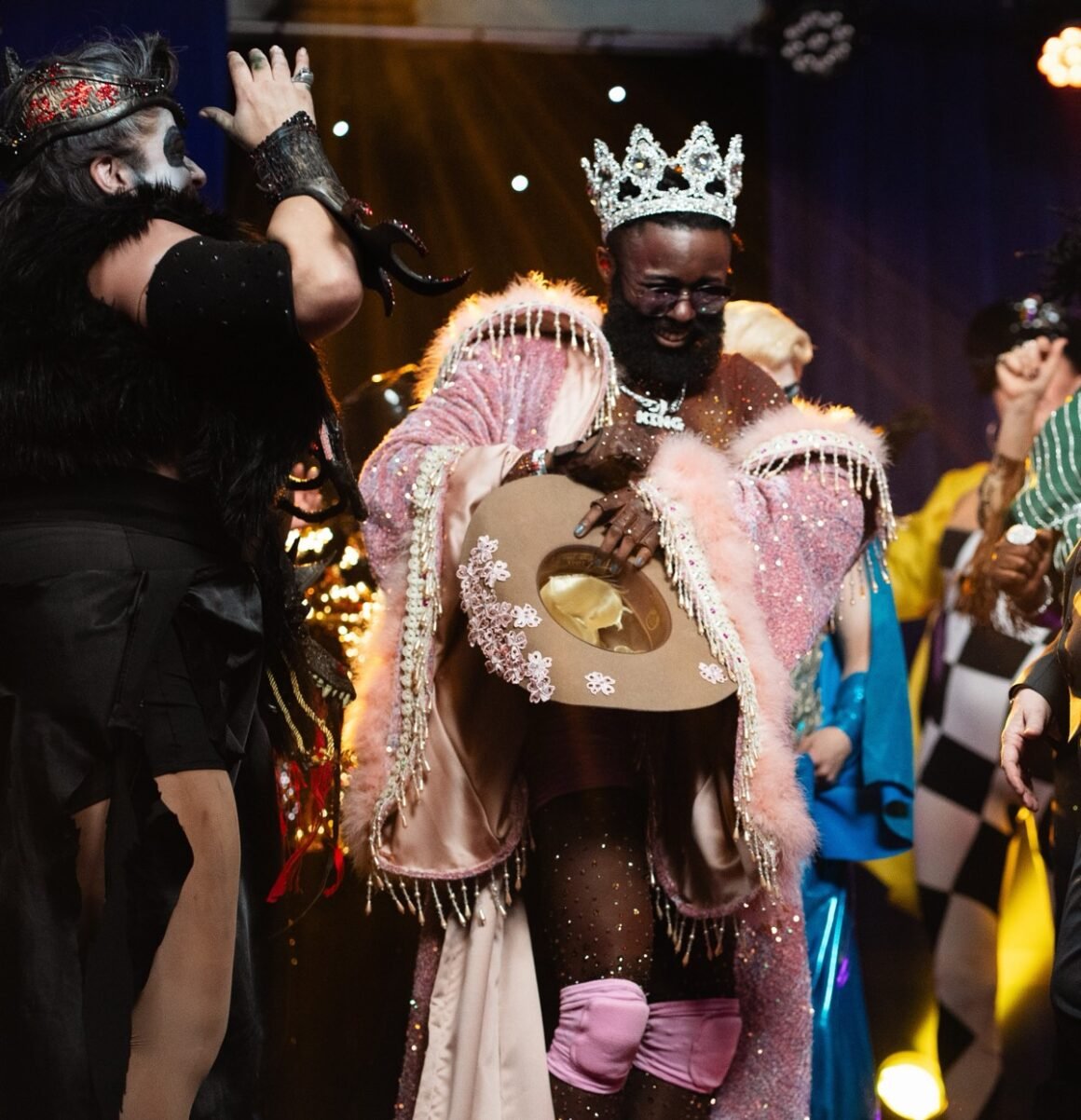
Drag kings have long been overlooked, as we mentioned. Why does it now feel like the right moment for a show like this to exist?
I love this question. What better time in history to be parodying masculinity? That’s what being a drag king is. It’s a parody of masculinity. With everything going on politically in this world, with just where we are in the evolution of humankind, there is not a better time. I could not have picked a better time in history – her-story – to have a show like King of Drag exist and to poke fun and parody masculinity. I mean, there’s just so much there.
If season one was about proving drag kings deserve the spotlight, how would you define the mission of season two in one sentence?
The mission of season two is that kings are here to stay.
What do you hope audiences around the world will feel when they watch the season two premiere?
Queer joy. It’s in our mission statement, but everything we do comes from a place of queer joy – whether you’re a contestant on the show, whether you’re holding a camera shooting one of our shows, a producer, a writer, an advertiser like e.l.f. Cosmetics, even within our own company culture, we come from a place of queer joy. Everything needs to be about queer joy.
How do you see Revry as a as a network and a streaming service evolving over the next couple of years?
I think Revry is evolving pretty rapidly, especially with big hits like King of Drag, but I think the evolution of us is we will be the most culturally relevant network that is free for anyone, regardless of race, gender, sexual orientation or socioeconomic background, to be able to see their stories reflected and, more importantly, to help shape the zeitgeist for allies to normalize the queer experience. I think my personal legacy and mission in life with building this business is truly and this network is truly about bringing queer joy to the masses and really helping normalize the queer experience.
King of Drag streams exclusively on Revry, available free on the Revry app and across major streaming platforms and devices worldwide. For updates, follow @kingofdragtv and @revrytv on social media. Casting for season two runs through March 13 and potential competitors can apply here. Follow Damian on Instagram.