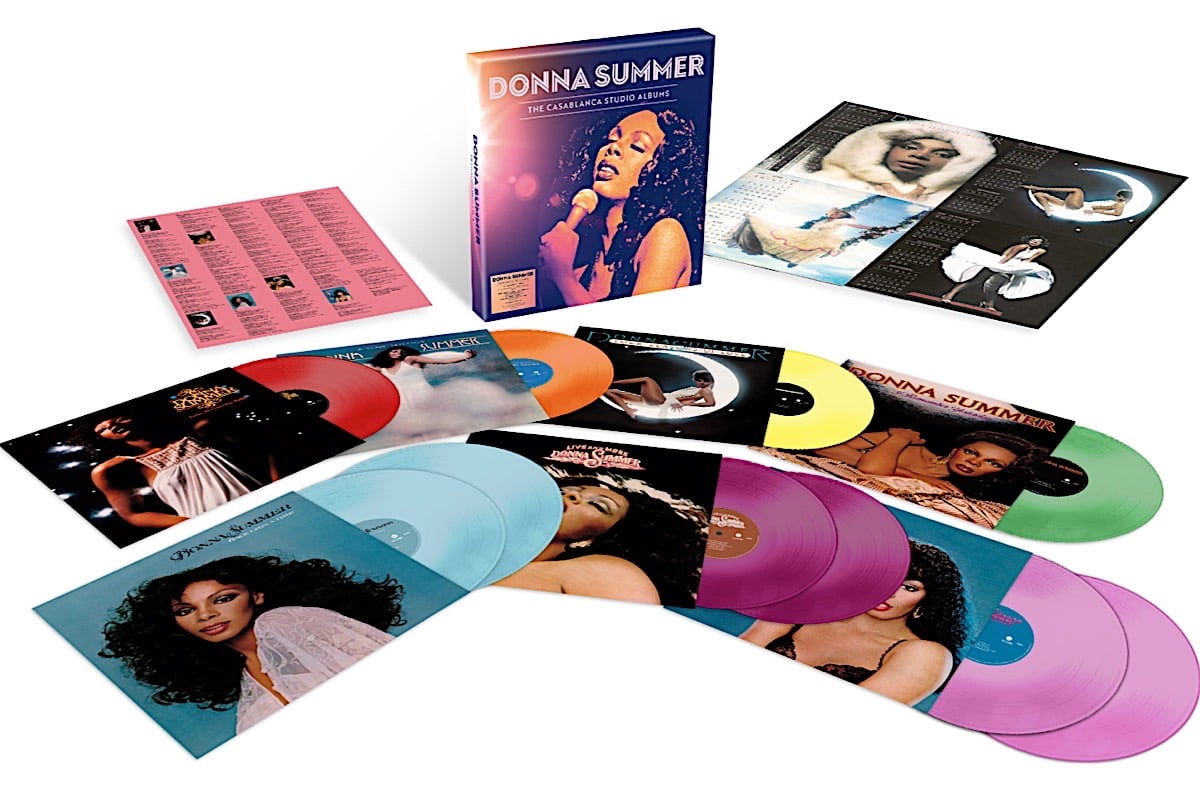
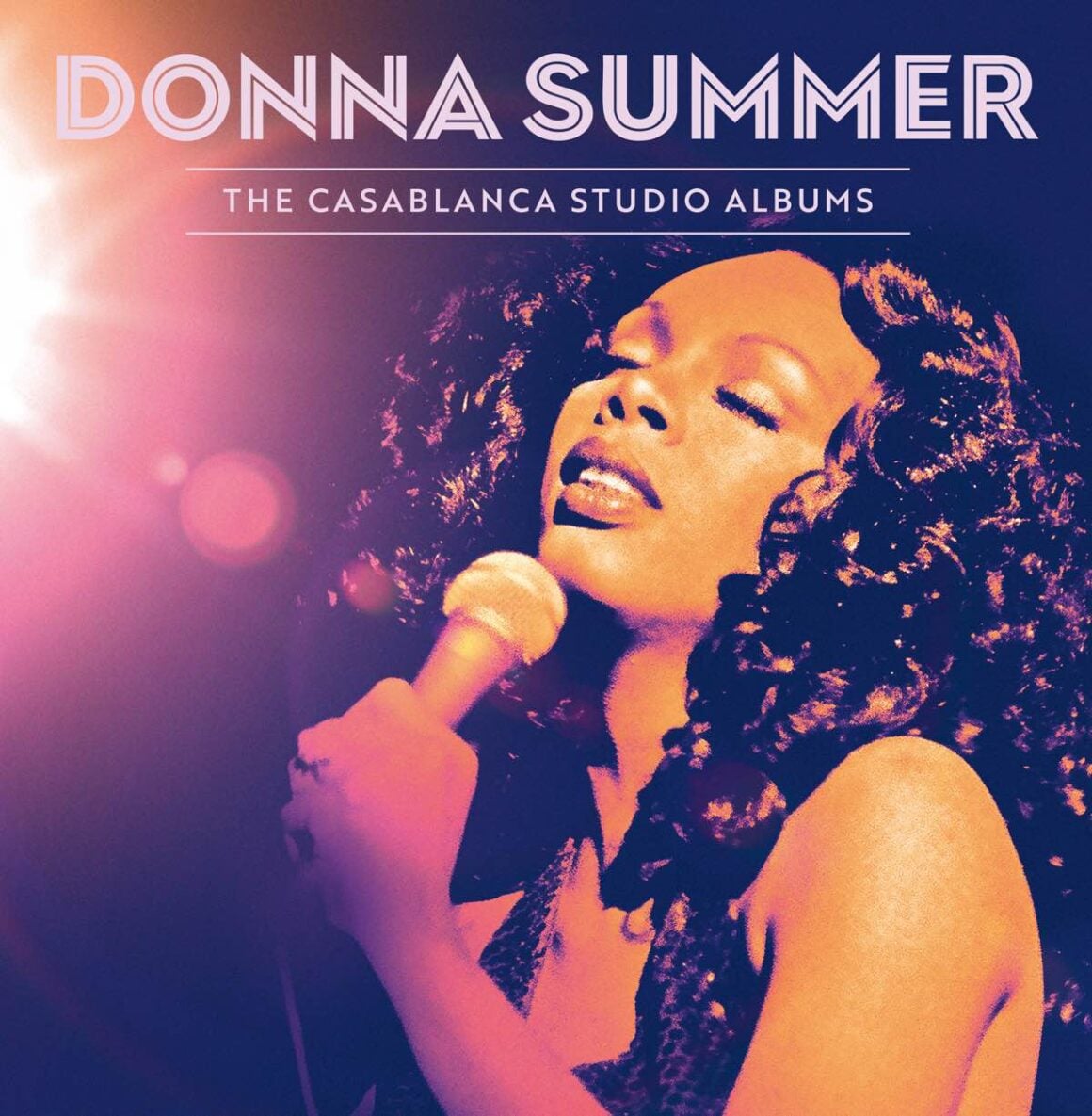
For decades, Donna Summer has been known as the Queen of Disco, but that title only tells part of the story. Across a career that moved effortlessly from sensual disco to rock, pop, soul and theatrical ballads, she continually reinvented herself while remaining unmistakably Donna. Now, the new Donna Summer: The Casablanca Studio Albums Collector’s Edition offers another opportunity to revisit one of the most remarkable chapters of her career, and writer Christian John Wikane is helping tell that story.
The seven-CD and 10-LP collection chronicles Donna’s years on Neil Bogart’s Casablanca Records, beginning with Love to Love You Baby and continuing through A Love Trilogy, Four Seasons of Love, I Remember Yesterday, Once Upon a Time..., Live and More and Bad Girls. Alongside the music is a new 3,500-word essay by Christian, drawn from his interviews with Donna as well as conversations with the musicians, producers and artists who helped shape her sound.
Christan has spent years exploring Donna’s legacy, including interviewing her during her lifetime and working with her estate and family on the 2023 HBO documentary Love to Love You, Donna Summer. What continues to fascinate him is just how difficult it is to pin Donna down. Put “Love to Love You Baby,” “MacArthur Park” and “Hot Stuff” next to one another, he says, and it can sound as though three completely different artists are singing them. Yet each song reveals another facet of the same singular performer.
That versatility is at the heart of Christian’s appreciation for Donna. He points to her ability to move from the raw rock vocals of “Hot Stuff” to the exquisite drama of “MacArthur Park,” while continuing to challenge herself and the producers and musicians around her. Even within the relatively short span covered by the Casablanca years, Donna refused to simply repeat herself.
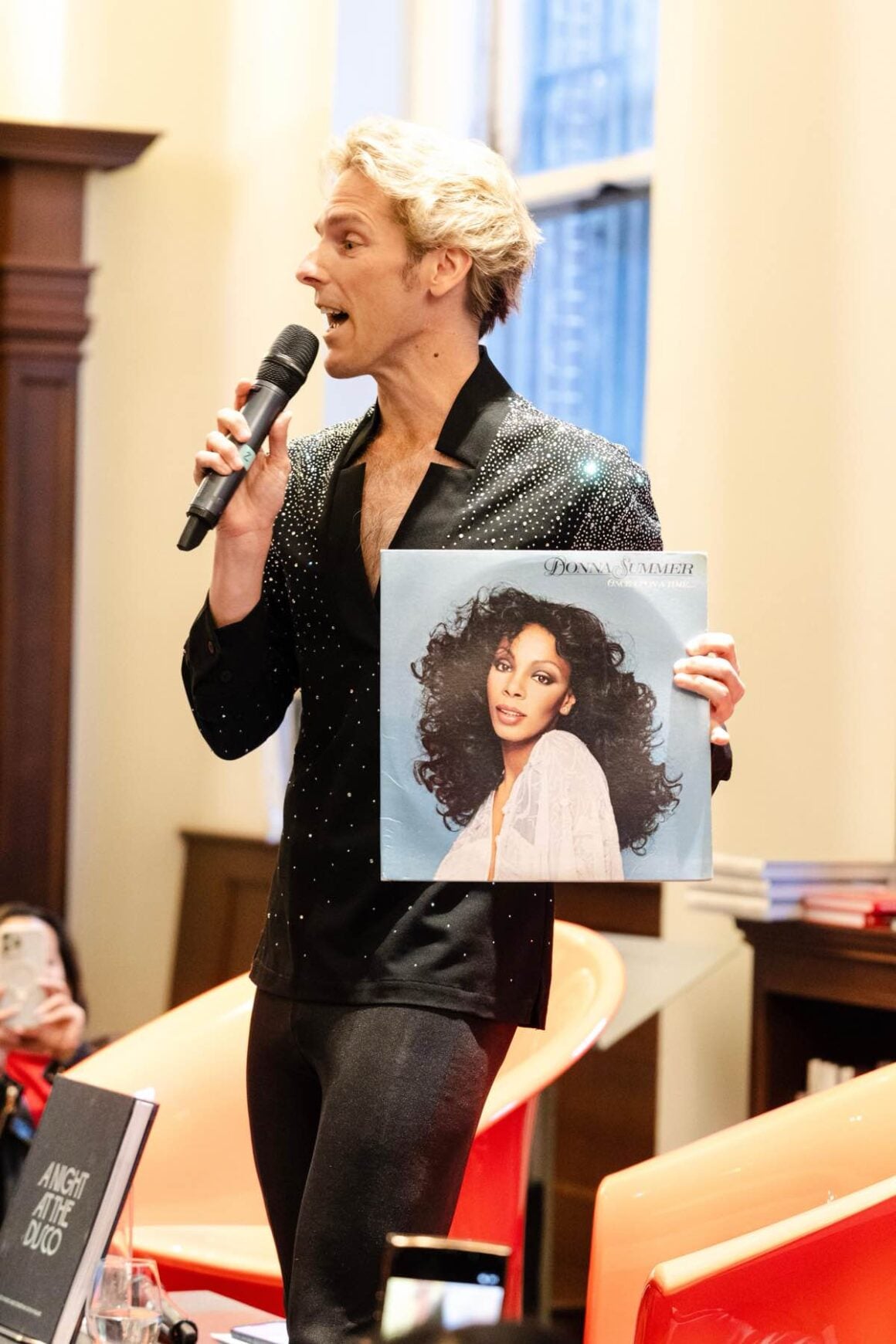
In our conversation, Christian talks about his lifelong connection to Donna’s music, the side of her personality that fans may not have seen, why her records still sound extraordinary decades later, and what he hopes listeners discover when they return to the Casablanca albums. He also discusses the importance of preserving her legacy, the stories he continues to uncover through interviews with the people who knew and worked with her, and why Donna Summer remains such a singular artist more than a decade after her death.
How did you develop your passion for music?
When I was two years old, I heard “Ain’t No Mountain High Enough” by Diana Ross on a 45 single. That’s the first song I ever remember hearing and that record opened up my world, not only to music, but just to life. The excitement of that record is something that has followed me my entire life. Even before Diana Ross sings, the music just has this excitement to it, and I think for me, I always wanted to keep experiencing that as a young child. That’s what led me to all of this amazing music, and fortunately my parents had a big record collection. I also have an older sister and it’s because of her that I found out who Donna Summer was.
You’ve spent years helping preserve Donna Summer’s legacy, like working with her daughter and family on the documentary and now working on the liner notes for the box set. What have you learned about Donna Summer that you don’t think the average fan fully appreciates?
How well-regarded she remains by some of the most legendary artists of our time. One of the projects that I worked on was a box set of all of her albums from Lady of the Night up until her last album, and that came out in 2020. I found this great quote from Billy Joel in, I think it was Rolling Stone magazine, from an interview he did in 1980, and he talked about how whenever Donna Summer comes on, he’d rather listen to her than almost anybody else on the radio, because the records were so good. That’s something that I’ve learned to appreciate, is that these records worked on your car stereo, they worked in these amazing nightclubs. The sound, no matter how you heard those records, was incredible. Whether it was just on your headphones or in this massive space, the music translated in such a powerful way, and I think that’s what I’ve grown to appreciate over the years about her music and how the records were made.
You’ve actually interviewed Donna Summer during your career. What surprised you most about her as a person?
What surprised me most about her as a person, her sense of humor. She’s was really funny. She just had a great slant on things that you wouldn’t really expect because her image was not that from the 1970s. She was this goddess. The cover of Bad Girls for her, I think she would think of this as almost a joke, presenting as a streetwalker, but just as a character. It’s not meant to be taken really seriously.
I think that’s there’s always a bit of another layer to even the music that she made or how she presented herself. It’s not so much face value. She was operating on multiple levels and there was a sense of humor there that I don’t think a lot of people really appreciated, “Love to Love You Baby” being a great example of that because that was just seen as, “Oh, I’ll just try to channel Marilyn Monroe and, imagine myself with a man and that’ll be that.” She had no idea what that was going to lead to.
People still talk about Donna’s music and it’s being rediscovered constantly. Why do you think her work continues to resonate so powerfully today?
Because she’s a singular artist. No one can sing like Donna Summer can sing, and part of that is because she was very much a chameleon with her voice. For eight years I’ve lectured at Barnard College, and the lecture is about Donna and Grace Jones and the group Labelle. The students are all 18, 19 years old and they don’t really know Donna Summer, so I play them a clip of “Love to Love You Baby”, “MacArthur Park” and “Hot Stuff”, and with each of those clips, Donna is like a completely different artist, and they are mesmerized by that fact. If you were to not even look at her, you wouldn’t think it’s the same person singing each of those songs because she sounds so different on each of them.
I don’t think, of her contemporaries, that anyone really had that ability to really shape-shift in ways that are still Donna Summer but are from another part of her soul. And that’s something that I love about her, and I love it when other people see that light bulb go off. If you think about “Last Dance” and you think about “I Feel Love”, is that the same person? They were only recorded a year apart from each other. That’s the other thing. She did so much in such a short amount of time that really did change music and has influenced artists for the past 50 years. So, I think to go back to your question, I think there’s this curiosity about her because when we think of artists like Aretha Franklin, we know “Aretha Franklin”. She’s the Queen of Soul. Automatically you think of “Respect”, “Chain of Fools”, all of these groundbreaking records in soul music. But with Donna, I feel like you think of Donna, and depending on who you are, a different image comes to mind because she was such a versatile singer.
That’s the Alive and More album to me. That was my absolute favorite with “Fairy Tale High” and “I Remember Yesterday” and those songs. You can even tell there that there are so many different styles that she goes through in that live experience.
Yes, and “The Man I Love” and “I Got It Bad and That Ain’t Good” showed her affinity for the standards as well – all within one night of a concert. I don’t even think people that don’t regard disco more than Saturday Night Fever would be surprised to know that a lot of those artists actually had a lot more to give – more than what they were known for.
The new box set is giving fans another opportunity to revisit her music. What do you hope listeners would hear differently this time around if they hadn’t heard these albums in a while?
That’s a good question because whenever I write about her music, I try to listen to it as if it’s the first time, which is really hard to do. It’s almost like trying to remember the first time you had water. That’s part of who I am, right? Her music is elemental for me. So, what I do and what maybe other listeners can do as well is just to kind of listen when you don’t have any distractions. If you get the vinyl edition of the box set, actually appreciate the ritual of taking the record out of the sleeve, putting it on the record player, watching it spin around, looking at the artwork, reading the lyrics. Just experience it as an experience, because for so many years, that’s all we really had, listening to music. We just had the vinyl record and that was it, and I think what that did is it activated our imaginations, because we didn’t really have much to go on, and I think that’s the magic of her music.
I would say listen to the music without distraction just as much as you can. Appreciate the musicality and the musicians who made this music with her. They were peers. It wasn’t like some anonymous session players. These were musicians that had played for years together, and as Donna grew, they grew as well. Georgio Moroder and Pete Bellotte, they kept pushing each other forward as Donna wanted to keep growing as an artist. She didn’t want to just do the same old thing. And Giorgio Moroder was actually a little resistant for her to do something like Hot Stuff. Pete Bellotte was the one that really wanted to take her into a rock direction, and Giorgio was like, “we have a good thing going” but Donna herself always looked to artists like Janis Joplin as a source of inspiration, so she was actually the first artist to win a Grammy Award for Best Rock Vocal Performance, Female, and that was for “Hot Stuff”. You can hear it in that record. You hear that she just has this affinity for singing in that kind of raw way, yet she could also sing something exquisite like “MacArthur Park” and that’s the thing about her career that I find so fascinating and so unique is that she just had all of these voices in her to share, and they registered powerfully in their own way.
Both of those songs were number one hits, so it wasn’t as if the public only wanted one kind of Donna Summer. That there were so many facets of her talent is really part of why we’re still talking about her, from the rock stuff to things like “I Feel Love” and “Last Dance”. All of those are standards in their own way. I also liked her foray into rock with The Wanderer. That’s another favorite of mine that I think is unappreciated. I think it doesn’t get the credit it deserves. I heard The Wanderer before I knew anything else, and actually that’s how I interviewed her the first time, I was writing about that album. It was such a dream come true to speak to her about “Running for Cover” and “Cold Love” and the other tracks on that album. That album is not part of this box set. That album comes directly after this box set – and what a dramatic change. It’s just impressive that she really did offer such a new sound, still working with the same producers and the same musicians, yet it doesn’t really evoke Bad Girls and that’s only a year before, so it’s fascinating to think about that.
Now how involved was Donna Summer’s estate been in preserving her musical legacy, and what has it been like for you to collaborate with them on the documentary and things like that?
Oh, it’s an honor to work with the estate on the box sets and the reissues, and the documentary itself was long overdue. I feel like, for me personally, I’m glad that they waited for enough time to pass from her transition because it would’ve been too soon if they had tried to do something right after her passing. I feel like they needed time to just figure out what story do we want to tell? I feel like that it’s very much Donna’s daughters’ story to tell about who she was and how, in some ways, she remained an enigma for them as well.
After writing the liner notes for these releases in this box set, do you still find new stories hidden within this part of her catalog?
Absolutely. That’s the fun part about writing about her catalog. There’s always another story to tell, because if you speak to that musician or that producer or that background singer, they’re going to have another story that you can put into the overall puzzle of this era of her career and each time that I write about her catalog, I endeavor to do that. I try to find just another slant on something that might be of interest. This is the Casablanca Records box set, what people may not know is that for four years in a row, 1977 through 1980, it was the number one disco label as ranked by Billboard. It really deserves that prize of being the top label because they, along with Donna, the Village People, Cher, and a lot of other artists that came through the clubs were on that record label. I think I put that in the opening paragraph of this essay to kind of show that Casablanca was the label to be on and Donna is part of why we’re still talking about it.
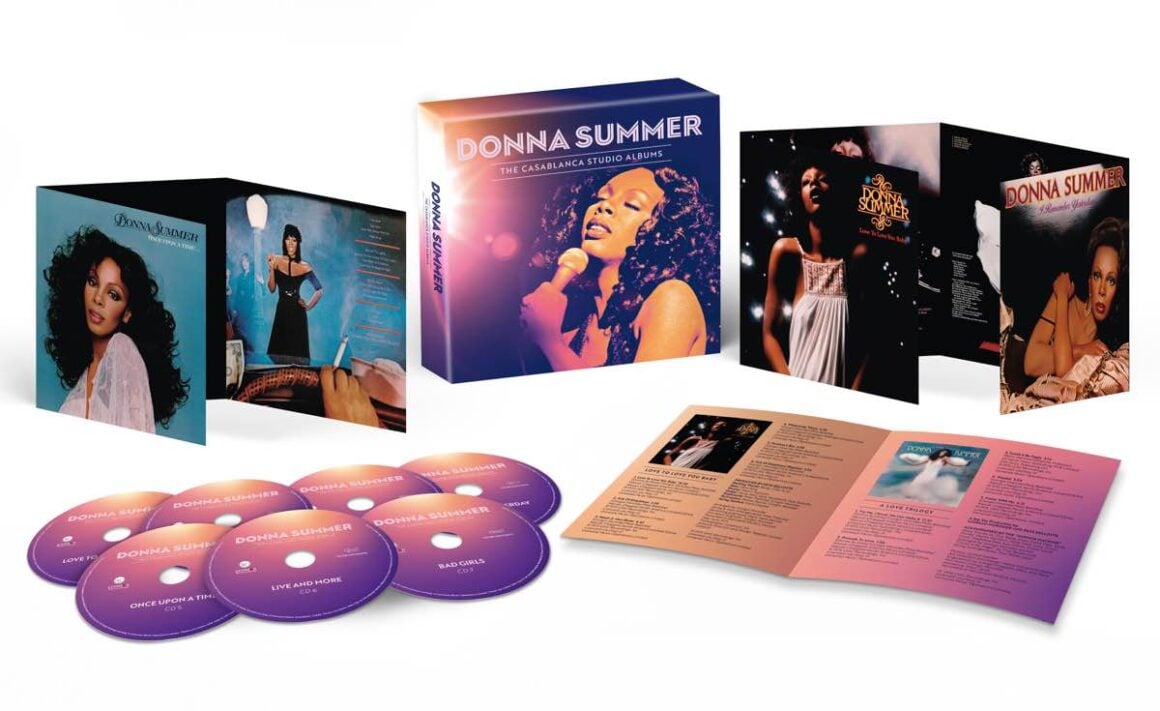
Donna Summer: The Casablanca Studio Albums will be released on October 2, 2026. You can pre-order and pre-save here. Follow Christian John WIkane on Instagram and on his website and check out his interview series, Unscripted on YouTube.