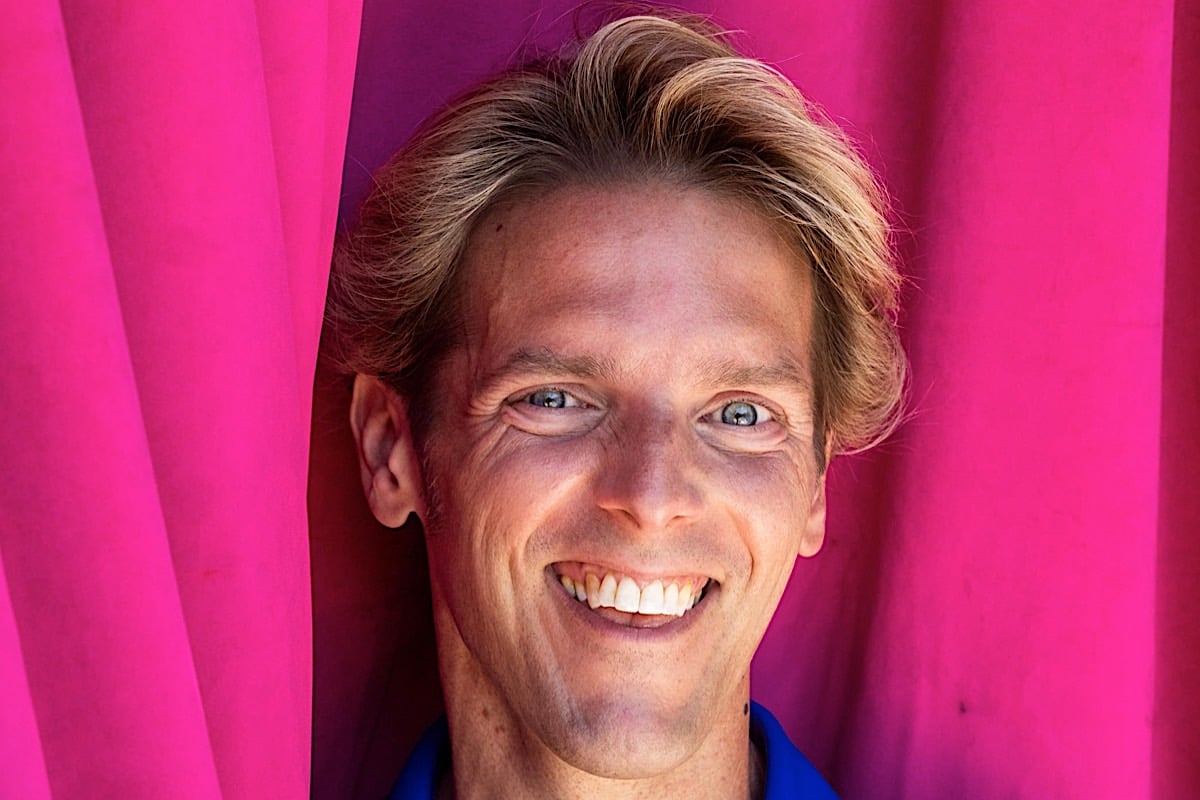
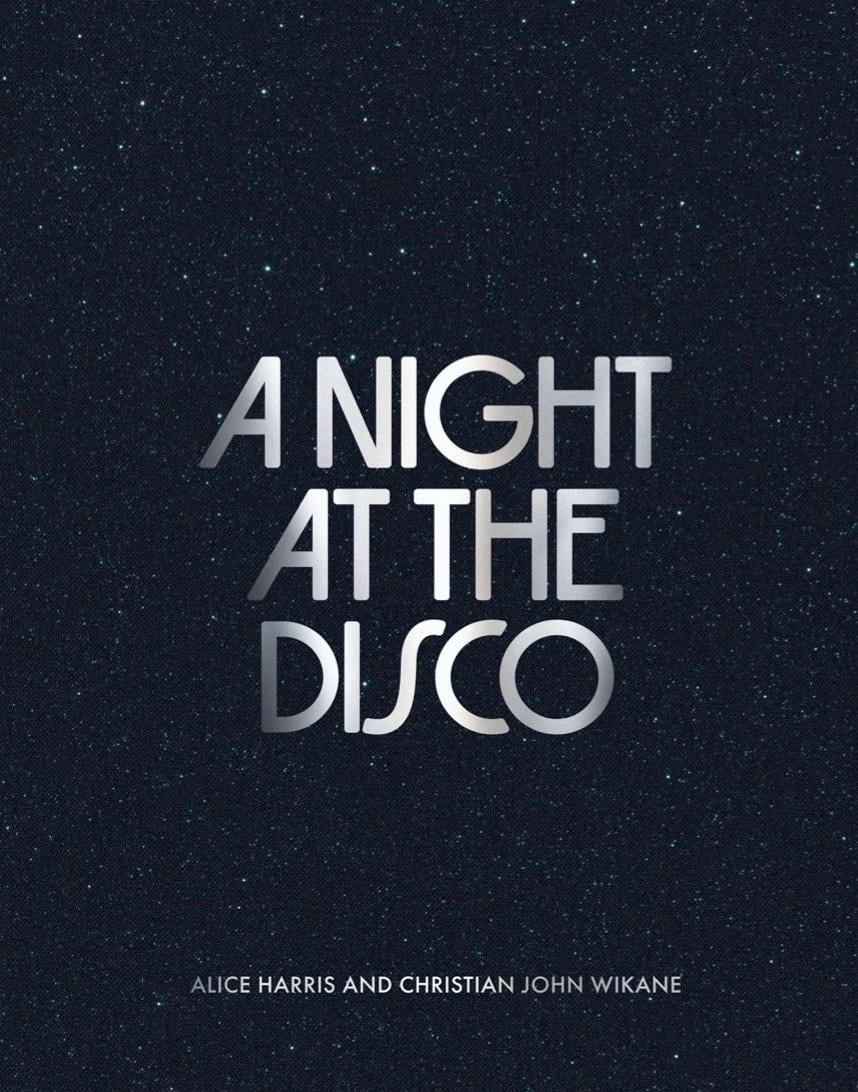
For NYC-based music journalist and essayist Christian John Wikane, disco has never been just a genre. It’s more than mirror balls, glittering dance floors, or a handful of songs by the artists whose names have become synonymous with the era. It’s a sprawling musical movement shaped by DJs, musicians, clubs and audiences, with roots stretching across funk, soul, jazz fusion, progressive rock and beyond. Now, with his new book A Night at the Disco, co-written by Alice Harris, Christian is taking readers deeper into that history and shining a light on the artists who too often get left out of the story.
The book grew out of Christian’s extensive archive of interviews with artists from the 1970s, as well as his lifelong fascination with music he discovered just outside the mainstream. Born in 1979, Christian came to disco at a time when the word itself had become unfashionable, but his curiosity about the era never faded. A Night at the Disco brings together conversations with 112 artists from 1970 through 1979, tracing how dance music evolved throughout the decade and challenging the idea that disco was ever musically homogeneous.
At the heart of Christian’s approach is the dance floor itself. Rather than defining disco simply as a genre, he explores the music that DJs actually played across an entire night, moving between funk, jazz fusion, progressive rock, soul and other sounds depending on where the music took them.
The cultural history is just as important. For Christian, understanding disco means understanding the African American and LGBTQ+ communities that helped create and sustain the club culture surrounding it. He describes the music as a source of liberation and empowerment, a place where the pressures of everyday life could temporarily disappear and a sense of community could take their place.
In our conversation, Christian discusses the artists and recordings that helped shape disco, the underrated artists he hopes readers will rediscover, and why disco’s influence never really disappeared after the so-called “Death to Disco” backlash. He also looks toward the future and answers the Socialite Seven with everything from his dream disco-club night to the three legends he’d most like to put around a table.
What inspired you to write A Night at the Disco now?
The publisher approached me and Alice about a disco book – so that’s a great reason. He asked because he knew that I have this whole archive of interviews that I’ve done with a lot of the artists from that era, and I think he felt that I would be a good person to bring all of that together in a way that maybe hasn’t been done before. So often when we talk about the era, there’s 10 or 15 artists that are always discussed but there’s a whole bunch of other artists that are either dismissed or forgotten about, yet they’re still relevant to that era. I’m so glad that I could include 112 different artists from 1970 to ’79 to show how dance music really evolved throughout the decade.
And for me, it’s always a good time to listen to that music. I feel like whether it’s now, 10 years ago or 10 years into the future, the music will still register in a very powerful way. I think now more than ever, that era gets a lot of respect that it didn’t necessarily before. Certainly, growing up in the ’80s, you couldn’t say the word disco. I mean, if you did, you were considered kind of passe, but that never stopped me from loving it or wanting to know more about it, so I feel vindicated that the years I’ve spent rediscovering or discovering what I wasn’t able to live through during the 1970s now has a home in A Night at the Disco through all the conversations that I’ve had with artists over the years.
Verdine White from Earth, Wind & Fire wrote the foreword, which is really exciting because I’ve interviewed him several times over the years, and he’s a great person to start the story because Earth, Wind & Fire really did grow throughout the decade like a lot of other artists and then when “Shining Star” comes around, it’s like their career just takes off. Similarly, that happened with other artists as well, like the Bee Gees with “Jive Talkin’”, just taking their career to a whole other orbit, and that’s because of dance music.
Disco has been reduced in a lot of ways to cliches about mirror balls and Studio 54. With the book, what misconceptions about disco were you hoping to challenge?
That it’s musically homogenous. I feel like disco is so multifaceted in terms of the music itself, and the intention was really about the music that was played in the discos versus disco as a genre of music, because that’s really what we’re talking about. We’re talking about a period of time from 1970 through ’79, and it was about the journey that DJs would take listeners through an entire evening. You’re not going to get the same beats per minute all night. You’re going to get some interesting detours to funk, to progressive rock, to jazz fusion. It’s really fascinating to see what turned the DJs on and I feel like that’s really what I wanted to highlight in A Night at the Disco was to show that if we look at 1970, you have Sly and the Family Stone, you have Isaac Hayes, you have Osibisa, you have War, you have these really exceptionally musical artists and bands providing this soundtrack. And then I think from there it evolved into different branches on the tree.
But I think for me, I really wanted people to understand that disco is more than the 15 artists that always get talked about. There really is a legacy there of dance music that is more than just that word.
You’ve spoken to some amazing artists for this book. Was there one interview or an archival discovery that completely changed the way you viewed the whole disco era?
What it did is it confirmed a view that I had, and that’s the interview I did with Earl Young, who co-founded The Trammps and was also a member of MFSB, the orchestra for Sigma Sound Studios in Philadelphia. People ask me, “Is there a first disco song?” And I don’t think there is. I think it’s a confluence of different things that were happening in the clubs. But if I had to give a song or a few songs that I think laid the foundation for what became known as disco, “The Love I Lost” by Harold Melvin & The Blue Notes is a really important place to start. And that’s because of Earl Young’s drumming on that track.
It originally started as a ballad, and then I think it was Leon Huff that told Earl Young to put a beat to it, and it turned into this galloping track. And if you go back and listen to that record, you can hear that style, that four on the floor with the hi-hat was a shift in how drummers created this tempo that made you want to move – and it was imitated. A lot of drummers took his lead and did their own thing with it. So, it was great to interview Earl Young and get the definitive history about how that track was put together and how he really is such a groundbreaking force in the musicians that really defined what club music is from that era.
Who do you think was one of the most underrated artists of that decade that really deserves more love?
I feel one band that I’m always excited to talk about, because I feel that they need to be remembered, is Dr. Buzzard’s Original Savannah Band. “Cherchez La Femme” was their big hit. I feel like the way that they blended Latin and big band and pop and disco into their own style, that definitely hit at the club level, but it wasn’t anything that you could pigeonhole easily. It was their own style. Yes, there was a 40s influence, but it was also very contemporary and I feel like if this book introduces readers to that group, then mission accomplished, because they were nearly dismissed by their own record company who didn’t know what to do with them. It was really the gay clubs in Fire Island that championed them and then, because of the club play there, it spread to New York City and then other clubs around the country. And before you knew it, they got a Grammy nomination for Best New Artist, and that’s so specific to this era and why clubs were important in breaking artists beyond the clubs.
Did you notice any common themes emerging across all those conversations that you had for the book?
Actually yes. It’s really interesting to know that a lot of the music was played in the clubs, and maybe more so in the earlier part of the ’70s, yet sometimes the artists themselves didn’t really know that was happening, like the group War. Their music was really important to the early ’70s, especially the clubs in New York. I interviewed the drummer for War, and I asked him, “Did you know that there was this whole other platform for your music?” And he said, “No, we had no idea that our music was being played in these places. We were writing, recording, touring, and promoting.” It just didn’t register that the clubs were now this new way for their music to be heard. I think it’s interesting to speak to other artists and hear that as well. “Yeah, we didn’t know that we were selling tens of thousands of copies of records that we had forgotten about,” but, they were really important to how music evolved throughout that decade. So, that’s one thing that I think a lot of artists share in common is they didn’t realize the impact they were having.
I watched a documentary recently about disco, and I think what a lot of people don’t realize is where it came from. It came out of African American clubs and, LGBTQ clubs, and it was more of like a refuge for those people to go and be together. How essential do you think that cultural context is to understanding the importance and impact of disco music?
It is so important, because for me, the music is a source of liberation and empowerment. And I feel you might feel a sense of oppression throughout your daily life and your existence, but you go to a club and suddenly that all just evaporates because the music transcends, especially when you’re with other people, then there’s this sense of bonding and community that comes together.
One thing that I found out while writing A Night at the Disco was how “What’s Going On” by Marvin Gaye was a big record on Fire Island in the summer of 1971. I never thought of that record being an anthem in a gay club. But think about the beauty of that record, just how beautiful it sounds as a record, and then to imagine it in this beachside resort, bringing all these guys together in a sense of solidarity. That’s a huge effect of a record that I would never think have had that in its DNA. I think it’s answering a social issue but I wouldn’t think of it as a way of bringing people together like that.
Disco has influenced so many modern-day artists, even country music has been embracing disco influences. Why do you think the genre has now become so timeless after the backlash in the late 70s with the “Death to Disco” movement?
There are a couple of generations that have since discovered the music, and it’s new for them and I don’t think they’re hearing it with the baggage that people who actually lived through the era might associate with it. Actually, in a way, that’s my story as well. Even though I was born in 1979, I have an affinity for that era and whatever I heard, it wasn’t because it was popular or because it was on the radio. Clearly in the 1980s they weren’t playing that music anymore. But I genuinely loved what I was discovering on my own and I think that has only continued with each new generation. They’re curious about the sound and the styles.
I think there’s something to be said for the earlier part of the decade where you really do have the musicians in a room recording this music together. It wasn’t all being done on a on a synthesizer, even though that’s also interesting in itself. But I think popular music now, dance music, is just so programmed that to hear music that you really had to know what you were doing in the studio. You had to have engineers that knew how to cut the tape with razors and splice things together. That takes a lot of patience and a lot of ingenuity, and it was a painstaking process, but what came from that is timeless music. I think maybe on a subconscious level people are hearing that this is unique because this isn’t really the way music is recorded anymore.
Now, looking back, do you think disco has finally received the critical respect that it always deserved?
I feel like there are a lot of artists that reference it, like Harry Styles, including it in the title of his latest album. Now I feel like sometimes people say it without even really knowing what they’re talking about. It’s like, “Disco, it sounds cool. That’s a cool word.” It has this cache that I don’t think it had 30 years ago because there was still this sort of discomfort with that era. But yeah, I feel in small ways and then in ways that really matter, disco has definitely gotten its due.
Personally, even Donna Summer having a documentary or Earth, Wind & Fire having a documentary, I think now we see why their music is important. And then something that Verdine writes in A Night at the Disco, “The music of that era is the way music was meant to be heard.” In terms of the musicianship and the orchestration, you have musicians that are brilliant creating this music that we take for granted how brilliant it is and it just became the foundation for an entire movement.
After A Night at the Disco, is there another era of musical movement that you’d like to explore in a book?
The 1980s. I just feel the 1980s is its own decade that had this sort of fascinating trajectory because I don’t feel like disco stopped in 1979 and that’s it. I think that’s one of the things that’s misunderstood about that era. Even though in A Night at the Disco, we stop at 1979 because we like round numbers of 10 years. But certainly, you still have that disco sensibility filtering through the early ’80s as well. I think I would like to show how Giorgio Moroder, Nile Rodgers and Bernard Edwards, the producers of classic disco records, were still doing really well in the early ’80s. Like Chic as a group may not have been, but the producers were working with Diana Ross and she was getting the biggest hits of her career with them. Same thing with Giorgio Moroder working with David Bowie and Limahl and then of course the Flashdance soundtrack. I feel like dance music didn’t stop. It just reshaped itself a little bit.
If readers walk away from A Night at the Disco with one new understanding of the genre, what do you hope that one thing would be?
How multifaceted it is, that it’s not this musically homogenous style. It’s like this big tree with all these different branches on it, and yet, like a tree, if you go down to the roots, you kind of see what those roots are and how vital they were to creating everything that the DJs were playing in the clubs. For me, A Night to Disco is more about the music that was played in the discos versus disco as a genre. Because, for me, it’s really, the DJs who determined what you would hear. I think if you have seven or eight hours of a night as a DJ, you’re going to go in some interesting directions with that. It’s not going to be the Bee Gees all night and I think that’s what people misunderstand. It wasn’t these 10 or 12 artists that we always hear about. It was a lot more artists from several different genres of music that defined what dance music was in the 1970s, disco being what became a catch-all phrase for it. But to me Herbie Hancock had disco hits. We don’t think of him as a disco artist and he’s in the book. I just wanted to show just how multifaceted disco really is.
Christian John Wikane Answers the Socialite Seven
Which disco anthem still gets you onto the dance floor every single time?
“Take Me Home” by Cher
If you could moderate a conversation with any three disco legends, past or present, who would be at the table?
Definitely Donna Summer. Isaac Hayes and, because he’s such a mysterious person, Peter Brown. He had his albums and then he just went off the radar, and I’ve always wondered…I want to know more, right? Yeah, Peter Brown, Donna Summer and Isaac Hayes. That would be a challenge because they’re all so different from each other to create a great conversation around them.
What is the rarest or most treasured piece in your music collection?
I’ll go with the most treasured because I don’t know if I have anything that’s particularly rare. Because the first tour stop I did was in Chicago, I got Linda Clifford to sign her album, Let Me Be Your Woman for me. That meant a lot to me because I’ve known her music since I was like three. I’d met her before, but to actually have her be the first artist that I interviewed on the promo tour for the book – which was 30 cities – was so meaningful for me. And then to actually have this album and have her sign it, I thought, “Okay, we’re off to a good start here for the promo tour.” So, Let Me Be Your Woman is the name of the album by Linda Clifford, autographed on the first night of my promo tour for A Night at the Disco.
Which artist has been on your interview wish list the longest?
Diana Ross. She would be a dream to speak with.
If you could spend one night at any legendary disco club in history, where would you want to go, and who would you want to see perform?
Okay, first that comes to mind I would like to go to Studio 54. I know that’s a very popular choice, but with good reason. I actually want to go, and I live 10 blocks from Studio 54, so it would be easy for me to get there. And who would I want to see…Grace Jones. I would love to see Grace Jones perform at Studio 54 because some of the most exciting photographs of that place are her performances.
What are three things you can’t live without?
I cannot live without coffee. I cannot live without my stereo – and that could be many different kinds of stereos, but let’s just say stereo – and I cannot live without my journal. It’s a blue journal. It has a specific place in my heart. So those three things I can’t live without.
W hat is the best piece of advice you’ve been given?
Andre De Shields said this, and I’ve been thinking about it a lot recently, which is “the top of one mountain is the bottom of another. Keep climbing.” I often think about with A Night at the Disco, that is the top of a mountain, to have completed a book, to have promoted it, to speak with people like yourself, to expand my world. But it’s like, okay I’m not going to stop here. I’m going to keep going. I’m always curious to see, okay what’s the next rung on the ladder of the next place that I’m going? It’s exciting to think about what that could be.
A Night at the Disco is available at Amazon or wherever you purchase your books. Follow Christian on Instagram and on his website and check out his interview series, Unscripted on YouTube.