
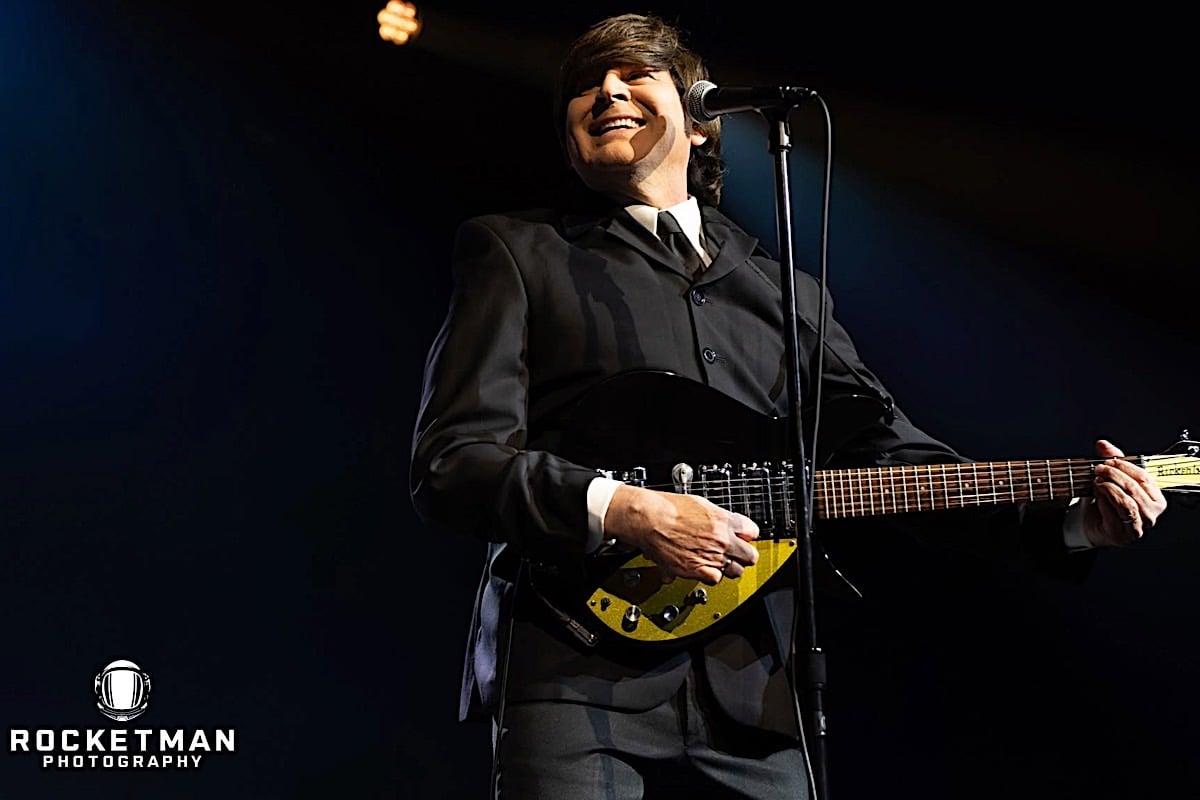
For nearly two decades, The Fab Four: The Ultimate Tribute has been bringing The Beatles‘ legendary music to life with Emmy-winning performances, meticulous attention to detail, and an uncanny ability to recreate the sound and spirit of one of the most influential bands in music history. For Ron McNeil, who portrays John Lennon, the secret to that authenticity lies in the little things, from mastering Lennon’s vocal inflections and guitar-playing techniques to capturing the many sides of his complex personality.
Now, The Fab Four is taking audiences back to the beginning of Beatlemania with an all-new show celebrating the 60th anniversary of the Beatles’ first feature film, A Hard Day’s Night. The production features songs from the iconic soundtrack alongside fan favorites spanning the band’s career, offering longtime fans and newcomers alike a chance to experience The Beatles’ music in a whole new way.
Ahead of the group’s November 6 performance at Atlanta’s Buckhead Theatre, Ron discusses the musical influences that started it all, the challenges of portraying Lennon, the painstaking details that set The Fab Four apart, and why The Beatles’ music continues to connect generations around the world.
What got you into music? Obviously, The Beatles, but what were your other musical influences?
It’s funny. The Monkees got me into The Beatles. I used to watch the reruns, and my mom tells me I’d run around the living room singing “Hey, Hey, We’re The Monkees” and then I borrowed my older sister’s records and never gave them back. She had a lot of Beatles and Monkees [albums] and they ended up being my influences. I learned how to play guitar and keyboards from there, and then I just wanted to learn everything about those two groups, every single note they played, who sang what, who played what – bass, guitar, keyboards, drums. It was just a magical experience learning those songs.
What made you decide to start The Fab Four?
That was just it. I learned to play all that stuff not knowing I would have a career in it and then my father took me to a show called Beatlemania, which was a Broadway show. I was a young kid, and it influenced me a lot because I figured I couldn’t be one of The Beatles because The Beatles were The Beatles. But here was a group of guys who were pretending to be The Beatles and doing a really good job, and I thought, “Wow, that’d be a great job to have.” Fast-forward, a couple years later I met Ardy, who plays Paul McCartney, in Los Angeles, and he had a great voice for Paul McCartney. We hooked up and started getting more serious about it, and it took off from there.
The tour that you’re on right now celebrates the 60th anniversary of A Hard Day’s Night. What inspired you to build the show around that first movie, and what can audiences expect from this tour?
We’ve been doing some themed shows the last few years. With our regular show, we play all the hits of The Beatles and then we pretty much go home. But someone was pointing out that there are so many songs left over, and it’s hard to take songs out or put new songs in without taking other songs out. Then it’s like what are you going to take out? “Hey Jude”? “Twist and Shout”? No, you can’t take those out.
We started thinking what we could do were themed shows. The first year we did all of Rubber Soul, which was really cool and then the following year we did a show called “USA Meets The Beatles”, where we focused more on when The Beatles came over here for The Ed Sullivan Show. We’re finishing up Help!, which was their second film, and then now we’re onto A Hard Day’s Night, which is, in my opinion, the greatest rock and roll film ever made. We’re focusing on the songs from that film, and it’s been going really well. We’re real excited about it and it’s nice for us too, because we get to put some songs and different moments in the show that aren’t normally in there. Some songs we haven’t played in a long time, like “And I Love Her”, just because there’s just no real time in the show to put it in. It’s got all the hits as well. In the second half is Sgt. Pepper and then we go into the “Get Back” era, so the audience isn’t missing anything, they’re just getting more from one particular era.
You mentioned “And I Love Her”, but is there another song from A Hard Day’s Night that you especially enjoy performing?
That one especially, but there’s a couple, too, like kind of off numbers that we don’t do that often: “Tell Me Why”, “If I Fell”, “Happy Just to Dance With You” and “You Can’t Do That”. Some songs we haven’t done in a long time so they feel fresh to us and I think they feel fresh to the audience too.
You’ve been playing John Lennon for many years, recreating his voice and his mannerisms. How did your journey into the role begin and what first drew you to him?
It’s funny, I’m a big Paul fan and then after Paul was Ringo. Growing up, those were my two favorite Beatles. Then, John Lennon passed away and it really hit me hard. It was then that I started getting into his solo career. I always had his solo albums, and I listened to them, but I wasn’t really that knocked out by him. But then I went back and rediscovered what a great songwriter he was and I think my voice lends itself a little bit more to John and I kind of have the nose for him – so that helps – and then I started creating it from there.
And so, that first year, I went to Beatlefest, which is a Beatles convention in Los Angeles. The year after he passed away, they had a special Beatles convention. I sang “Imagine” at that convention and I won the soundalike contest, so I was very happy about that, and I realized that at some point my voice could lend itself to John Lennon. When I paired up with Ardy, who plays Paul, we took it from there and built our show around our two voices and how we could replicate that. Even Ardy, who’s naturally a right-handed player, taught himself to play left-handed [like Paul McCartney]. We were like, “Let’s do this thing right. Let’s really get as close as we can.” – and that’s kind of where it started.
John Lennon had such a distinctive personality both on stage and off. What’s been the most challenging aspect for you of capturing his essence, and what came most naturally to you?
It’s funny because the acting part and the talking on stage is a bit different than just talking in my normal voice – and then talking is different than singing. I had to develop his attitude a little bit. It’s funny because John had so many different dynamics to his range. He could be very soft and very sweet. He could also be very hard and you have to replicate that range on stage. He can be very quiet on “A Day in the Life”. “Imagine” is kind of quiet. Then you go to “Twist and Shout” and “Revolution”, where he’s screaming his head off. I think that’s more of the challenge.
A lot of people imitate John Lennon in one sort of monotone, where it’s the same thing for “A Hard Day’s Night” as it is for “Twist and Shout” as it is for “Imagine”. I’m like no, those are different John Lennons. You have to get into his mode. What’s he thinking at the time? What’s the song about? “Revolution” is an angry song; it opens up basically like a machine gun and somebody screaming at the top of their lungs. So, you have to get angry. You can tell in the lyrics he’s mad. He’s upset the way people are being treated and if you don’t get that anger in your voice, you’re never going to replicate what he was feeling. I think that’s more of the challenge for me because I’m generally a nice guy.
The Fab Four has performed around the world for nearly two decades. Has your approach to portraying John Lennon evolved over that time, and are there any details that you continue to refine as you still perform that role?
Oh, everything. Every single note, every single stance. Every time I watch a video or listen to a recording of myself, I think, “What about this?” or “I could change this or do that.” Sometimes I’ll see an interview I haven’t watched before, or revisit one and notice the way he says a particular word. I’ll think, “Oh, why didn’t I pick up on that before?”
It’s a continually evolving job because none of us are the Beatles, and none of us ever will be. Although we have a couple of guys in the group who come pretty dang close. It’s a challenge every day, and I learn something new all the time. I’ve always said that when my career is over, that’s when I’ll finally have it down.
Tribute acts seem to be all over the place these days. What do you think sets the Fab Four apart from other tribute bands? Is there something that audiences might not notice consciously, but it makes the performance feel more authentic?
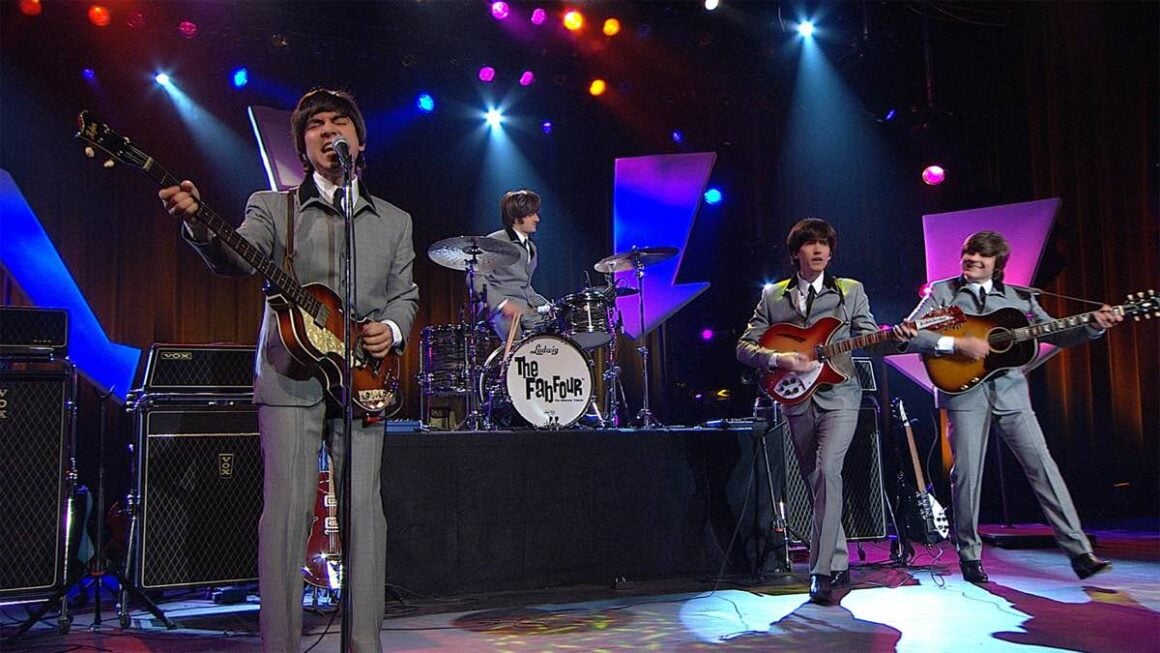
We have an Emmy Award, so that separates us a little bit. But honestly, everyone loves the Beatles. Somewhere in the world, somebody is performing a Beatles song right now and doing the best they can, and people love that. For us, though, it really comes down to attention to detail.
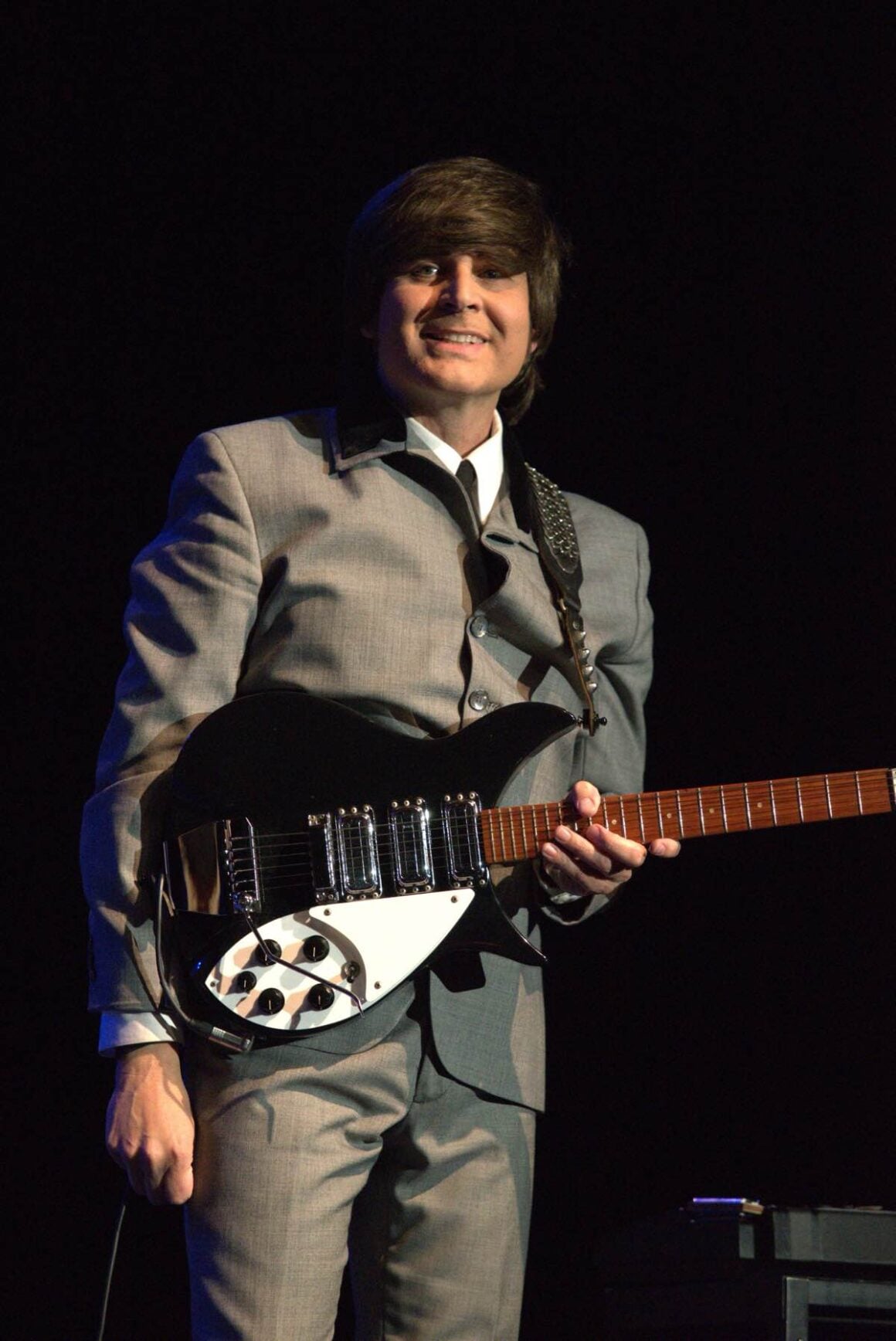
For example, our guitar player Gavin, who plays George Harrison, is from Liverpool, England, but he has blue eyes, whereas George had brown eyes. So, Gavin wears brown contact lenses. Those are the kinds of little details we pay attention to. When I used to play guitar, I’d hold the pick between my thumb and index finger, with my other three fingers dangling. That’s how I played, and it’s how a lot of people played in the ’80s. But then I noticed that John held his fingers together, almost like a fist, when he played. So, I had to tape my fingers together and practice the songs that way to make sure my hand looked like John’s when he was playing chords.
Those are the little things people might not necessarily notice, beyond the posture and other mannerisms. We’ve put so many details together, and we’ve also learned a lot about how to structure the show: which songs to put together, how to speak to the audience in the Beatles’ voices, and how to take people on a journey. It’s not just a band playing songs. It’s not quite a full Broadway show, either. We’re still a band, but we’re more of a theatrical band.
I think audiences recognize that we pay attention to those details. And let’s face it, the closer we get to the original recordings, the more authentic the experience becomes. We play the songs as closely as possible to the way the Beatles did them, right down to the chords and vocal inflections. We’re trying to recreate every little thing so that the audience can think, “Wow, that was exactly like the record!”
We work very hard at it, and we’re always pushing one another to get things right. Someone might say, “You didn’t get that right,” and the response is, “I know. Let’s go over it again.” We really hold each other accountable, but it’s fun. At the end of the day, it’s all for the love of music and for the love of the Beatles themselves.
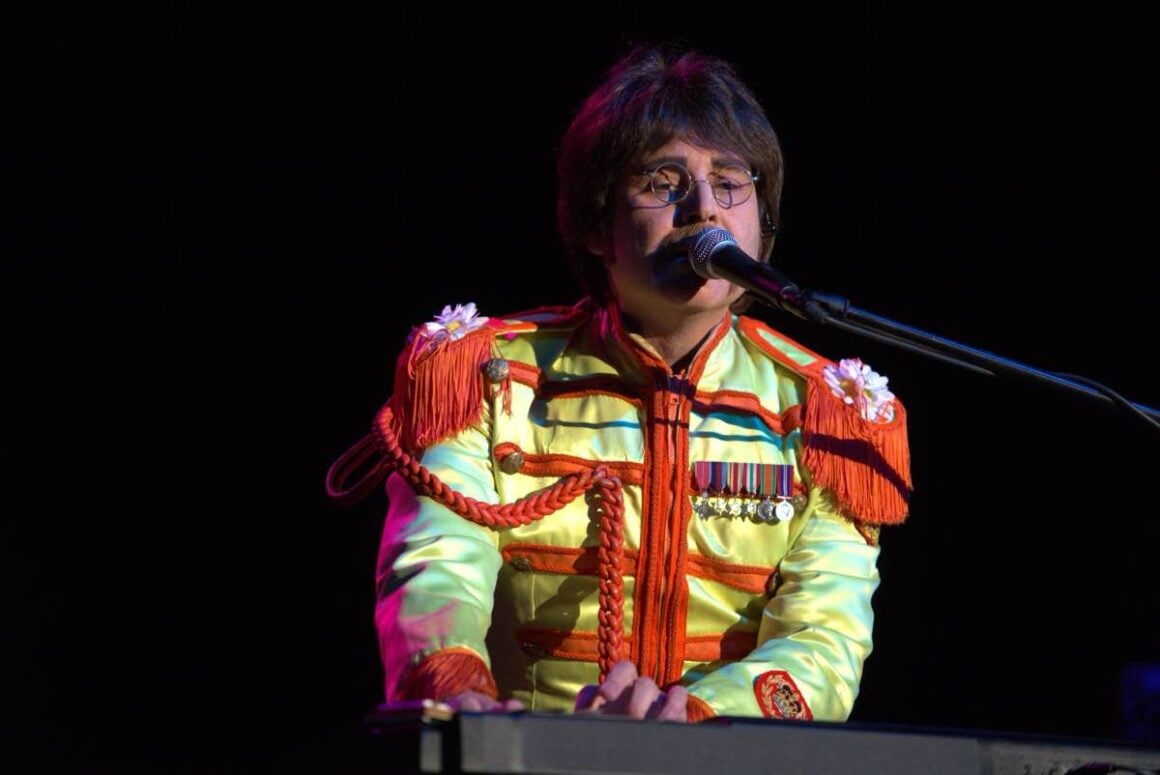
You’ve taken the show not only across America, but you’ve taken it to Hong Kong, Argentina and Brazil. What has surprised you the most about the way Beatles fans connect with the music across different cultures?
It is weird. You have a built-in audience wherever you go around the world. If we were an original band, we’d be trying to win audience over with our original songs. But it’s fortunate that everybody knows that music, even across different languages. Like you said, cultures, age, it doesn’t matter. [The music] bridges all of those gaps, and it’s so great to see all those people together. People bring their families and, obviously kids who aren’t old enough to remember The Beatles. In fact, none of us in the group are old enough to remember The Beatles but it’s great to see everybody getting together.
I think there’s not really too much a difference as far as people’s enjoyment, but I think different audiences react differently. Canadian audiences are a little reserved but once the song’s over, they go totally nuts. American audiences will just kind of jump up, and the Latin countries are very much into “Let It Be” and some other different songs. They won’t let you leave the stage unless you play “Let It Be”. It’s certain things like that where you just notice, oh, these songs are more popular in this kind of culture. But it’s obviously a great thing to see Beatles fans all over the world.
If someone came to a Fab Four show knowing only a handful of songs, what would you hope they would take away from the experience?
We’ve seen that happen many times. Someone will bring their wife, girlfriend, or a friend who doesn’t really know The Beatles that well, and they’ll leave saying, “Oh, my gosh, I didn’t even know that was a Beatles song!” Or they’ll say, “This isn’t my generation, but I had such a great time. Now I understand what The Beatles meant to so many people, and what an incredible collection of songs they created.”
It’s funny to see people discover The Beatles through us. Sometimes I’m thinking, “Really? You’ve never heard this song before? Or you didn’t know this was The Beatles?” But we’re just happy to introduce people to the music.
People go to shows for all kinds of reasons. Sometimes it’s, “My husband wants to go, so I’ll go with him,” or “My friend loves The Beatles, but they’re not really my thing.” And then those are often the people who end up having the best time. That’s the greatest compliment, not only to what we do, but to The Beatles themselves.
After nearly two decades of performing what continues to excite you about getting on stage and bringing that music to life?
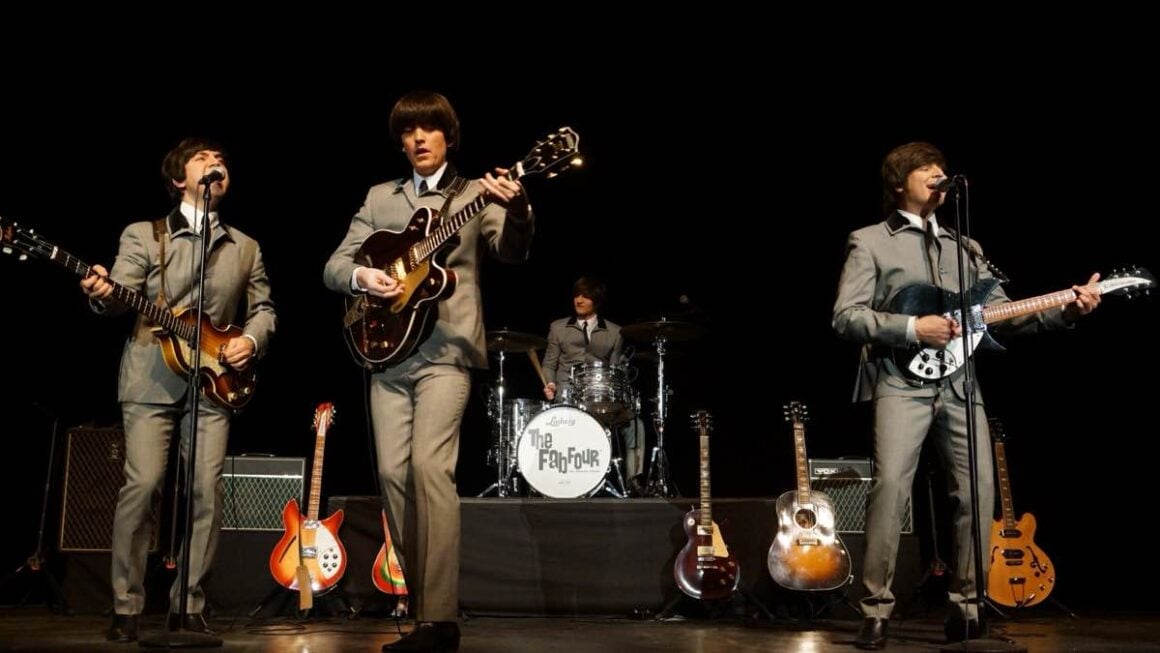
The money. No. It really is watching people’s faces, watching people respond to it for the first time, or you can see people that know the lyrics, they’re singing with you, and that’s the kind of thing that keeps us going. One thing I do before the show is I’ll be almost ready in my makeup and costume, and I’ll peek out and look at the audience and just see who’s out there tonight. Obviously, there are a lot of older people, but there’s also a lot of younger people and you’ll see people, for example, pointing out the different guitars to somebody else because we leave the curtain open so people can see the instruments. And people are taking pictures with the stage and with the guitars and it’s little things like that keep the motivation going, because the songs are pretty much the same every night. But the motivation is just watching the audience enjoy the show. Our job is to make people happy and when we’re up there for two hours, that’s what we’re doing.
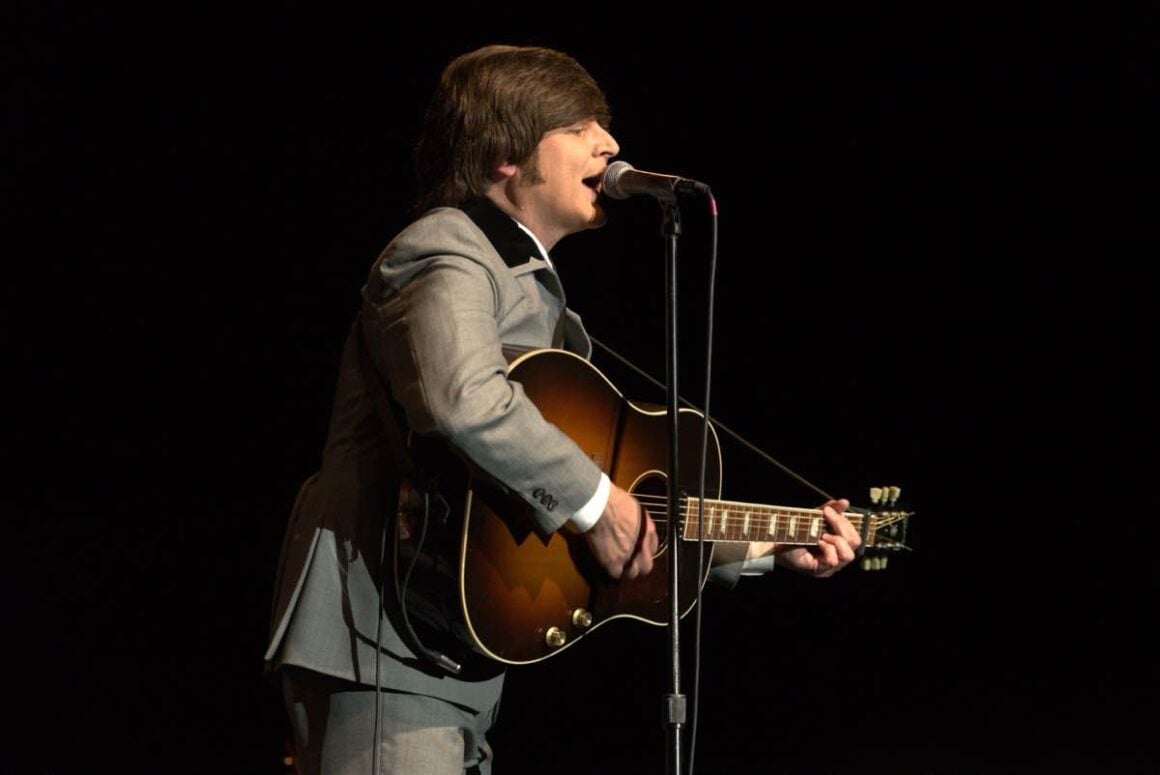
Tickets for The Fab Four’s A Hard Day’s Night tour are available on the band’s website. Follow the band on Facebook and YouTube.