- Lena Dunham’s memoir Famesick reveals she cheated on Jack Antonoff near the end of their relationship, while also alluding to his suspicious closeness with an unnamed “teen pop star.”
- Dunham describes Adam Driver as “spectacularly rude” on the Girls set — allegedly throwing chairs, punching trailer walls, and screaming in her face while she stayed silent, thinking that’s just what “great male geniuses do.”
- After checking into a 28-day rehab program for benzodiazepine addiction in 2018, Dunham says she genuinely loved the experience — and is now eight years sober.
Lena Dunham was 25 when Girls premiered on HBO, and the internet decided she was both a genius and a punching bag. Now, on the cusp of 40, she has written Famesick — a memoir about exactly what it cost her to be that person, and what happened when the bill came due.
The book covers the years 2010 to 2020, what Dunham describes as “a decade in which my life changed profoundly and permanently, in which nearly every strand of my DNA reconstituted itself.” It’s also about illness, addiction, a tempestuous on-set relationship with a then-unknown Adam Driver, and the slow implosion of her romance with Jack Antonoff. Which is to say: it’s a lot.
The Jack Antonoff Situation Is… Complicated
Dunham and Antonoff dated for about five years, from 2012 to 2017, their romance beginning shortly after Girls premiered, while Antonoff was finding success as the lead guitarist of Fun. By any tabloid metric, they were the downtown-cool couple of the era. But Famesick reveals the relationship was far messier than their Golden Globes red carpet appearances suggested.
Dunham writes that their relationship became strained in part because she was dealing with chronic pain, which affected everything from intimacy to holidays. Things apparently hit a wall when she told Antonoff about her increasing reliance on pain medication — two weeks after a brutal hysterectomy. His response, she writes (per The Telegraph), “was to go to the bathroom and angrily flush all my pills down the toilet, which necessitated a call to the doctor and a late-night trip to the pharmacy to get more so that she wouldn’t go into withdrawal — from any one of the drugs — overnight.”
While all this was happening, Dunham was clocking something else in her own apartment. She recalls FaceTiming Antonoff while visiting her grandmother, only to find him in “the recording studio in our apartment, where he was ensconced with a teen pop star I was too oblivious to be jealous of.” She later noted Antonoff spent time “locked in a room with a teen pop star whose needs seemed as massive and complex as my own, and who called me ‘Aunt Lena’ when I hobbled into the kitchen with my walker to grab another bottle of green tea.” The unnamed artist is widely believed to be Lorde, though both Antonoff and Lorde have denied dating rumors.

But here’s where Dunham goes full Dunham: she admits she was stepping out, too. She details, for the first time, embarking on an affair with a former middle-school flame named Nick, which ultimately led to the final break from Antonoff. In the book, Dunham describes herself as “an adulteress” and reasons that Antonoff may have strayed as well. “I had never stopped flirting — I mean, I wasn’t dead yet — but I had observed careful boundaries, never taking it far enough that I could be declared out of bounds. If I’d wanted to look, perhaps I may have seen that Jack was not observing them as closely as I was,” she writes.
The breakup hit her hard, even as she could see it coming. “It’s a unique privilege to have every breakup song you love written by your ex,” Dunham told the New York Times. “I feel blessed. I was a really late bloomer. That was my first. I felt like you fall in love with someone and then you’re together for the rest of your life.”
Adam Driver Allegedly Threw a Chair. She Said Nothing.
The other bombshell tucked into Famesick is Dunham’s account of working with Adam Driver on the set of Girls, where he played the brooding, complicated Adam Sackler across all six seasons. Before Driver was Oscar-nominated for Marriage Story, he was, by Dunham’s account, a significant source of on-set anxiety.
Driver is described in the book as “spectacularly rude” to Dunham, having once hurled a chair at the wall next to her, punched a hole in his trailer wall, and screamed in her face. The jaw-dropping part? Dunham never pushed back.
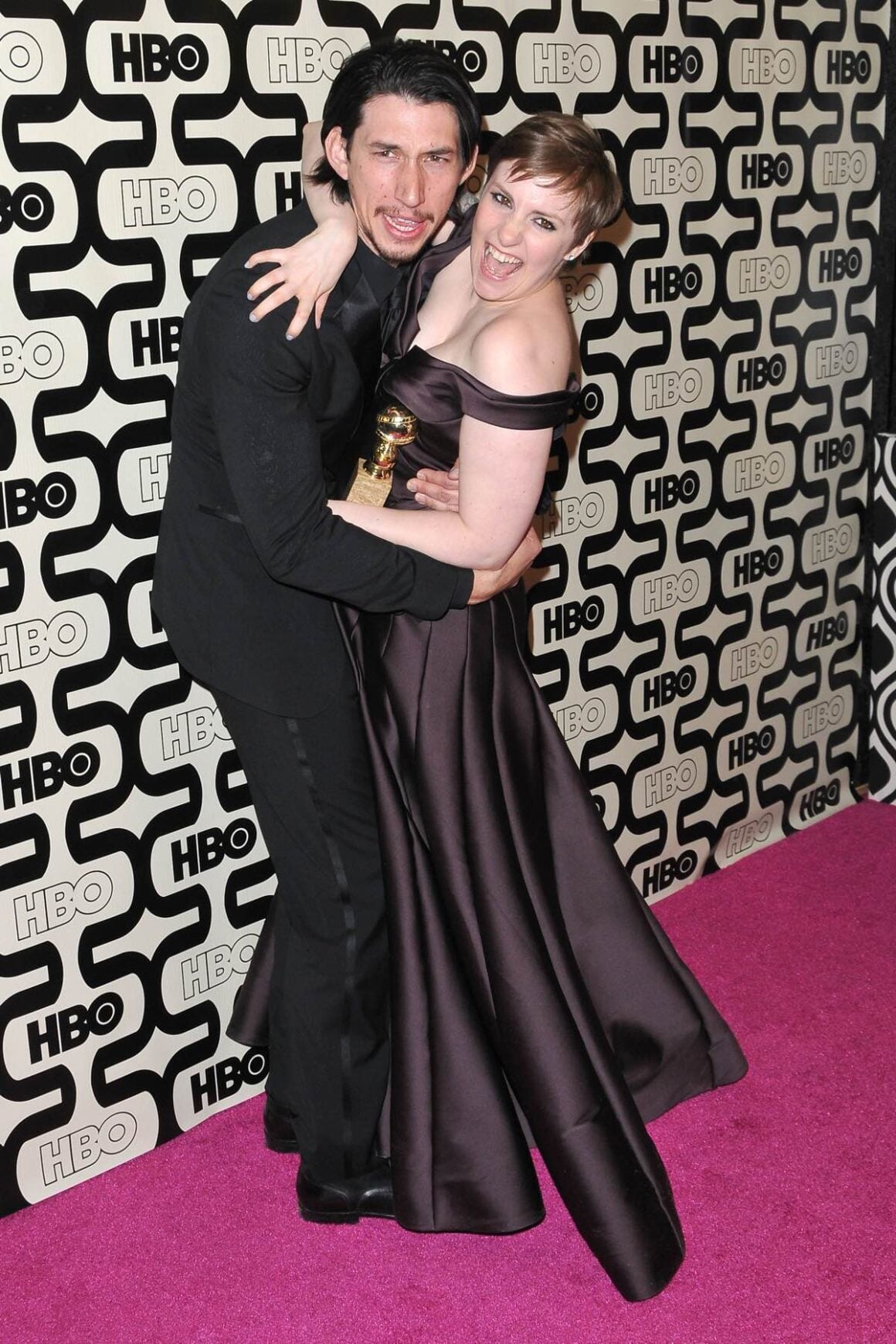
“At the time, I didn’t have the skill to. … It never entered my mind to say, ‘I am your boss, you can’t speak to me this way.’ And, at that point in my 20s, I still thought that’s what great male geniuses do: Eviscerate you. Which is weird, because I was raised by a male genius who would never do that,” she told The Guardian.
She’s quick to note she’s not broadly anti-man about it. “There’s plenty of them walking around,” she said of the “amazing men” in her life, citing Judd Apatow, Tim Bevan, Sam Levy, and Mark Ruffalo. “But there were years when I thought: ‘Can’t I just make things that only have women in them?'”
She Loved Rehab. She Means It.
In April 2018, Dunham checked into a 28-day rehab program for an addiction to benzodiazepines, a prescribed anxiety medication that she had begun to abuse. She walked out on her 32nd birthday and is now eight years sober. Most people soften the rehab chapter into something grim but redemptive. Dunham goes a different direction entirely.
“I loved rehab. I genuinely did,” she told the New York Times. “A lot of addiction is feeling a positive feeling that is in direct contrast with the rest of your life. Your life is falling apart, and you’re sitting on your bed in a good mood. There’s nothing in that. I want to have good feelings where you look under them, and there are more good feelings.”
It’s a rare, crystalline description of what recovery actually feels like — one that cuts through the usual noise. So is Dunham’s broader reflection on how fame and illness mirror each other. “Illness, like fame, can make you contract into self because physical pain is one of the most selfish feelings that exists. All you want is to be out of it. Also, illness is scary to people,” she said. “Somehow my health picture kept getting less clear, not more, which also makes it very hard for other people to empathize with, because it seems abstract, amorphous.”
The Internet Was a Game She Tried to Win
Dunham was 23 when she sold Girls to HBO, and she and her castmates — Allison Williams, Jemima Kirke, and Zosia Mamet — were, in her words, “lambs to the slaughter” when the show debuted. The online criticism was relentless and frequently vicious, and Dunham cops to getting swallowed up in it.
“If you have an addictive personality, which clearly I do, any hit of the dopamine of positivity is welcome and there’s also a hit of adrenaline that comes from the negative,” she explained. “And then, because you see something negative, you want to see something positive to erase it, and you end up in this cycle. It’s easy when you’re young to feel the internet’s a game you want to win.”

Famesick is Dunham at her most unsparing — not just about the industry, or the men who screamed at her, or the ex whose breakup songs you can stream on any platform right now. It’s about the particular madness of becoming famous before you’ve finished becoming yourself. That she survived it is impressive. That she wrote this book about it is, characteristically, very Lena Dunham.
Famesick is out now via Penguin Random House.