Highlights
- Kenneth Iwamasa, 61, was sentenced to 41 months in prison and fined $10,000 for his role in Matthew Perry’s ketamine death.
- Perry’s former publicist alleged Iwamasa was driving one of the actor’s cars at 4 a.m., hours after Perry’s death.
- Iwamasa was the last of five defendants to be sentenced in the 2½-year investigation following Perry’s death in October 2023.
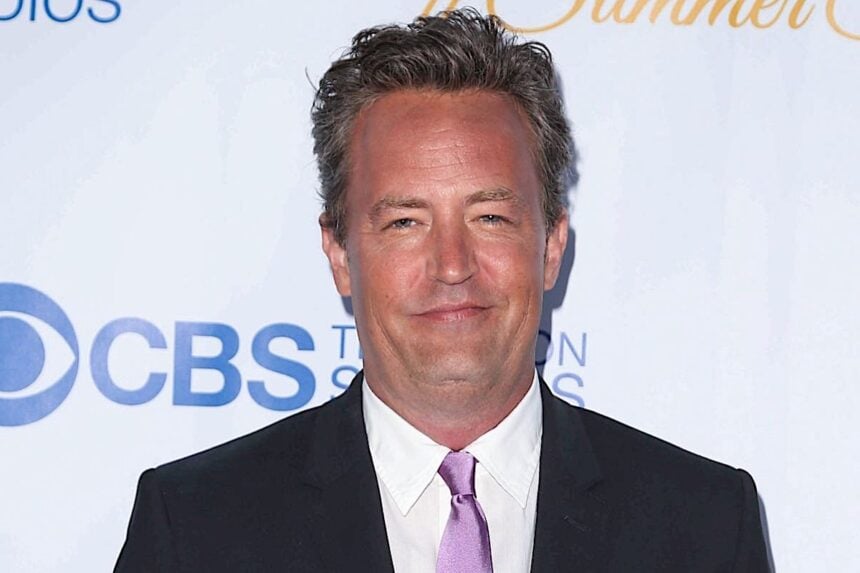
The man who served as Matthew Perry‘s closest confidant — and ultimately his enabler — has been handed a federal prison sentence for administering the lethal dose of ketamine that ended the Friends star’s life.
Kenneth Iwamasa, 61, of Toluca Lake, was sentenced Wednesday (May 26, 2026) by United States District Judge Sherilyn Peace Garnett to 41 months in federal prison for obtaining and repeatedly injecting Perry with ketamine, including the fatal dose that ended the actor’s life in October 2023.
Iwamasa pleaded guilty in August 2024 to one count of conspiracy to distribute ketamine resulting in death. Judge Garnett also fined him $10,000, the Department of Justice said.

The sentencing closed the book on one of Hollywood’s most shocking drug cases in recent memory.
It was the fifth and final sentencing in the 2½-year investigation and prosecution that followed Perry’s death at age 54 on October 28, 2023. Before handing down the sentence, Judge Garnett addressed Iwamasa directly and without ambiguity.
“You were privy to Mr. Perry’s addiction (yet) continued to obtain the drug and inject him,” Judge Garnett said. “Your conduct was reckless.”
Perry had hired Iwamasa in 2022 and was paying him $150,000 a year to live at his Los Angeles home and act as his assistant. The actor had been taking the surgical anesthetic ketamine legally for depression, an increasingly common off-label use — but he wanted more than his doctor would give him.
According to court documents, Iwamasa had known Perry since 1992. In his role as live-in personal assistant, he had various responsibilities, including coordinating Perry’s medical care and ensuring that Perry took the medication lawfully prescribed to him by treating physicians.
Prosecutors painted a damning portrait of a man who betrayed the trust placed in him.

“When defendant Kenneth Iwamasa was hired as Matthew Perry’s live-in personal assistant, he was acutely aware that Mr. Perry had suffered from drug addiction for most of his life. But rather than help Mr. Perry maintain sobriety, defendant became his enabler and drug supplier,” prosecutors wrote in a sentencing memorandum ahead of Wednesday’s hearing in Los Angeles federal court.
According to a plea agreement Iwamasa signed, he injected Perry with “significant quantities of ketamine” — he estimated around “6–8 shots per day” — in the final days before the actor’s death.
Among the most chilling allegations to emerge ahead of sentencing was an account from Perry’s former longtime publicist, Lisa Calio, who worked with the actor for nearly three decades.
In a letter to the judge, Calio said that shortly after Matthew died, “I received a text from Kenny at 4 a.m. as he was driving one of Matthew’s cars from the house in the Hollywood Hills to the house in the Palisades. And he was loving it.”
Calio did not mince words in her assessment of Iwamasa’s character.

“Kenny Iwamasa killed my friend. His narcissistic, outrageous, irresponsible behavior, his psychotic plan, caused him to heat up the jacuzzi, give Matthew the giant shot he requested and leave him alone to die,” Calio wrote.
“Whatever sentence he receives, it won’t be long enough. He will always be known as the man who killed Matthew Perry.”
Perry’s estate executor, Lisa Ferguson, also addressed the court.
Ferguson told the court that Iwamasa had been the actor’s personal assistant for one year and had attempted to make himself “indispensable.” “You didn’t care,” Ferguson said. “You were now indispensable.”
Prosecutors further alleged that Iwamasa attempted to destroy evidence in the aftermath of the actor’s death. Federal prosecutors claimed the former live-in assistant went into damage-control mode immediately after Perry died — allegedly directing another person to destroy ketamine evidence, shredding documents, and scrubbing digital records.
The feds said Iwamasa repeatedly lied to investigators — first by allegedly hiding the fact that he injected Perry with multiple ketamine shots on the day of his death, then later claiming Perry had hidden ketamine bottles himself. Prosecutors said that wasn’t true.
Iwamasa’s defense team sought a far lighter sentence.

Iwamasa’s lawyer Alan Eisner argued for a six-month prison term with six months of home confinement, emphasizing that he was always acting at the direction of a boss with much more power than he had. “His loyalty to Mr. Perry was paramount,” Eisner told the judge.
Iwamasa’s attorneys expressed disappointment in the sentence, though noted that he “has grown from this tragedy and looks forward to pursuing new goals and achieving positive accomplishments in his life.”
The four other defendants in the case were sentenced over the preceding months. Lead supplier Jasveen Sangha, known as the “Ketamine Queen,” was sentenced to 15 years in federal prison in April 2026. Middleman Erik Fleming received two years in prison in May 2026. Dr. Salvador Plasencia received two years and six months, while Dr. Mark Chavez received eight months of home confinement and 300 hours of community service.
Perry was found dead in his hot tub at his Pacific Palisades home on October 28, 2023. An autopsy showed he died from the “acute effects” of ketamine. He had been on ketamine infusion therapy, but the ketamine found in his system at the time of death could not have been from his most recent session, which had taken place about a week and a half before his death.