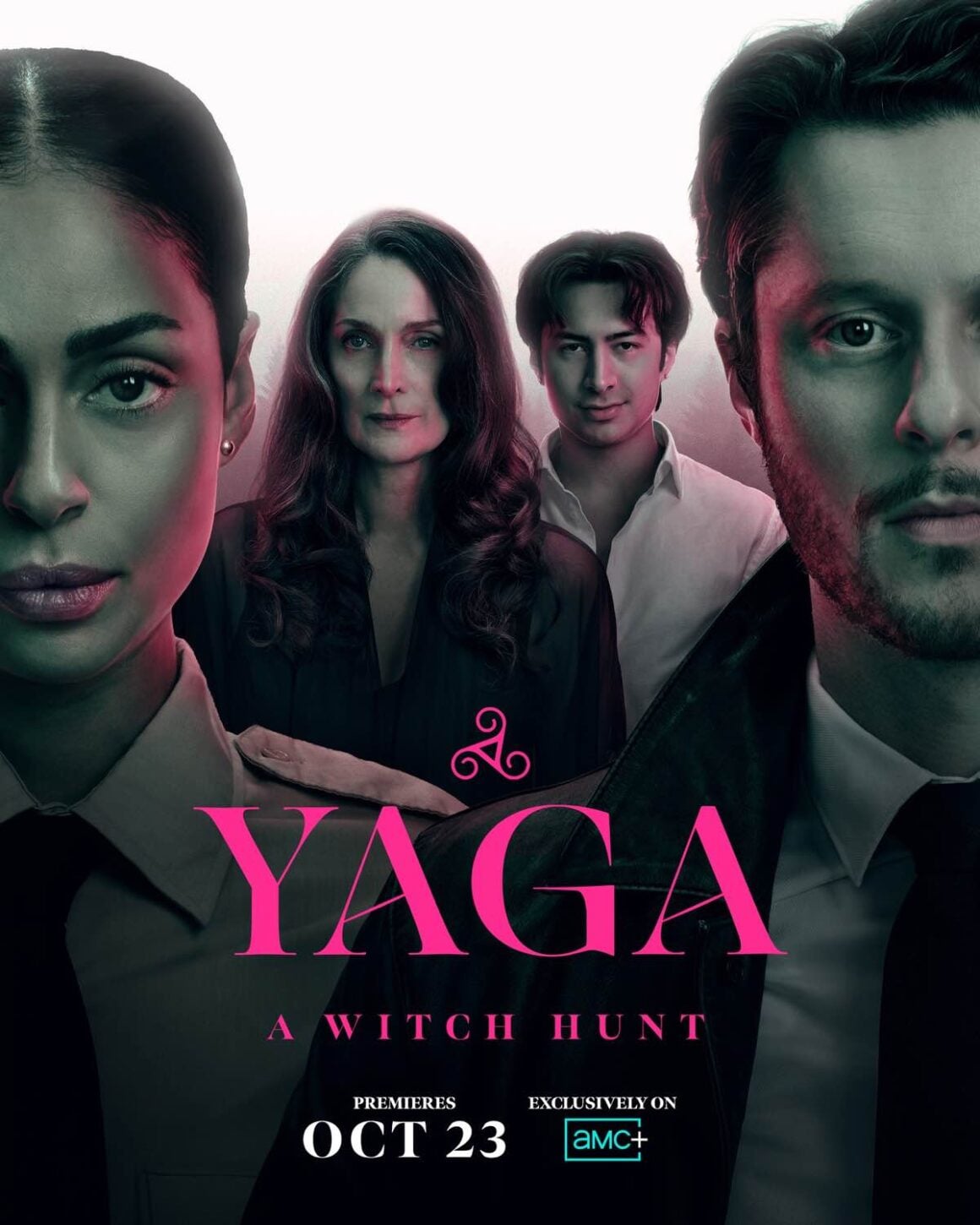
What happens when a small-town mystery collides with horror, dark comedy, and a little romantic chaos? That’s the deliciously unpredictable territory of Yaga, the genre-bending Canadian series from playwright and creator Kat Sandler. Inspired by Sandler’s own play, the Crave and AMC+ series premieres October 23 and reimagines the folklore surrounding Baba Yaga, the mysterious witch of Slavic legend, through a contemporary story filled with secrets, suspicious characters, and badass women who refuse to fit neatly into anyone’s expectations.
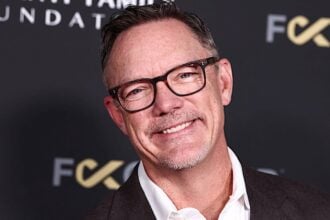
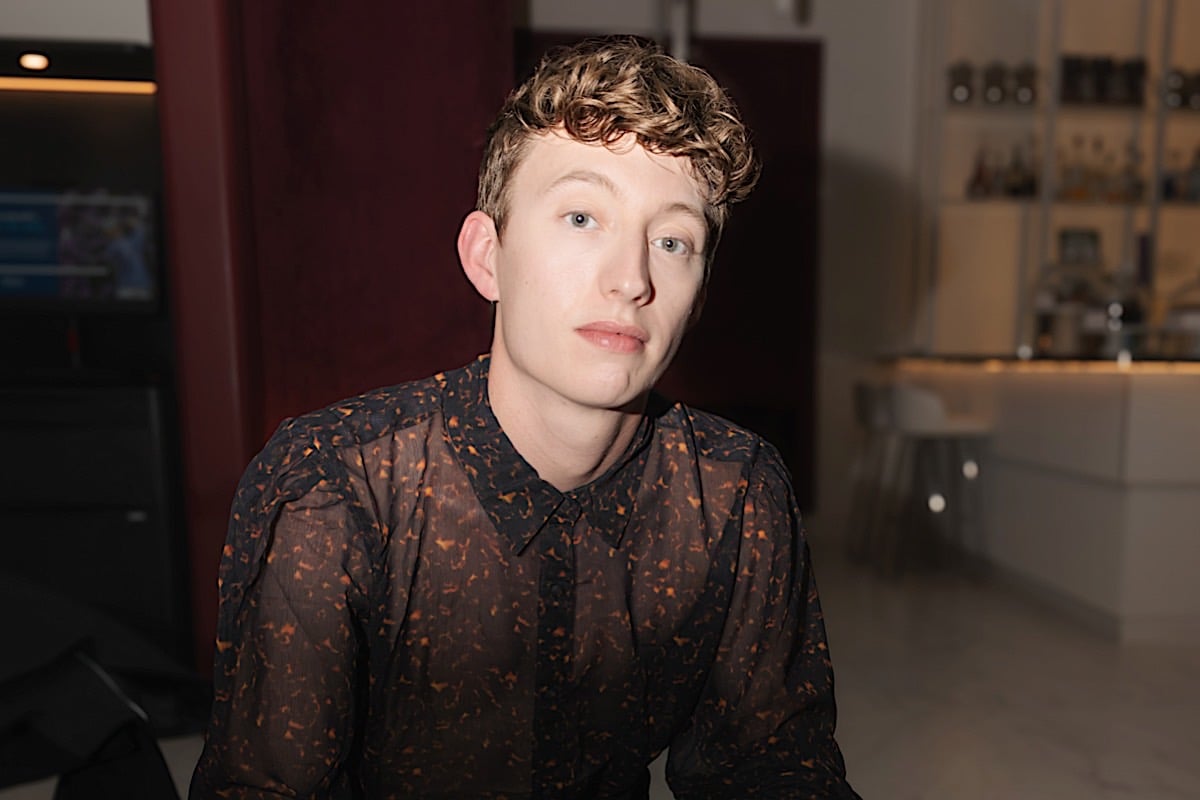
Featuring a standout ensemble that includes Carrie-Anne Moss, Noah Reid, Clark Backo, and Hudson Williams (from Heated Rivalry), Yaga keeps audiences guessing as its mystery unfolds in the town of Whittock. Sam Krochmal, an award-winning screenwriter and actor, joins the cast as Billy, a rookie cop who gets in over his head as he tries to solve the case. Bringing a welcome dose of comic relief to the series’ darker twists, Billy desperately tries to prove himself, even when he’s not quite up to the task.
For Sam, Yaga’s appeal was its originality, its willingness to defy genre conventions, and the chance to contribute to a distinctly Canadian production. In our conversation, he discusses finding the comedy in a dark mystery, collaborating with a cast he describes as Canadian television royalty, and why Hudson Williams’ performance is poised to surprise audiences beyond Heated Rivalry. He also reflects on his journey as an actor and screenwriter, working alongside Nick Offerman in Voicemails for Isabelle, and learning to embrace imperfection rather than put too much pressure on himself.
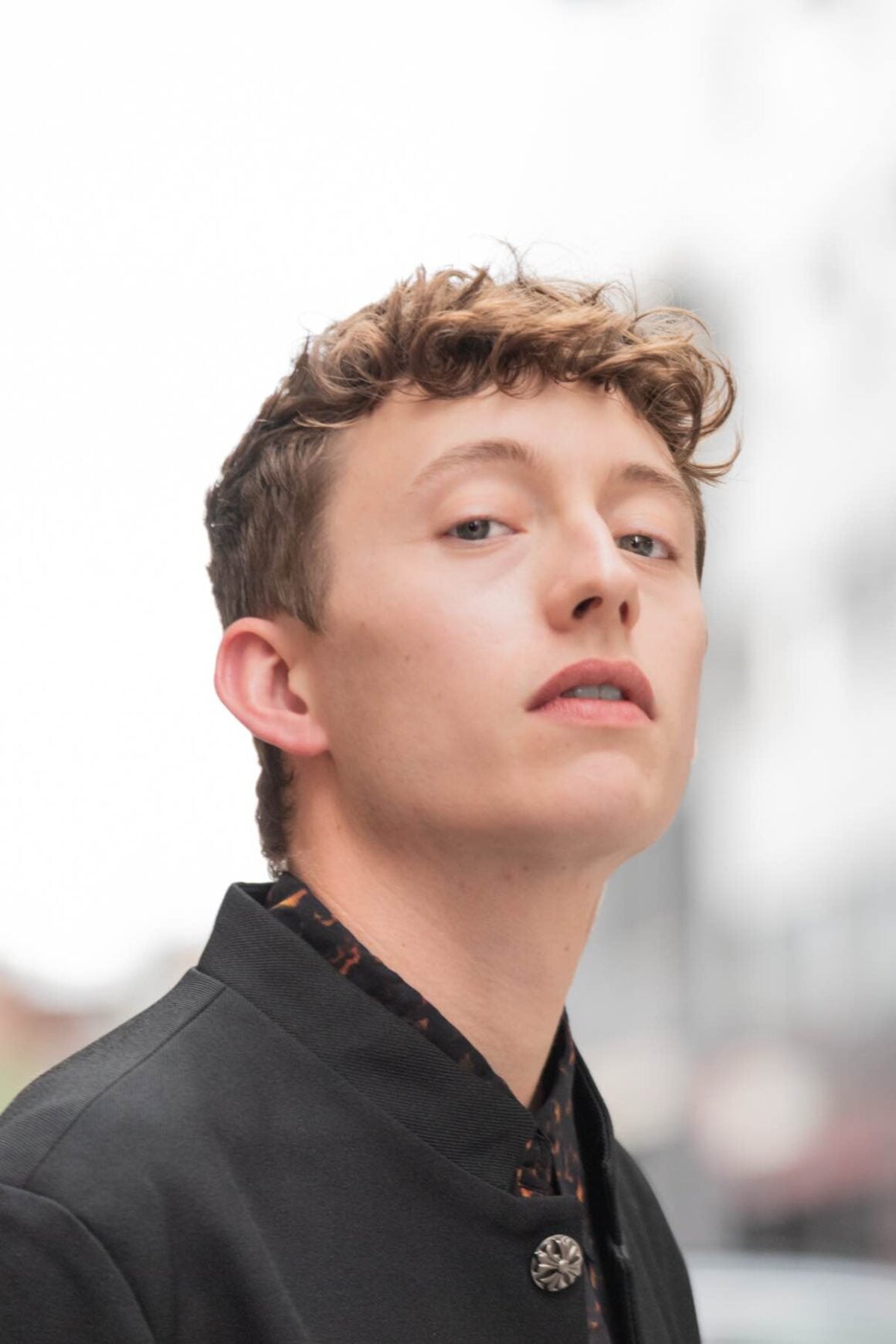
Tell me how you got started in acting.
I would say that my story is not the most cinematic or poetic of them all. I grew up in Edmonton, Alberta, and I think from a young age, acting was always present in my life. I was involved in the high school musical and I just always found a real sense of comfort and authenticity when I was performing and acting. When I was coming of age, 18, 19 years old, I didn’t really know what I wanted to do with myself. What I did know is I wanted to get out of Edmonton, so I ended up taking a gap year in the UK, and I think my time there and my kind of soul searching led me to the fact of the matter, which was I don’t think I want to do anything else for the rest of my life, or I can’t imagine doing anything else that wouldn’t leave me feeling sad. It was this process of elimination, of the one thing I’d love to do is this, so I think I owe it to myself to give it a whirl and I moved to Vancouver and that was the start of it. That was the seed of it.
And since then, I just basically wake up every day and have to tell myself that I’m not quitting because it’s hard sometimes but I feel like it’s been a really rewarding just about a decade doing this and I feel like I’m finally starting to see some growth from the seeds that I planted along the way, which is really exciting.
Now, along with being an actor, you are an award-winning screenwriter. What comes more naturally to you, writing or acting?
I feel like it’s so circumstantial. It depends on the material. I think, touching on a project like Yaga, I think that’s a really great example of material that came really naturally to me. I think it’s a real luxury when an actor gets to play a character that’s basically themselves and that was very much the case for Yaga. But not every acting job is like that. I would say acting probably comes a little bit more naturally to me, just because I’ve been doing it longer.
And the kind of impetus of the screenwriting for me was, like, feeling frustrated and wanting to create some of my own opportunities. I think there’s a real beautiful link between acting and screenwriting, and I think being a really good actor makes you a better screenwriter, and I think vice versa as well. I would love to keep doing both. But yeah, neither is easy, I would say. They’re both challenging.
What was it like working with Nick Offerman in Voicemails for Isabelle?
It’s a funny story. I booked that job and I think with Netflix specifically, things were a little bit chaotic around pre-production and ramping up into shooting. I knew I’d booked the job, but I didn’t know much else. They weren’t really communicating what was happening. My dates were up in the air and so, when I finally got my dates – I ended up getting the call sheet I think two days before. I think I think we were shooting on a Monday, and I got the call sheet like, mid-Saturday. All the way up to two days before shooting, I didn’t know who I was going to be working with. All I knew is that Zoey Deutch was in this movie, Nick Robinson was in this movie, and that’s it.
I knew I was playing across from the Chef Bastian character, and I was just assuming it was going to be a local hire. Someone from Vancouver, maybe someone I would know and yeah, I was a little gobsmacked when that call sheet came through. I wouldn’t say that I have many moments in my career where I catch myself fan-girling, but that was one where I was like, wow, it is an honor and a privilege to work with such an influential performer. And, as is the case with most of these super successful well-respected actors, he’s just the nicest dude. No ego, super chill, shooting the shit about his woodworking. He just created such a sense and an aura of calmness on set that made the work feel really easy.
It’s too bad not a lot of people know this, but when we shot that scene, most of the takes ended with Nick Offerman slapping me across the face as I was sobbing. That was what was in the script. And I’m sure that Leah McKendrick and Netflix along the way were like, “This is maybe not funny. Maybe this is just mean.” So, it didn’t make the final cut of the movie, but I often joke and boast that getting slapped by Nick Offerman is definitely a career highlight so far.
Let’s talk about Yaga. What was it about that project that immediately made you want to be part of it?
Right off the top, I was super excited to see Kat Sandler attached to it. When I originally got the breakdown, I wasn’t putting two and two together that it was based off of one of her plays, and my friend who was helping me audition was like, “You realize this is her work?” And then it all snapped into place for me. So, immediately getting to work on something that’s an adaptation of a play is super unique and cool, and I feel like in the current landscape right now of spinoffs on spinoffs and remakes and sequels, and not a lot of super creative cool shit being made, it was really exciting to see such a cool original story and I think that immediately grabbed me.
Also, I just think the mystery genre is just a genre that transcends. Everybody loves a whodunit. I just feel like it’s so universally loved. And I think most importantly for me, working on a production that was explicitly doubling down and really saying “This is a Canadian show,” made by Canadian people, top to bottom, all through the creative lineup, that was really special and made me really excited to jump on board as well.
Is there anything you could tease about your character without giving away too much? Where does your character fit in this world?
My character’s name is Billy. He is the new rookie cop on the scene in the town of Whittock, and he’s there to help and aid in the investigation and the mystery. I’ve said it before, I would like to believe that Billy, before this investigation, was probably on like parking ticket duty. He is the opposite of seasoned. He’s a little in over his head. He is so desperately trying hard to do the right thing and to prove himself as a good detective, and he often fails to rise to the occasion. And I think the result of that is Billy providing a sense of levity and comedy in a pretty dark story – and that’s just bread and butter for me. I think I’ve kind of built my career on being the comedic relief or the funny guy. It’s a big treat to get to play a role like that.
The show itself blends a lot of different genres like horror, mystery, and humor. What was your reaction when you first read the script and realized it wasn’t going to fit neatly into one genre?
To be honest, mostly because I have worked on a handful of them, there’s an expectation or a stereotype when it comes to Canadian television, especially in the procedural landscape. A lot of these shows are kind of hitting all the same notes. They’re not necessarily bad, but they have a formula to them, which I think makes them successful. But it’s relatively safe. I think when I first read the material and the scripts, my initial reaction was like, “What is the genre of this?” And then getting to work on it and hearing the cast’s perspective, that was the intention and I think it’s what makes the show so special and so different. As you’re watching it, the ground is shifting underneath you. Sometimes it feels like you’re watching a rom-com. Sometimes it feels like you’re watching a dark thriller. Sometimes it feels like you’re watching a procedural. It really ebbs and flows as you watch it, and I think that the result of that is a really engaging and what feels like artistic piece of television. I think it’s really special and I’m very curious to see how people respond watching it. I have a feeling it’s probably going to be similar to how I felt when I read it, which is “What’s going on? I need to see more.”
The cast is made up of a lot of very talented actors, like Carrie-Anne Moss, Hudson Williams and Noah Reid. What was the dynamic like between the cast off camera? Did everybody click, or did it take some time to find chemistry in this very interesting world?
Firstly, what a blessing to get to work with what I would describe as like the Canadian royalty of television. Noah Reid, Clark Backo, Hudson, Carrie-Anne Moss, are you kidding me? These people are iconic. The little actor in me was jumping up and down to get to collaborate with these folks. But, on a day-to-day set basis, the, the atmosphere was immediately one of so much excitement and passion and focus. I think a lot of TV shows especially shows that kind of bleed into a second, third or fourth season suffer from everybody starting to phone it in a little bit. It’s like people are present, they’re there, but they’re not like giving it 100% – which isn’t anyone’s fault.
It’s a lot of work to do this stuff. Kat Sandler came in with such a passionate, ignited excitable, and razor-sharp vision for this project that I think it just immediately pulled everyone in, and there was this kind of universal unspoken buy-in of we’re going to make something fricking cool. So, in terms of the atmosphere on set, everyone was dialed in, they were focused, but at the same time and a lot of this has to give props to, to David and Rachel, the co-directors. They created such a sandbox for us actors to play around and find moments off the page that weren’t in the script. It was an environment that was conducive to a lot of really fun moments and magic, and I think that everyone was just bringing their A-game and you felt that right away.
Obviously there are very big fans of Hudson from Heated Rivalry, and that series put Canadian shows really on the map in the United States. Given the attention surrounding Heated Rivalry, are you excited for audiences to discover Hudson through a different series and through a different lens that’s in a completely different world?
I’m so excited for Hudson’s following to get to see him in such a different light. I think this is not only quite brave of Hudson to make such a strong pivot, but I also think it’s really strategic. I think that it can sometimes be a blessing and a curse to have your career kind of catalyze around one role and be known for that role. I think sometimes it can be tricky for an actor to break out of that brand, and I think Hudson is smart in doing something that is so polar opposite to his work on Heated Rivalry – and not only do it but do it at a tremendous level. The guy’s so talented, and I think that if anybody thought that Heated Rivalry was a fluke or a one-off, this is going to silence those haters. His work is tremendous on this show, and also what a crazy challenge to have to play two different people. I will tell you, having watched it, he has exceeded expectations.
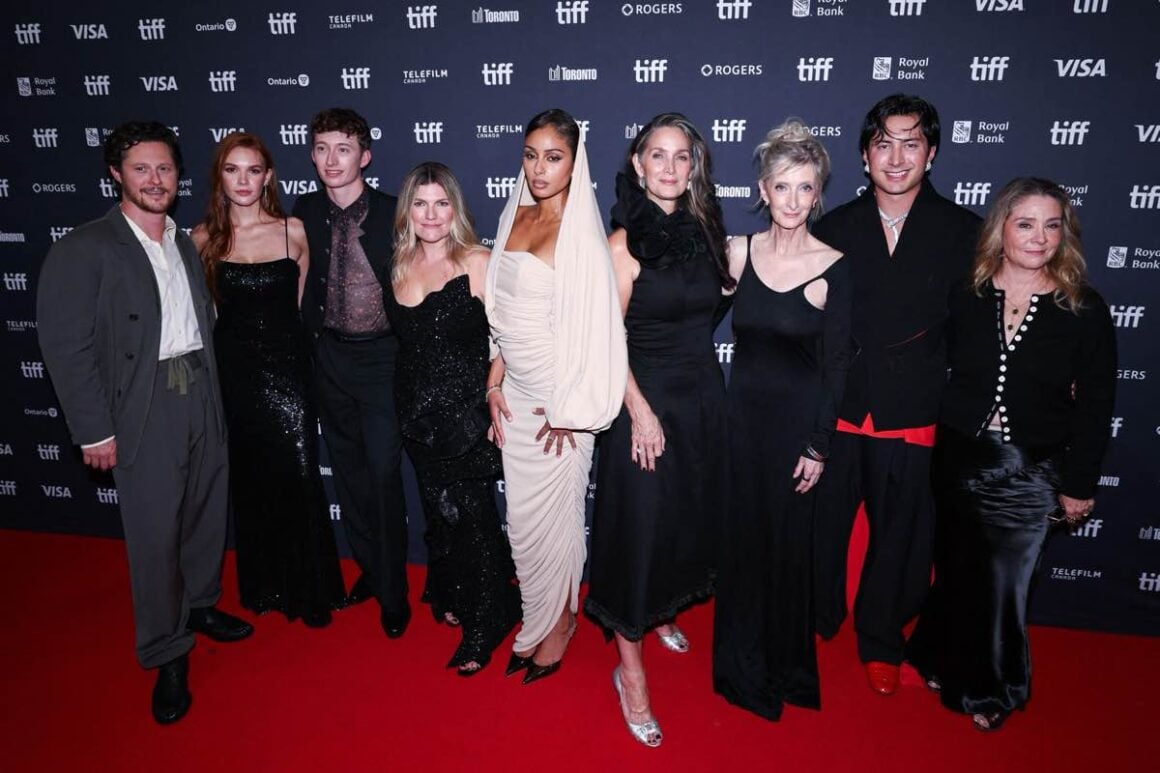
The first two episodes premiered at TIFF. What was it like seeing the series with an audience for the first time in a festival environment?
So cool. You work on this thing, and then there’s a lull where so many months go by, and you start to build the expectation and then the anxiety and the excitement of how it’s going to eventually land with the people that are going to watch it. TIFF was…I could talk about TIFF for hours. Just that whole process and that experience was surreal on a multitude of levels, especially for me. But how cool and special to get to experience the first two episodes with an audience for the first time. That was the first time I saw it as well, which was really special. It’s television, and you don’t get to have a movie theater experience watching TV very often, so it was really cool to watch it in that environment, watch it with an audience that was just as excited to be there as we were, and really vindicating and fulfilling to see that that it was received beautifully. I think the audience went on that rollercoaster of there were scary moments, there was laughter. It was really special, and I just can’t wait for more people to see it.
What do you hope audiences will take away from Yaga after they’ve watched the series?
First and foremost, I think that we are past due for more stories being told that have strong feminist leads and feminine anti-heroes. I think that we should not villainize badass women. And I think that the original Baba Yaga urban legend – this kind of dated depiction of this old woman in the woods who grinds up children’s bones and lives in a hut on chicken feet – that depiction is typically depicted as a little bit evil, ill-intentioned, disgusting, misunderstood. And I think this show is asking who decided that she is those things, and does us not understanding or a woman having some mystery around her automatically mean that she’s out for evil or in it for the wrong reasons? I think that this is a TV show that is unapologetically a full display of badass women. Yeah. And a little bit like “F**k Men” also, which I think is super fair, and I’m all for that message.
In addition to working on Yaga, you’ve got a lot of projects in the works. You’re working with Osgood Perkins. What was it like working on that film with such an interesting director?
Osgood has got such a terrific mind. It was a full-circle moment for me because a couple years ago I was at a small film festival in British Columbia in Chilliwack called the Chilliwack Film Fest, and he was there. His film Longlegs was opening that festival, and he was there doing a talk back, and I was sitting in the front row and just in awe listening to this director. And you know what? I think I walked away from that panel being like, man, those are the kind of collaborators I want to work with. I hope I get to work with somebody like that someday and kismet, about a year later we were working together.
He has such a complex mind and such a clear vision. I think the thing that struck me on a movie like that, which, you’re dealing with just such big budgets, high stakes, a lot on the line. He just brought such a chill and calm demeanor into a project that is pretty high stakes in terms of the economics of it is pretty cool. And I don’t know when it’s going to release. Hopefully soon, but I’m very excited because the film is crazy.
In the short period of time that you’ve been working, you’ve had the chance to move between a lot of different genres. Is there a particular type of role that you haven’t had the opportunity to play that you’re hoping that someone would give you?
I think I kind of mentioned before, I’ve found my little pocket in the industry, living in that comedy, quirky place. I think that work comes really naturally to me. I just did a job on a Canadian television show where I got to play a character that was, like, a little bit excuse my language, f**ked up. And that was a really fun challenge for me, and really affirming. Not only did I feel good about it, but I was like, “I like this. I like kind of living in this place.”
To answer your question, I’m hoping that moving forward, not only can I continue to do the funny stuff because I love it. I love making people laugh. I love the quirky silliness. But I hope that I get the opportunity to play some characters that maybe have bad intentions or are a little bit questionable. I think that would be a really fun way to push my push my range a little bit.
I always ask everybody that I interview, what is the best piece of advice you’ve been given in your career?
This may be a little bit esoteric or cheesy, but I think that the nugget that’s really stuck with me, especially over the past couple years, because I’ve been kind of going through a period in my career where I’m getting work, which is exciting and the size of the opportunity is starting to sneak up a little bit. I think, at least for me – and I think a lot of artists can relate to this – I really start to crank up the pressure wheel on myself. It feels like the stakes get higher and I’m really trying to do it right. I’m trying to do a good job. I don’t want to fail. And I think the result of that, for me at least, has been starting to just grip the steering wheel a little bit too tight. And I think in this line of work, the second that you are trying to get it right, trying to not mess up, trying to do it well, trying to give them what you think they want, which they don’t know actually, the second you grip it that tight, the work’s not going to be there.
And I think that, at least for me, what I’ve experienced is when I’ve let go a little bit of the handlebar, so to speak, and I’ve tried not to strangle it that’s when the work starts to feel really embodied and good. It feels kind of counterproductive to try less to be better and it’s not about effort, but it’s about finding ease in the work. So, to anyone who’s trying to do this or trying to do any creative field, stop being mean to yourself. The way that I talk to myself, I would never, ever speak to a friend or a family member like that, so why am I talking to me like that? So be nice to yourself. And also, release the pressure to get it right because I think the best work is the work that feels wrong and imperfect because that’s human.
Yaga premieres on October 23 on AMC+. Follow Sam on Instagram and his website.