An abusive ex. A world-ending storm. A primordial cosmic threat. Scorch Marks has all the ingredients of a nightmare, but beneath its apocalyptic horror is a surprisingly intimate story about queer relationships, trauma, and survival.
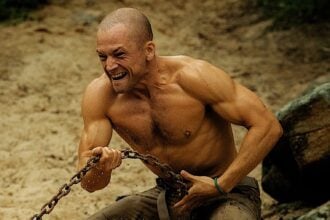
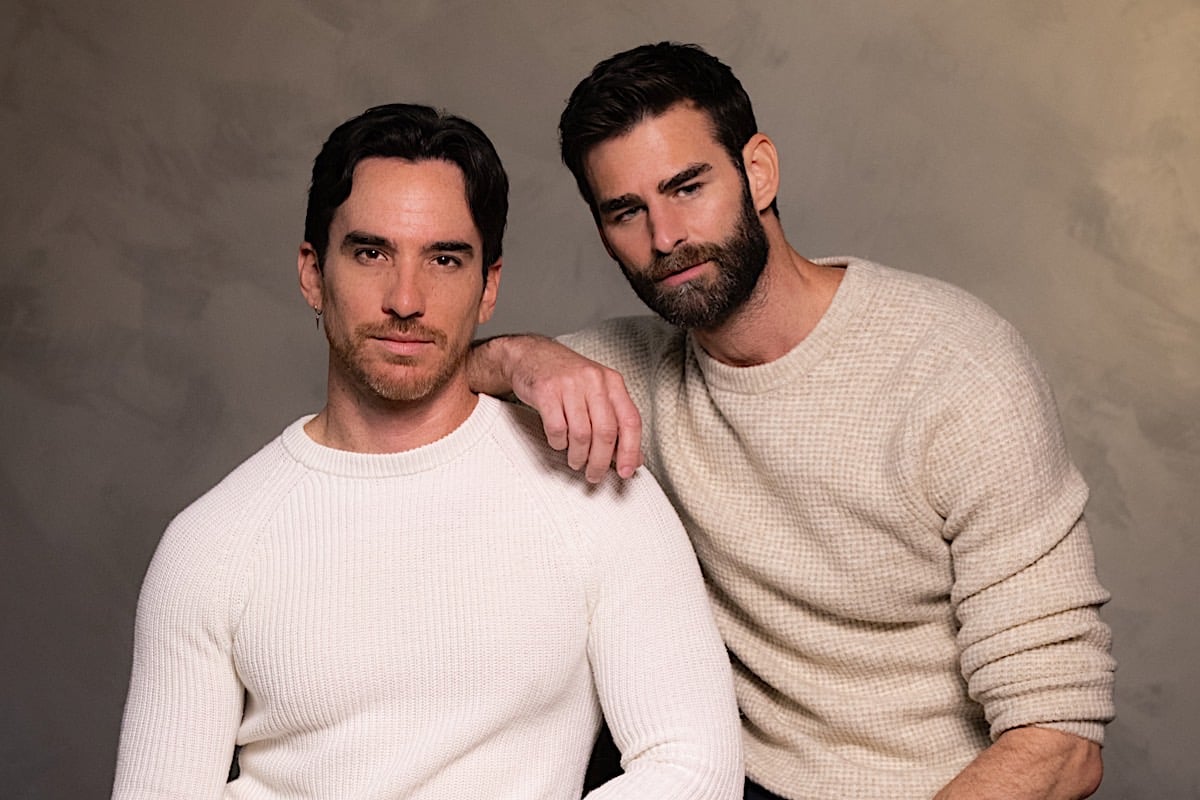
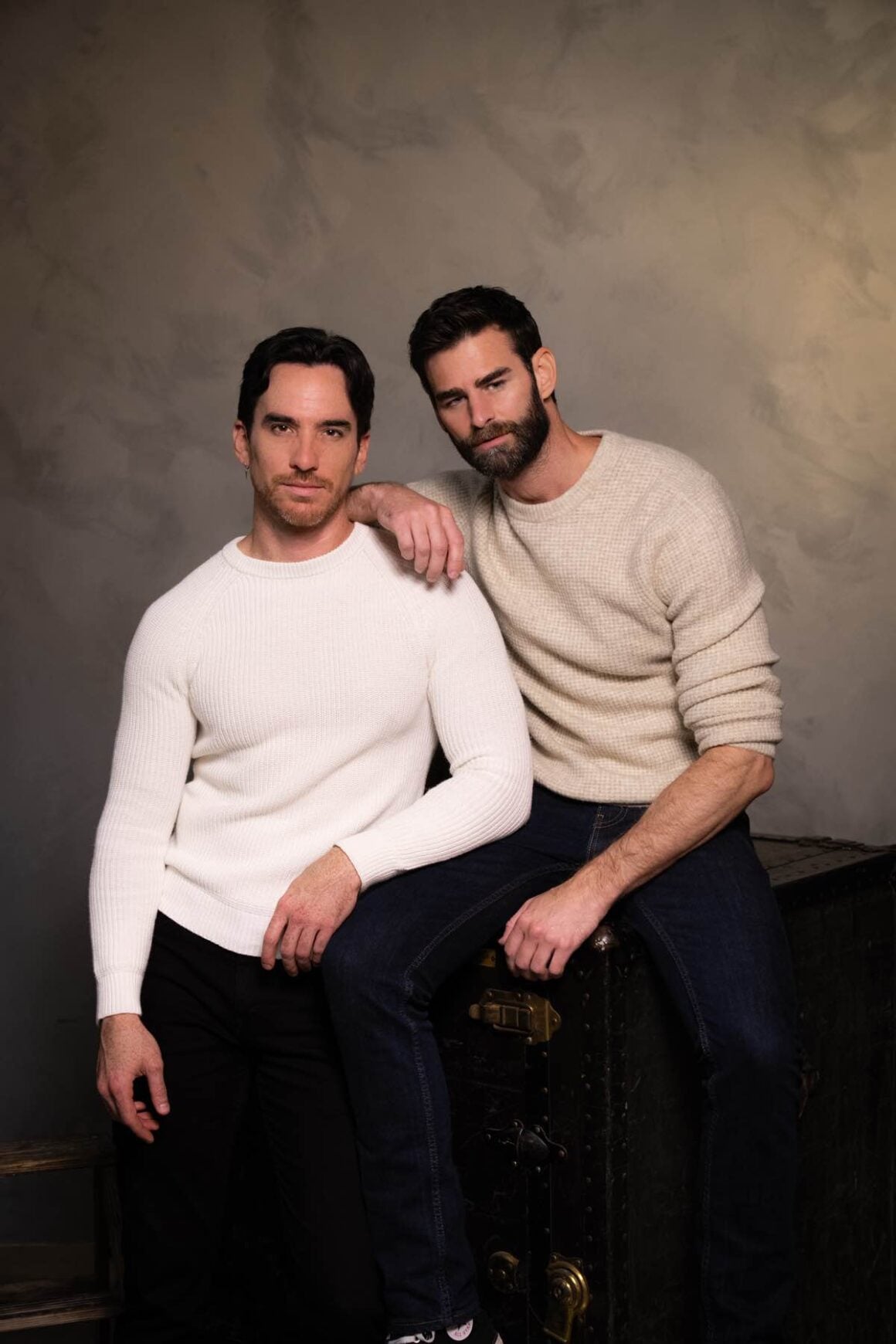
Written and directed by Brendan Haley, the film stars Brandon Shypkowski as Beckett, a flawed man awakening to a seemingly destroyed world, and Chris Salvatore as Joel, his abusive ex-husband whose presence continues to haunt him. The film turns the apocalypse into a metaphor for the chaos and isolation of a world that has historically demanded queer people conform, while asking what happens when those destructive expectations follow us into our relationships.
The roles also gave both actors an opportunity to explore new territory. Brandon worked closely with Haley to shape Beckett’s complicated personality, while Chris, best known for his romantic-comedy work in the Eating Out films, embraced the chance to play a genuinely antagonistic character. Ahead of the film’s October 1 premiere on Dekkoo, the actors open up about their characters, their on-screen chemistry, the challenges of portraying an abusive relationship and finding hope at the end of the world.
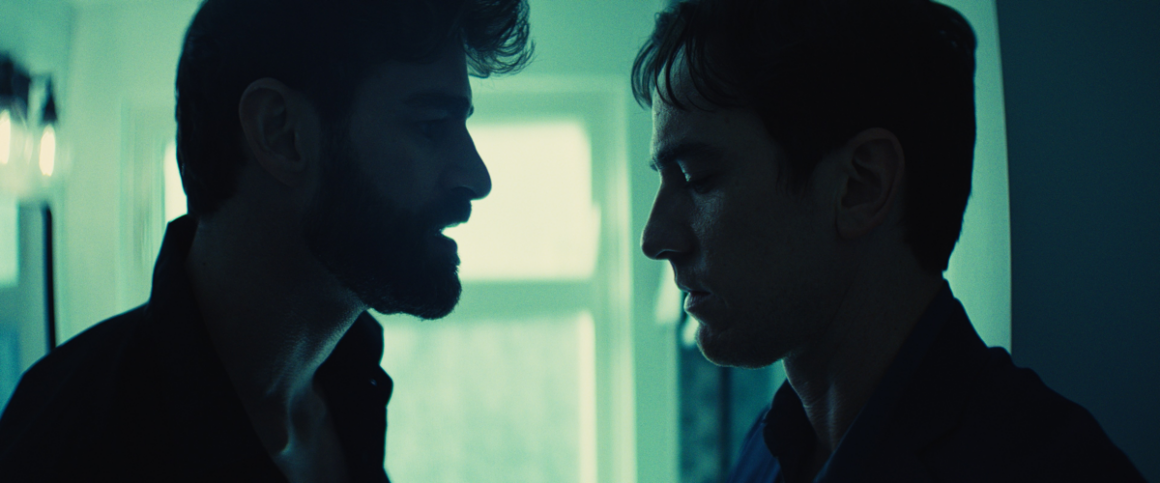
What was it about the movie and specifically Brendan’s screenplay that made you want to be a part of the movie?
Chris Salvatore: When he first told me about Scorch Marks and the character that I play, he basically was saying, “Joel is kind of a bastard, and I don’t think this is like any role that you’ve played.” I’ve known Brendan Haley, the director-writer, for a while now, and I always wanted to do something like this, but I’ve been typecast as the guy-next-door type, and this is what I’ve been waiting for. That’s one of the main reasons I wanted to do it. When I read the script, I was like, oh, this is going to be really fun – although I was quite nervous because since it was new for me, I wondered if I was going to be able to pull this off. But it was a lot of fun.
Brandon Shypkowski: When Brendan sent it to me, I think I just really connected with Beckett, the main character, because I keep making this joke that filming was cheaper than therapy, but I was going through a lot of sort-of emotionally turbulent stuff. As I was reading [the script], it’s such a gift to an actor because it’s something you can sink your teeth into and really go there, and with a team like Brendan and Chris, who’s not only so effing talented but just so generous, I felt safe to really go there. With something like this, you’ve seen it, it is a lot of crying and a lot of yelling and a lot of screaming. But the moment I read it, I was like, oh, this is something I really want to do.
The movie combines apocalyptic horror and psychological terror and of course, the queer storyline. What was your reaction when you first read the script and you realized how many different layers were going on within the story?
Brandon: This is what’s so great about Brendan and his writing. I think there are so many different layers to this in feeling othered. There are themes of shame and guilt, which I think are common in horror. But the apocalypse setting, interlaced with what happens to mine and Chris’s characters, I think he gives you the context, right as you need it throughout the film to make this really beautiful arc between our characters specifically, where we go from just despising each other in the beginning to this kind of nice resolution, it was just so brilliant. And then to do it in the context of the apocalypse, I think is a tall order, but Brendan totally pulls it off.
Chris: It’s definitely one of those movies where you leave with questions, and I think
that’s a good thing because I feel like it leaves the viewer with the ability to come up with their own assumptions and conclusions as to what things really mean because some of it can be kind of heady and very thought-provoking, especially with the entities and Tiamat and the other black-figured entity that Beckett sees.
When I first read it, I was like, “Okay, Brendan, can you explain?” I was like, “What’s going on here?” I even had to ask – I don’t know if this is a spoiler – but I was like, “Am I actually there or am I not? Is he imagining me?” But I love that it is not really answered in a way because I want the viewers and people that watch it to think of Joel as actually being there in any sort of sense, even though maybe it could be Beckett’s imagination or hallucination. But I definitely played it as, obviously, him really being there just for the intention of that.
Brandon: Everyone has their own experience with it. I feel like I had a different experience
watching it than when we made it.
Chris: Absolutely. Seeing it all together because you’re like, “Oh, okay, I didn’t think about that.” That was a really cool thing for us to see together and be like, “Oh. Oh, cool.”
Brandon: I was holding your arm and squeezing you to death watching myself.
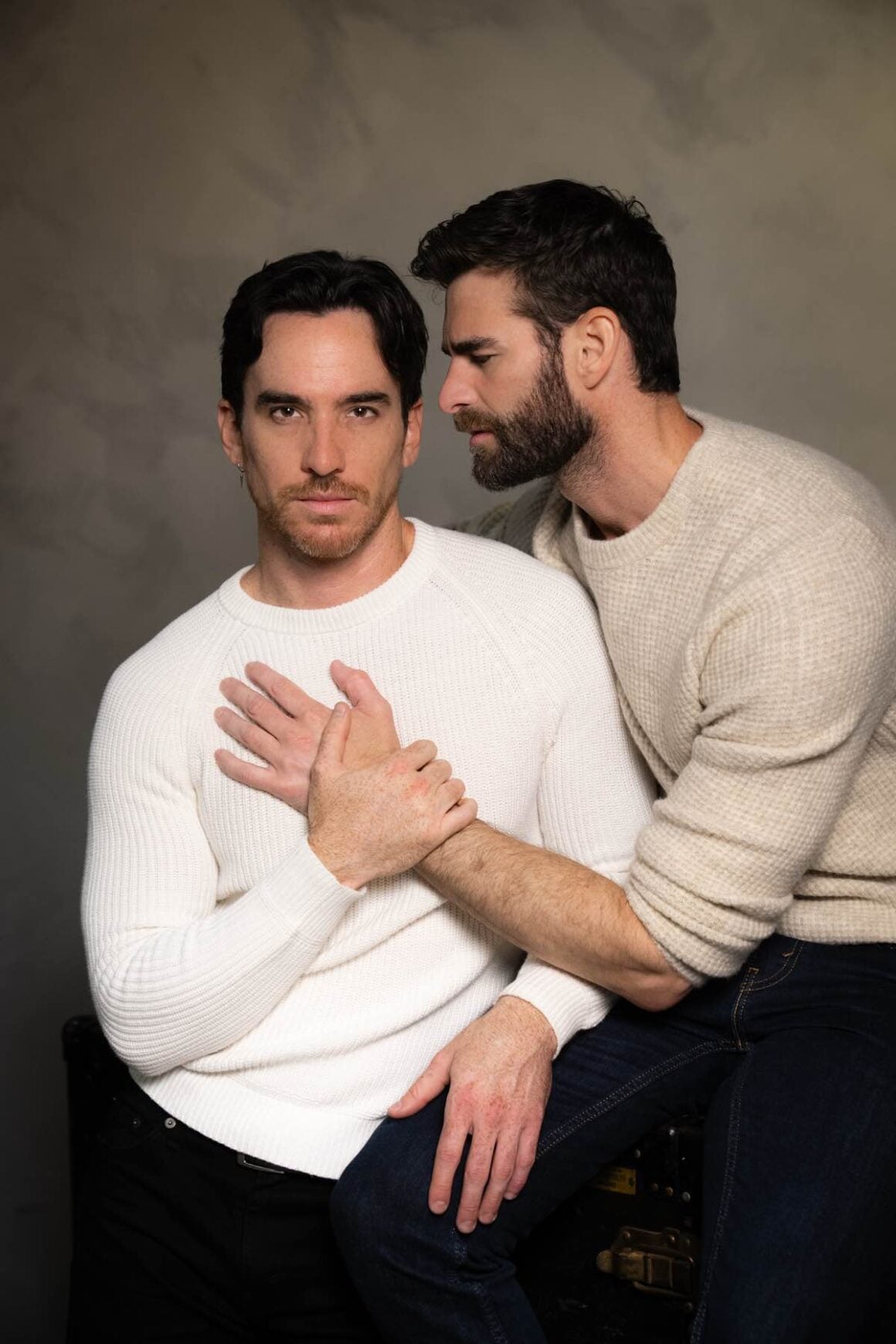
Chris, the audience may have known you best from the Eating Out movies. What appealed to you about playing someone as dark and antagonistic as Joel in the movie?
Chris: I feel like for me, obviously I’ve never played a role like Joel before and when I read the script, I was like, “Oh, this is really going to help me grow as an actor.” But I also loved the amount of layers that it had, and I think some of the layers aren’t so obvious. Whereas in Eating Out, you don’t leave the movie with a lot of questions, I really love the idea of Scorch Marks being a movie about isolation and feeling othered in the gay community, and then also feeling isolated because it’s the end of the world and there’s not many people left. I feel like that layering of the two as well as our relationship and how I use isolation and control to manipulate Beckett is just really interesting.
I feel like there haven’t been a lot of queer stories like that, that kind of focus on the really messy, layered thing about it. I think we’re finally coming out of the “coming out era” of storytelling and really getting into the nitty-gritty, all the pain and the shame and the mess
underneath all of that. And, obviously, it’s a totally different movie than Eating Out, a different genre. But at the core of it, they both have heart. I’m not putting down Eating Out at all but it’s also just funny where I’m at in my life because when I filmed it, gosh, it might have been almost 20 years ago. I feel like I’m in a different place. I’m more serious about my career and my acting and even the state of the world, it is fitting with this movie, so it’s just really interesting how that kind of happens that way.
Brandon, Beckett is described as selfish, arrogant, passive, and even annoying but there’s also an innate goodness and compassion underneath it all. How did you find the humanity in a character with so many difficult qualities?
Brandon: I think that’s one of the things that – what I was saying earlier about it being a gift – I have to obviously empathize and find the humanity in this character, or I can’t really play him. And I think, going back to Brendan’s writing, Beckett is so deeply flawed and he’s not the victim of this toxic relationship, he is one half of it. And I think what was so beautiful is we got to the place where we could see that he was a good person who had been bruised and battered his whole life and was doing everything he knew how to in order to survive and making horrible decisions.
And finally, throughout the course of this movie – though it took an apocalypse, an ancient deity, and a dead demonic ex-boyfriend to get me there – I finally understood and took responsibility for what I was doing, not just between us, but in how I was moving through the world. I think one of the most beautiful things about this film is that scene on the dance floor where we have a real nice reconciliation saying, “I loved you once. No, I didn’t,” finding the nuance of that toxic relationship and taking responsibility for it, I think is my way into finding the humanity in Beckett.
You spent months rehearsing together before filming. What did the rehearsal process allow you to establish that you might not have been able to build once the camera started rolling?
Brandon: Rapport and trust. A deep trust.
Chris: Yeah. I can’t imagine us meeting the first day of shooting and it turning out the way it turned out. I think we obviously have rapport in real life because of all the rehearsal time and stuff. But then bringing that and translating it to this relationship that’s not a very good one, I think it made that jump a lot easier because underneath we already trusted each other and we felt safe with each other to really go to those places. We rehearsed a lot, maybe a couple times a week sometimes, for two months and just being able to get into a sort of rhythm because some of the scenes are intense and there’s physicality to them as well was really helpful. And, on top of that, I’ll say for me, then being in prosthetics and then having white blackout contacts in my eyes, not being able to see – where I couldn’t see anything – thank God we had the rehearsal time because I feel like for me, I’ll speak for myself, my performance would’ve suffered tremendously if we didn’t spend all that time rehearsing.
Brandon: I’ve got basically the same answer. I think without all of that time getting to know
each other… there would be rehearsal days where we spent hours talking and getting to know each other before we even jumped into the scenes. I think that built a trust between us where I felt so safe to really go to the dark places that we have to go in this film. And I’m the same way. If we’d just met on set, the work would have suffered. I don’t think there’s any way that we could have found all of the meat on the bone in these scenes without really trusting each other.
Chris: And I think also what it does is it helps you let your guard down because normally you don’t really get rehearsal time when you shoot a movie. You just kind of show up on set with your lines memorized and your beats, and you did all your work and you’re prepared with whatever it may be, your acting coach, a friend, or yourself. And then you meet the actors, and then that’s it. If you’re supposed to have known each other for 20 years, married or whatever, you go and find it right now. I feel like just having that time to get to know each other, I wasn’t nervous at all because I knew him and I was like, “Oh, I can let the nerves go, and I can just focus on, the acting,” so that was helpful.
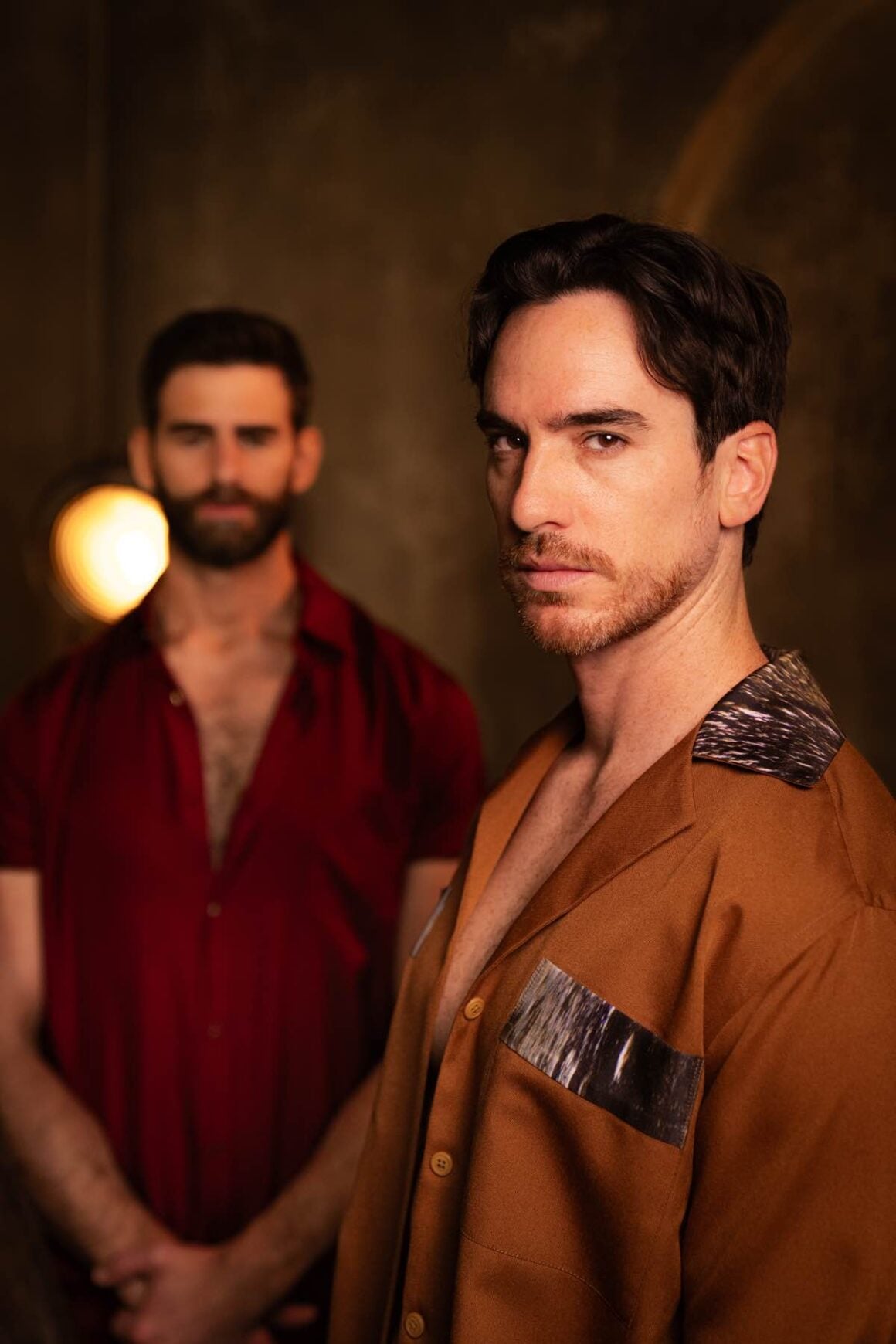
Was there a scene between Beckett and Joel that was particularly difficult to film together?
Brandon: Our last scene together, the one where we’re dancing because that’s the one where we’re really showing the most care for each other. And, for me, I didn’t even have to try to get emotional. I was just emotional standing there talking to you, knowing that this is the last time I get to talk to you. Everything just welled up. And I think, again, that we got really lucky. There’s an element of it that you can’t plan for. You can meet somebody and you just don’t really click. But luckily, we just did. We’re such birds of a feather. So that scene for me was just…I’m crying in the scene, but I’m really crying.
Did you learn anything from each other as actors while making the film?
Chris: Definitely. I even said this just this morning. I learned so much from this guy. This is his first lead feature, and I was blown away by how seasoned your performance felt to me.
Brandon: There’s just a lot of practice behind the scenes. And I’m like a type A overpreparer, so I overprepare everything.
Chris: It made my job so much easier. Thank goodness. But yeah, it’s funny, because when we first did the read-through when we first met each other back in November of last year with our director, he came in with a notepad of intentions. Every scene, every page number and a song for the scene that he could listen to, to get into the mood. When I saw him show up, I showed up with my iPad with the script on it and I was like, “Oh my gosh.”
Brandon: Yeah, but you knocked it out of the park right from the beginning. It comes from needing to get straight A-s because who will love me if I’m not good at school or good at something? I think that’s where all my notetaking came from. But also, to answer the question, in terms of what I learned from you, you’re so relaxed on set. You’re so genuinely kind to every single person no matter who they are. You pour everything out there. You’re a rock star, and you’re so talented. You make it look effortless. If I’ve got my binder with eight million tabs, you’re just hitting it out of the park right from the gate. I think that’s something that I definitely notice. It’s just such a spirit that you can’t teach. You either have it or you don’t.
Chris: Thank you. And I’m not dogging on you for the notebook. I have taken that, seeing him do all that, and I’m like, you know what? My next acting gig I’m going to do that. I’m going to try that. I want to prepare as much and see what it does.
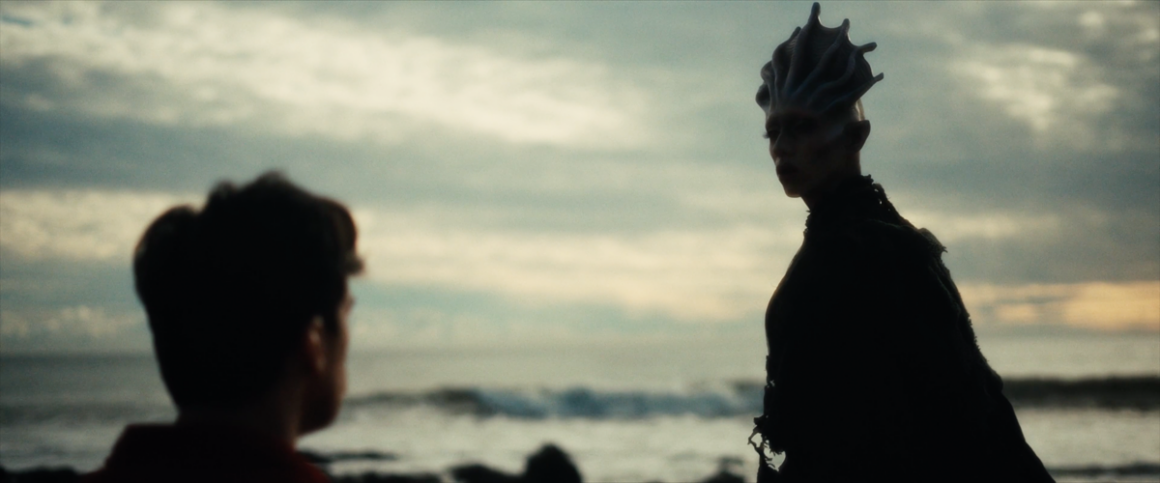
We kind of covered this earlier, but what do you think horror can explore about queer experience that perhaps a more direct, traditional drama can’t?
Brandon: I do think Scorch Marks is interesting because it’s a film that is unafraid to show queer relationships, because they can be different from straight relationships. I think there’s a misconception that like we can just plug in a guy where the girl’s supposed to be or a girl where the guy’s supposed to be or like a trans experience where they are just like a cisgender experience, and it should read the same. But I think there are nuances to the way that we all have to walk through the world and the way that society is a that’s what I love about Scorch Marks is it’s so unapologetically queer. I remember a long time ago there was something that I was working on, and it both of the leads were men and it was supposed to be a gay horror movie. And one of the notes we got back is “It’s really great. What if one of them was a girl?” That’s not what this is. I think the word of the day for Scorch Marks in terms of being queer horror is unapologetic, and I love that.
The film doesn’t shy away from toxic relationships within the gay community. Why do you think it’s important for queer storytelling to make room for difficult or uncomfortable conversations like the ones in the movie?
Brandon: I think they’re real. Our experiences run the gamut of everything from a more sanitized version that maybe has been more seen in media to a lot of toxicity. Some people are great at handling relationships and some people aren’t, and it doesn’t matter if you’re gay or straight or trans. There’s a lot of nuances to our experiences, and I think us being able, as queer people, to tell those stories with those nuances is so important to get more of the real sort of human experience.
Chris: I think it’s really important to showcase the toxic side of gay relationships, especially because, I don’t know any gay person that says they’ve never been in a toxic relationship. I feel like most of them are kind of toxic. But I think it’s important to showcase that because when you’re in a relationship with queer people, you touched on it before, we are kind of othered in society. And when you feel like you are seen by someone else you kind of lose a little bit of how to differentiate red flags because you’re being welcomed and seen by this person, so people fall really fast. And also, we’re not taught how to get out of bad relationships, and some people stay in bad relationships when it can turn to abuse, whether it’s emotional or physical or psychological. I feel like that is really important to just showcase that on screen, that there are these types of relationships and you need to know how to see the signs and the confidence to get out of them as well.
Now that you’ve stepped away from your characters what do you think you’ll remember most about making Scorch Marks?
Chris: I am definitely going to remember my time with this guy just because, like I said, I learned so much as an actor on that set by being his scene partner, and it was my first time ever playing that type of character so I’m always going to just remember that as being really grateful for that experience because I grew a lot filming it.
Brandon: Same. And I think for the set in general, we’ve all worked on a lot of sets at this point. I’d say most of the time it’s like an average to maybe not so great experience. Every now and then you get so lucky where there’s not one weak link in the bunch. Everybody’s talented, everybody’s kind, everybody’s generous. And when you have a team like that who’s willing to really work together and collaborate, you get something that everyone is just so proud of because it was a great experience making it, and then you’re all proud of the end result, and I think it shows here. I think that sort of dedication and collaboration with each other uplifts the work.
What are you hoping that audiences will take away from seeing Scorch Marks?
Chris: Tackle your issues before you cause an apocalypse and bring about the end of days. I think therapy is important. We should all be in therapy. And yeah, battle your demons.
Brandon: And take accountability in your relationships.
Any projects in the works for you?
Brandon: I’m writing a horror film, and we are hopefully going out to financiers soon. It’ll be my directorial debut, so I’m really excited about that. And then a couple of other projects but we’ll see if they go or not.
Chris: I am writing a memoir about my time taking care of my elderly neighbor, Norma. I hope to release that next year, and then I really hope for it to turn into a screenplay one day.
Brandon: He’s given me a sneak peek of it, and he won’t say this himself, but it is genuinely
brilliant. It is so moving, it’s so heartfelt, and it really, I think, gets at something that we all could use more of, which is really caring for each other and especially the age gap and why we should care about elderly people that live right next to us. I remember my friend used to say, “LA is a place where people come together to live alone.” And I think this just breaks through that stereotype.
Scorch Marks premieres on October 2 on Dekkoo. Follow the stars on Instagram: Chris Salvatore and Brandon Shypkowski.