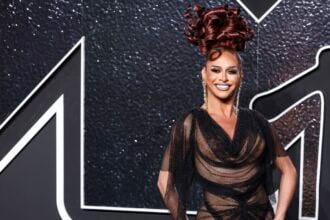
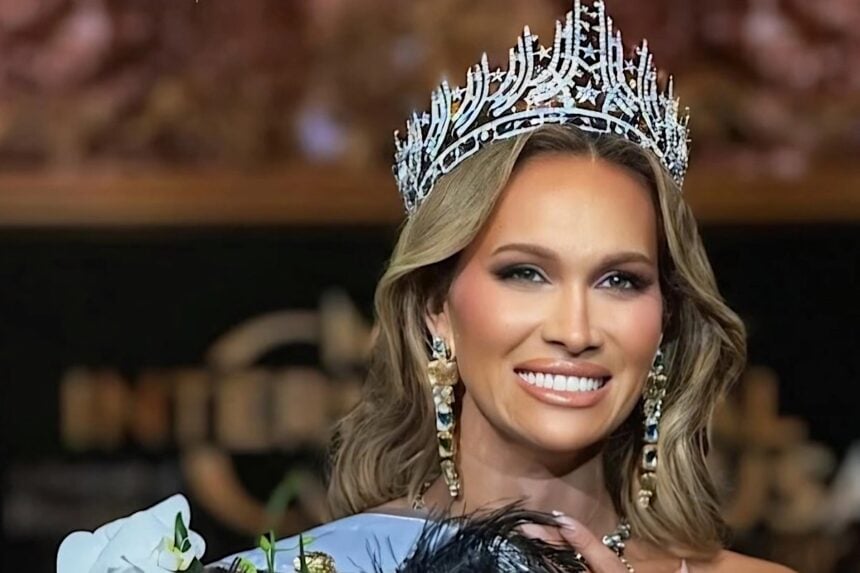
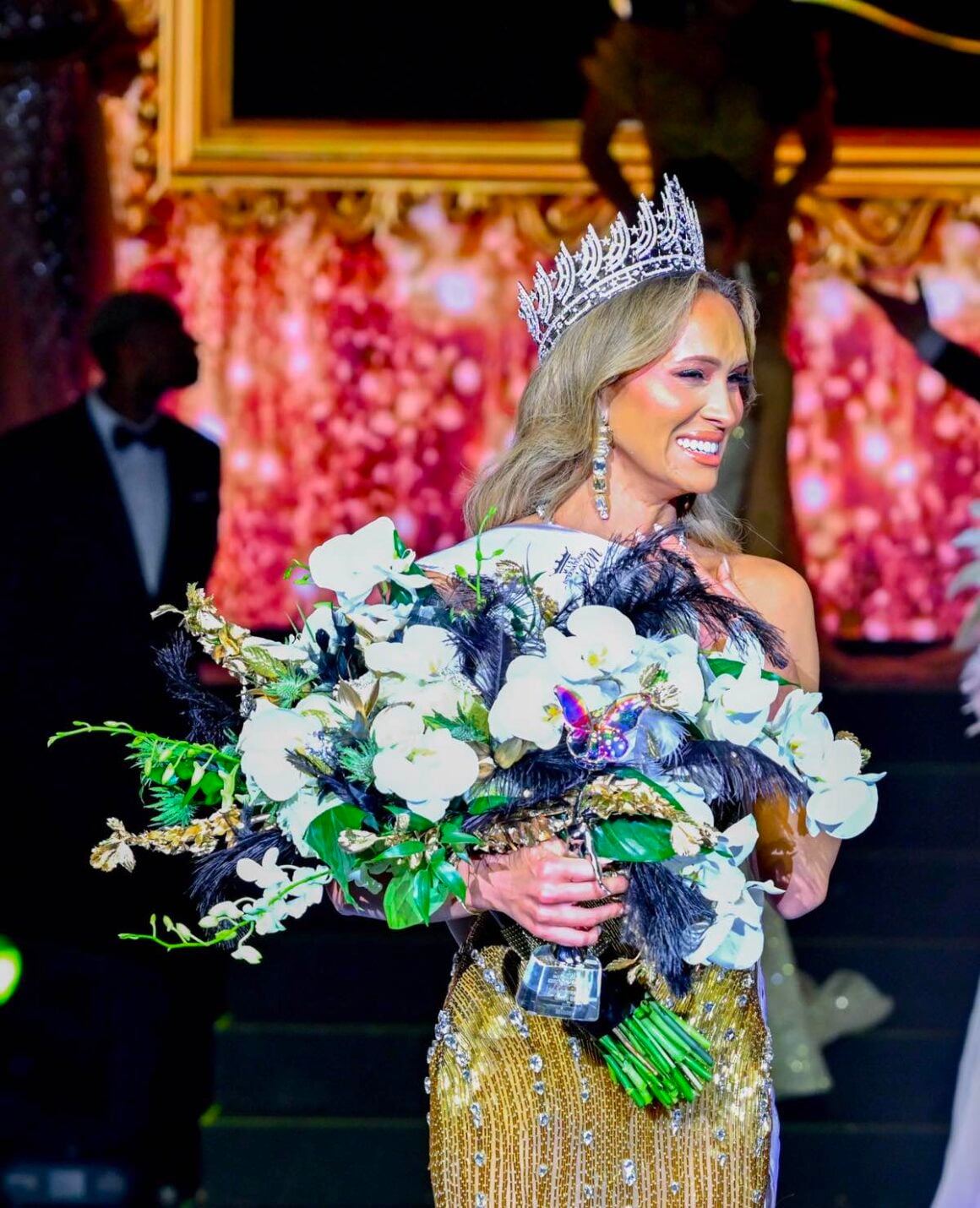
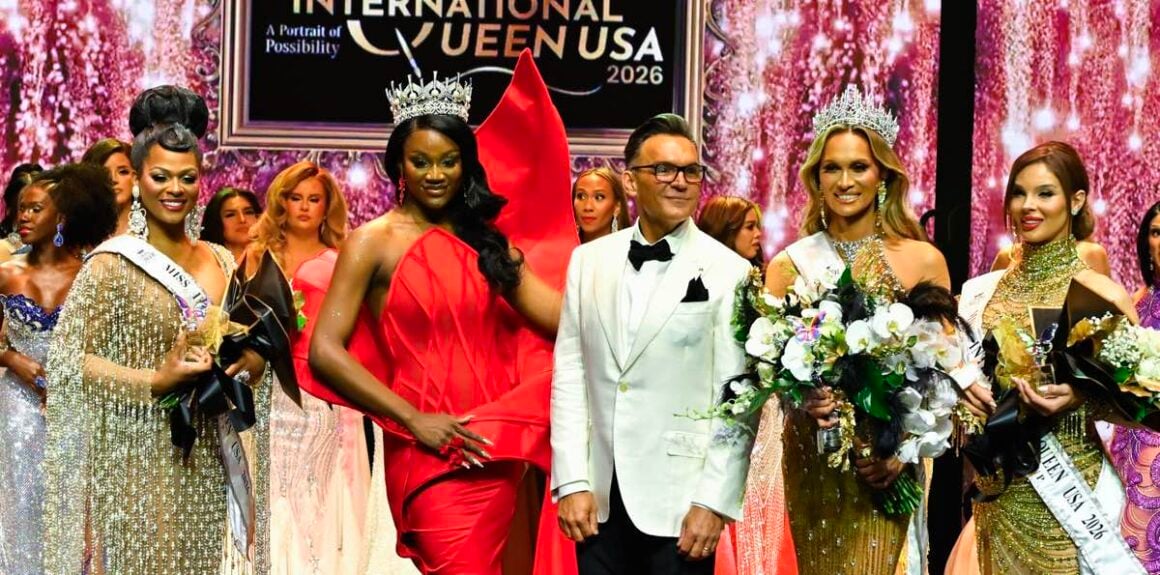
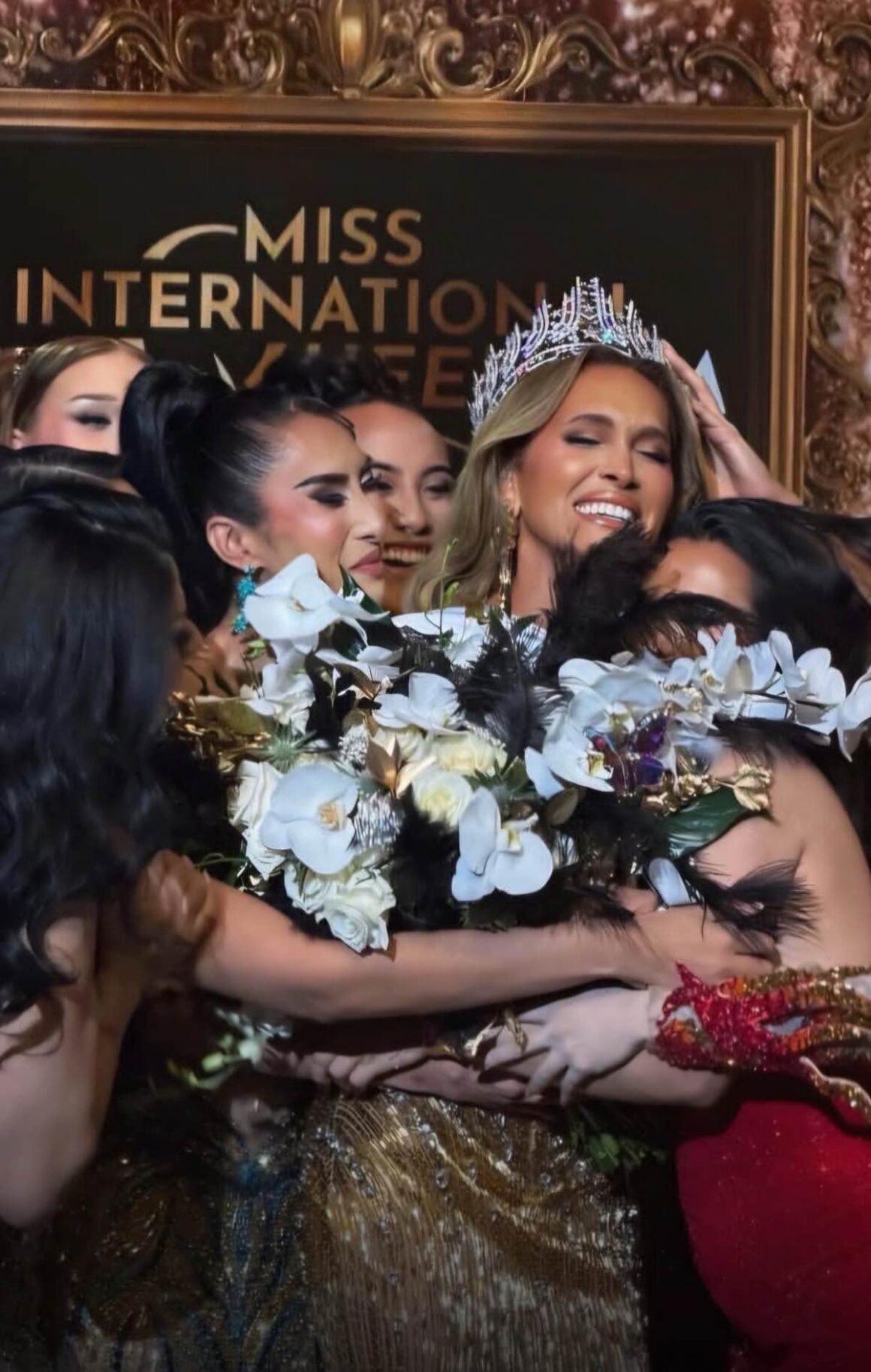
When Lo Colby’s name was announced as Miss International Queen USA 2026, time seemed to stand still…until it didn’t. In a rush of emotion, she found herself grounded not by the crown, but by connection: a tearful embrace with a fellow competitor turned friend, and the sight of her chosen family cheering her on. It was a moment years in the making, shaped by resilience, sobriety, and a commitment to showing up as her most authentic self.
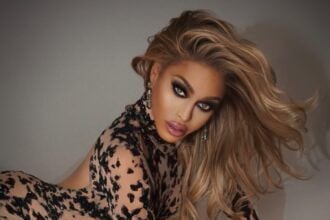
A Hawaii-born Thai transgender woman, accomplished performer, and technology professional, Colby represents a new kind of titleholder: one equally at home on stage, in boardrooms, and in community spaces. As the drag daughter of Sasha Colby, she carries a powerful legacy, but her mission is distinctly her own: advocating for transgender economic empowerment and ensuring trans voices are not just represented but heard in the rooms where decisions are made.
Now, as she prepares to take the global stage in Thailand, Colby is focused on more than presentation—she’s intent on creating impact. In this conversation, she opens up about the surreal moment of her win, the lessons that shaped her, and why kindness, authenticity, and access are at the heart of everything she does.
Take me back to the moment that your name was announced as the winner. What was going through your mind in those first few seconds?
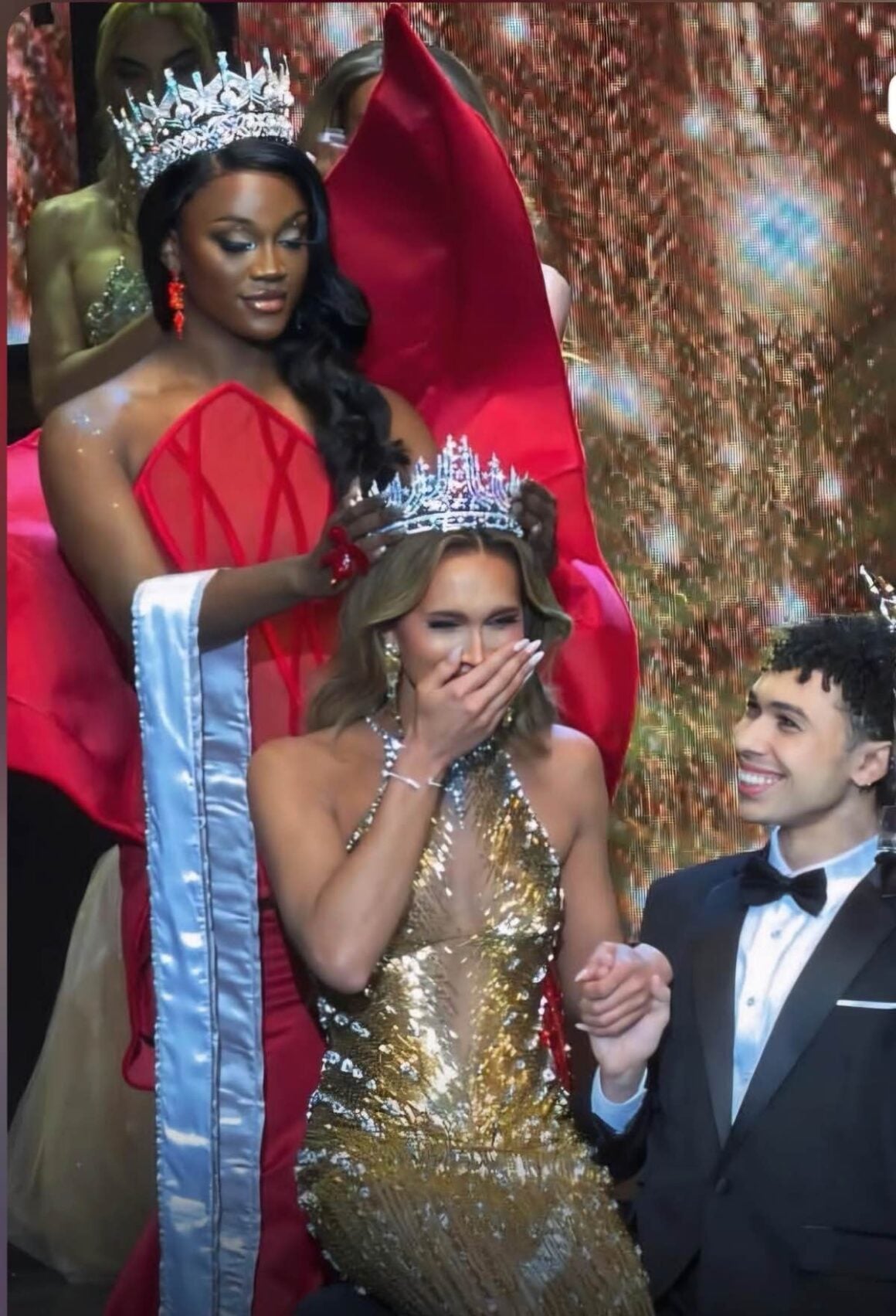
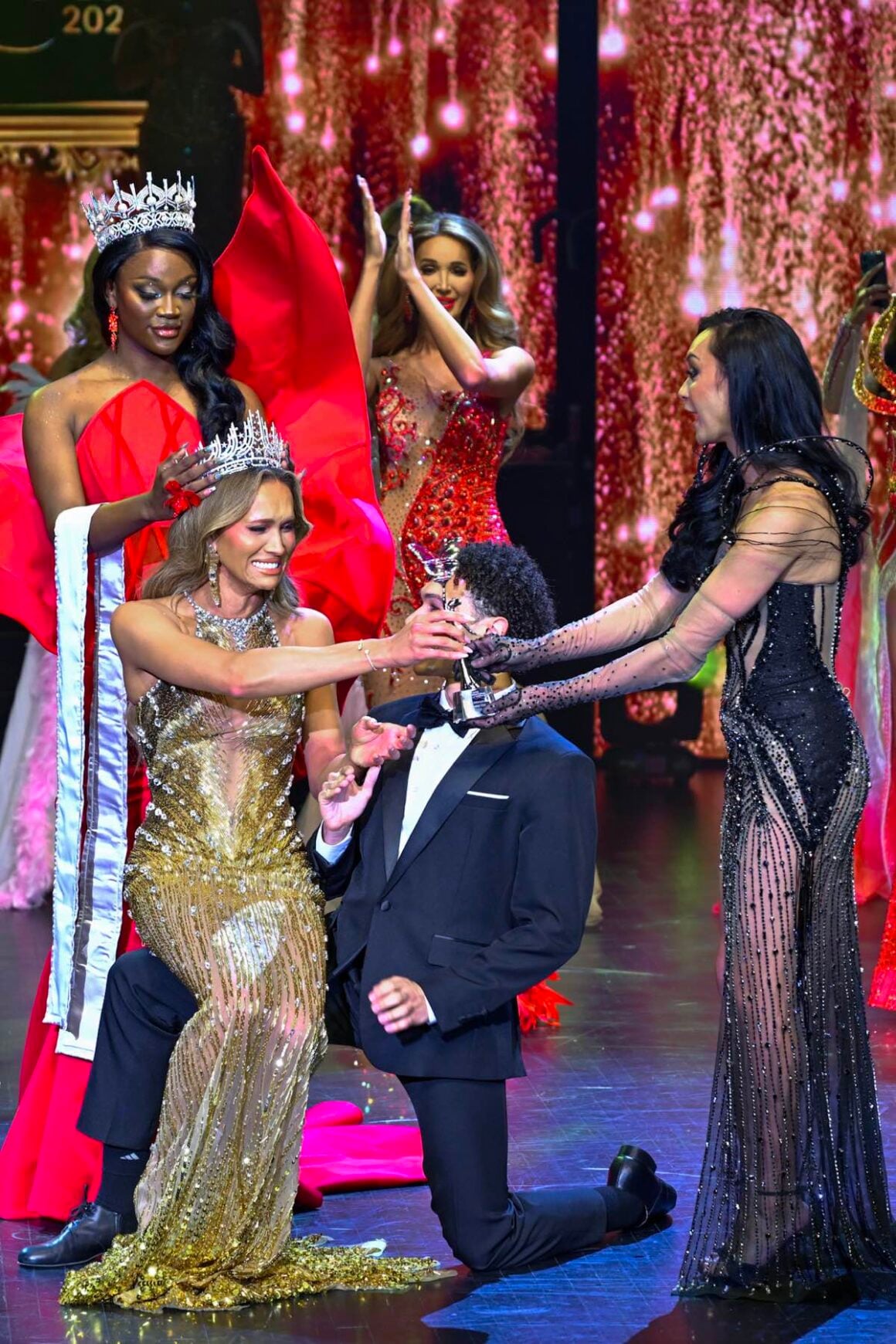
It was such a surreal moment. I didn’t really know what was going on. I heard my name and I was like, oh my gosh, wait, am I making this up or did that just really happen? And in front of me is Zhané [Dawlingz] – she and I became really great friends through the competition week – and she’s just like girl, you did it. And then it all hit me. I looked in the audience and saw my friends and my drag family there, and I just started crying. And, when it all happened, I went in to hug Zhané and that kind of brought everything to a center where I was like, okay, I am in this moment. My hard work paid off. I just did it and I got to share it with someone I really care about. So that was really special.
What did it mean to receive the crown from Midori Monet and continue that legacy of visibility?
Being two trans women of color, we have very different experiences in being people of color. I think that it really represents how diverse the US is and how diverse trans women are. We do come from different backgrounds, different places. The more we got to know each other, we discovered we are similar in a lot of ways. We’ve gone through a lot of the same experiences. So, just carrying on that legacy of these incredible trans women that are not only beautiful but they’re doing incredible things in their lives and their careers and doing a lot of good for the community. I think it’s really special.
How has being a Hawaii-born Thai woman shaped the way that you show up on stage and in the world?
Being from Hawaii and having a Thai mother, kindness is always at the heart of what we do. We accept people for who they are. We accept people for the place they are in their life, and we don’t place judgment on people. Being from Hawaii, you learn at a very young age that when somebody is in need, if you’re able to, help them – and I’ve always been that way. I will continue to be that way for the rest of my life. It’s just about spreading kindness and joy.
What parts of your upbringing most prepared you for the competition and this moment in your life?
Ooh, I would say I have always had very accepting and loving people around me. They let me be myself, however that was, even if I was a different kid on the playground, they just let me be myself and they loved me. I think I got in my own way in a lot of my life where I felt like I had to be something different and once I was able to just let my personality shine and let who I really am shine, that really helped me get through this competition. I promised myself that I wouldn’t put on a facade throughout the competition. I was going to be 100% authentically me and I stayed true to that, which I’m very happy I did.
Was there a time that you ever doubted that you’d be here? And when you had those moments, what helped you push forward?

Yeah, about 10 years ago I decided to get sober. I was in a really dark place in my life and when you get to that place, it doesn’t feel like anything’s worth it. I’m really thankful and I’m really happy that I allowed myself to flourish in life. I used my pain and, when I’m in a dark place, questioning what I’m doing or questioning myself, I always remember back to what I went through and I knew that was just temporary. So, when I’m doubting myself, it’s really important for me to just know you’re meant to be here. You’re doing the right things. It’s difficult right now, but it’s going to be so much better when you get through it.
Being Sasha Colby’s drag daughter, has her mentorship influenced your artistry and your confidence?
She taught me the power of being present and allowing me to shine without the extras. She was the person to say – especially when I was, a baby drag queen if you will – when I was doing too much. I was jumping around trying to do all the tricks, the splits and everything, and she pulled me aside and she said, “Hey, you are so beautiful and you have an aura about you. People just want to receive you. They want to look at you. They want to examine you. They want you to just be you, so try that.”
That actually brought me a lot of confidence because I didn’t have to hide behind doing things that I thought I had to do. All I had to do is go out there and really let myself shine. She really brought a sense of confidence in me that maybe I just needed to hear somebody tell me that I was great. And sometimes it is nice for – especially someone like her, she’s Sasha Colby – to just really see what I have inside and something that I didn’t see for myself and just allow me to explore that rather than telling me you need to do this, and this but to just go out there and be perfect the way you are and people are going to love it.
What is the most valuable lesson that Sasha taught you about legacy and leadership?
She taught me that, of course, professionalism is always of the utmost importance. She also taught me be kind to everyone, so if we’re thinking about a drag show, be kind to the promoter, be kind to the stage, help be kind to the staff of the establishment, be kind to everyone, and that’s going to take you so much farther than probably anything in your career – farther than talent, farther than a name. Just showing up and being kind is probably the most important thing you could do.
How do you carve out your own identity while honoring such an iconic drag mother?
I built my own path. Being in West Hollywood, I’m surrounded by a multitude of incredible drag queens and I made sure to figure out exactly where I would land and all of that and what I realized was I’m a really great business woman, so it was important for me to be not only an incredible performer and drag queen, but it was important for a drag queen to finally have a little bit of control over the careers and lives of someone like me to give them an opportunity to pay them correctly in this city.
I made sure to turn my passion into a business, if you will, but with that, I wanted to make sure that I was also taking care of my community and doing good. For them, it’s putting them on giant stages, putting them in front of people like the celebrities that come to my shows. Making sure that they’re taken care of financially. Because being an artist out here is really hard and Los Angeles is so expensive.
Did Sasha give you any advice before you went to compete for Miss International Queen?
Oh my gosh, yes. To be honest, she looked at me and she just said, “Girl, you know what to do, you know how to win. Just go do it. Just breathe. Get out of your head.” And the getting out of my head was the biggest thing because I’m somebody that can’t hide their emotions. It reads on my face. So, if I’m uncomfortable, if I’m overthinking something, you can instantly see it. Her telling me to just go do it, was – while a very simple comment – it really did a lot for me because I knew I prepared so much for this pageant. I prepared for months and months with lots of training and I just had to go do it. It’s like a dancer practicing a routine or rehearsing, once you go out there, if you just know it, there’s nothing to question, there’s nothing to think about.
Does carrying both your cultural heritage and your drag lineage add a sense of responsibility to your reign as Miss International Queen?
Oh my gosh, incredibly. Starting with my drag lineage, aside from Sasha, I come from a very long line of really strong trans women who happen to be performers from Hawaii. These women broke barriers. They performed in spaces that they might not necessarily be welcomed into. They performed in a time when I can only imagine what they had to go through even just existing as a trans woman back then. And I wanted to make sure that I represented them correctly. I wanted to pay respect to my culture. I wanted to pay respect to the people that paved the path for me. I didn’t want to just do this for myself, which really drove me to making sure I was excellent at every single thing I did that week.
How do you handle the expectations that come with being connected to a global drag icon like Sasha?
To be honest, I don’t think about it. I think it’s incredible what Sasha has done but at the end of the day, Sasha did that for her and when I became her drag daughter, she was very clear with me, “I don’t want you to be me, I want you to be you. There’s only one of you and there’s only one of me, so don’t allow people to have the expectation that you are going to try to be me.” I think that’s really powerful because she didn’t want to create a family full of identical hers because it’s only her. She just wanted me to be the greatest me that I could be. I just rhymed there. I try not to allow myself to get lost in the mix of the legacy that she has built. I want to build my own legacy, and I think I’m doing it now.
You had mentioned that you’re a technology professional as well as a performer and content creator. How do those worlds intersect in your life?
They have all taught me that you really need to speak up in spaces that maybe from an outsider’s view, you might be on the bottom of the totem pole. I want to make sure that I’m walking into a room where if people are looking at me a little bit different, they understand that I’m not like everybody else in the room. But they keep me there and they invite me into spaces because I’m exceptional. Not because I’m different. I want to make sure that people see how hardworking I am, how professional I am, and how much of an asset I am – and that goes from everything from being an entrepreneur to my tech professional world and also being a drag queen. Being professional and just being great at what you do is really important to me.
What do you think transgender economic empowerment looks like in practical terms?
In practical terms, I strive to ensure that in any organization or any company I walk into, they understand that well, yes, I might be different and while it might be an uncomfortable thing to say, “Okay, I’m looking at her and I see a woman, but there’s other things that I’m experiencing with this person that might not match what I’ve been taught.”
What I want to do in every organization I go into is allow people to have questions, allow people to be curious about the queer community, including trans and non-binary individuals. I want them to just be curious so we can educate people in the sense that we’re not so different from you and we actually bring a perspective to the workplace that is very valuable.
We’re resilient. We see the world a little bit differently. We take people for what they are not for what they look like, because we know exactly what that’s and those are qualities that make really great employees. Putting up barriers and a lot of the discrimination that queer people face really could be used as an asset rather than something that’s a deterrent.
What conversations do you hope to spark within corporate spaces about hiring and inclusion?
DEI affects everybody. It’s diversity, equity, and inclusion. We’re all diverse. We all come from different backgrounds, regardless of how we identify, the color of our skin or where we’re from. It affects everybody and really that is the core of what these practices intend to be – to make sure that everybody has an understanding that people are different, but people are different and we also sometimes have an unconscious bias about what we’re seeing or what we’re experiencing, and just being able to recognize those things and teaching our workforce how to overcome those unconscious biases really will make for a better economy for everybody and a better workforce, because having diversity is not a bad thing. It just opens the door for so many more people, especially a lot of the marginalized communities.
You’ll be representing the US at the pageant in Thailand. What does competing in Asia mean to you personally?
Ooh, I almost got emotional. I am a first-generation Thai woman. I don’t have any connection to my Thai family. My family – my siblings, my mom and my parents – they’re going to be coming to Thailand to support me and when my mom left Thailand, she hasn’t been back in over 30 years. Of course, culture, language and finances made that a little bit difficult, so finally getting to connect with a culture that I have never had the chance to connect with is so special to me. The idea that I might be able to meet someone from a part of my family that I’ve never met before. I’ve never met anyone’s on my mom’s side. The fact that I have that chance opens such a door of allowing me to explore a piece of myself that I just could not explore because I never got to experience it. It’s really special. Of course, I’m there to compete, but connecting with a culture and a place that I have such love for and I have such fondness of, but I’ve never actually been there in person, that’s incredible. The Miss International Queen USA organization, they don’t even know how much that means to me because I’m about to overwhelmed with emotion when I get there. Let’s just say that.
What is the most important thing you’d like to achieve during your reign as Miss International Queen USA?
I want to ensure that I am continuing conversations and that I’m invited into conversations about trans people. I think right now what we’re seeing, especially in this country, is we do have people that are allies and that are representing trans and queer people, but we don’t have any of us in those rooms, I want to make sure that I am somebody that can come directly from a trans experience and talk about my experience and the experiences that my community faces and hope that I can change some minds and allow people to be a little bit more understanding of who we are. I want to make sure that I’m in those conversations and that those conversations don’t stop once say the dust settles.
On my crowning, I want to make sure that I’m active in my community. I’m out there, I already have meetings set up with some community leaders here in LA. I want to get to work, I want to do good. I want to make sure that I’m going farther than the photo shoots and the glamor that comes with the title. I want to make sure that I’m actually doing the work that’s going to do some good in the community.
So, after Thailand – and you get crowned there – what is next for you?
Honestly at that point, the platform of Miss International Queen is world equality, and so I want to make sure that I am able to do as much traveling and meet as many people in different places and maybe traveling is out of the question but ensuring that I’m connecting with countries and communities and country representatives that could use my help. I want to make sure that I’m opening an invitation to use me as a representative. I want to make sure that I’m not just once again wearing the crown. I want to be out there, and I want to do as much good as I can.
Follow Lo Colby on Instagram and learn more about Miss International Queen USA here.